CAPITOL OBSERVATIONS
Fred Gray To Be Honored In Montgomery
The Fred D. Gray Institute for Human and Civil Rights has a new date for the Alabama Legacy Luncheon. It will be held in Montgomery on November 10, 2026. This is a gathering created to elevate one of the most consequential voices in American civil rights history and to bring our community together in a spirit of unity, reflection, and purpose.
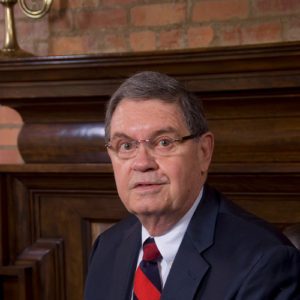
The Institute announced that Bryan Stevenson, Founder and Executive Director of the Equal Justice Initiative, and I will serve as Honorary Co-Chairs for the event. David Fleer, Founder of the Institute for Human and Civil Rights, said when announcing our selection:
The leadership and commitment to justice of Bryan Stevenson and Jere Beasley embody the values that have guided Attorney Fred Gray’s extraordinary life and work.
The luncheon will feature a special program: “The Wisdom of Fred Gray for Such a Time as This.” This offers a rare opportunity to reflect on the lessons, convictions, and moral courage of a man whose legal advocacy and leadership helped change the course of American history.
There will be a moving one-hour program featuring a powerful video collage and a facilitated conversation held in Fred’s presence. From the Montgomery Bus Boycott and the Freedom Riders to the Tuskegee Syphilis Study litigation and landmark voting-rights and educational-equality cases, Fred’s seven decades of service have left an indelible mark on our nation.
More than a celebration of history, this gathering will invite the participants to consider how the principles that guided Fred’s work-courage, perseverance, faith, justice, and hope—can illuminate the challenges and opportunities of our own time.
As Montgomery’s civic, legal, educational, business, faith, philanthropic, civil rights, and cultural leaders gather together, an extraordinary legacy will be celebrated and honored. We all must recommit ourselves to the ongoing pursuit of justice and equal opportunity for all.
Fred and I have been friends for a very long time. I know firsthand how significant and important his life work has been. Fred Gray is a great man who will leave a magnificent legacy.
SOCIAL MEDIA LITIGATION
TikTok Settles 3 Teen Addiction Suits Before Bellwether Trials
Following the first Bellwether trial in January, the Social Media Litigation pending in the Judicial Council Coordinated Proceedings (JCCP) before Judge Carolyn B. Kuhl in Los Angeles Superior Court continues to move forward.
Notably, TikTok, one of the four named defendants in the litigation, has settled three Bellwether cases involving young plaintiffs who allege they suffered mental health harms as a result of social media platform use. The settlement amounts remain confidential. These resolutions do not resolve the remaining cases filed in the JCCP or the Multi-District Litigation (MDL) and claims on behalf of those plaintiffs remain.
The second Bellwether Trial, involving Plaintiff R.K.C., was scheduled to begin July 27. However, TikTok, Snap and YouTube reached settlements with the plaintiff prior to trial while the claims against Meta were voluntarily dismissed by the plaintiff. As a result, the trial was cancelled.
The next round of Bellwether trials is scheduled for October. Although TikTok has resolved its own involvement in those cases, Meta, YouTube and Snap remain defendants. P.M.Y. settled her claims against TikTok and subsequently dismissed her remaining claims against Meta, Snap, and YouTube, leaving S.J. and K.D.B. as the two cases proceeding to trial against those companies.
Thousands of cases have been filed in the JCCP in Los Angeles County, with additional actions pending in the federal Multi-District Litigation (MDL) in the Northern District of California, Oakland Division. The Bellwether Plaintiffs serve as representatives of the thousands of individuals who allege harm resulting from the defendants’ social media platforms.
The plaintiffs are represented by Mariana McConnell of Kiesel Law, Rachel Lanier of Lanier Law Firm, Rahul Ravipudi of Panish Shea Ravipudi and Beasley Allen lawyer Joseph VanZandt.
Lawyers at Beasley Allen continue to pursue claims on behalf of individuals arising out of their addiction to the defendant Social Media Platforms, including Facebook, Instagram, Snapchat, TikTok, and YouTube. Injuries include, but are not limited to, depression, anxiety, eating disorders, suicidal ideation, etc. Additionally, we are representing school districts for expenses they have incurred due to problems related to their students’ social media addictions.
If you have questions or need help with a social media case, contact Melissa Prickett, Director of our Mass Torts Section. She will have a lawyer in the Section respond to you.
Plaintiffs Secure Combined Bellwether Trial In Social Media MDL
Plaintiffs in the California social media addiction litigation received good news on August 28. The court combined the October bellwether trials of S.J. and K.D.B. in an order we received just before this issue went to the printer. The consolidation will promote efficiency and avoid duplicative testimony. At a hearing before Judge Carolyn B. Kuhl, plaintiffs’ counsel Mark Lanier told the court the cases involve similar allegations that social media platforms caused mental health injuries to adolescent users and can be presented together without confusing jurors.
California law supports consolidation in mass tort cases and that proper trial management will allow jurors to distinguish between the plaintiffs’ individual circumstances. This combined trial will reduce demands on witnesses, including Meta CEO Mark Zuckerberg, who testified during the first bellwether trial that resulted in a $6 million verdict against Meta and Google.
Judge Kuhl reminded all present that California precedent grants trial courts broad discretion to consolidate cases where appropriate. She issued her ruling as stated above shortly thereafter.
The October bellwether trials are expected to move forward against Meta, Google, and Snap after TikTok reached settlements with the plaintiffs. The litigation is part of a broader wave of lawsuits alleging that social media platforms are designed in ways that harm young users’ mental health.
Source: Law360
Meta Agrees To Sweeping Child-Safety Reforms In Historic Settlement With State Attorneys General — But Claims Of Individual Victims, Families And School Districts Continue
On August 26, Meta Platforms, Inc. and a bipartisan coalition of 51 state and territorial attorneys general filed a proposed consent judgment resolving the states’ claims in the multidistrict litigation In re: Social Media Adolescent Addiction/Personal Injury Products Liability Litigation (MDL No. 3047), pending before Judge Yvonne Gonzalez Rogers in the Northern District of California. The settlement was reached mid-trial, shortly after jury selection had begun in the federal case brought by California, Colorado, Kentucky and New Jersey, which was tried alongside COPPA claims asserted by 29 states. At the heart of the agreement is a set of detailed, auditable product changes Meta must make to Facebook and Instagram — enforceable commitments the states could not have obtained through damages alone. The agreement remains subject to court approval.
Sweeping Injunctive Relief
Within one year, Meta must adopt an “Age Assurance Framework” classifying every user as an adult, a teen (13–17), or under 13, with accuracy targets subject to annual third-party testing, and it must build a dedicated model to detect under-13 users. Teen accounts will be subject to a default nighttime block on access — initially from midnight to 6:00 a.m., tightening to 10:00 p.m. to 7:00 a.m. if competitors adopt equivalent rules — along with daily time limits of 60 minutes per platform and 120 minutes across all Meta apps, a “School Mode” that disables notifications during school hours, and periodic prompts encouraging teens to take breaks. Only a supervising parent, never the teen alone, can loosen these defaults.
The agreement further requires that teens be offered a non-personalized, chronological feed; that like and reaction counts be hidden from teens by default; that cosmetic “surgery-style” augmented-reality filters be disabled for teens; and that teen accounts default to private, with warnings and parental alerts tied to suspicious contacts and suspected sextortion or grooming behavior. Parents will receive notice when a teen first messages a new adult and automatic notification if a teen repeatedly searches terms related to suicide, self-harm or eating disorders.
Compliance will be policed by a jointly selected independent auditor serving a minimum five-year term, reporting to a bipartisan committee of attorney general offices and issuing public executive summaries of its findings. Meta must submit a corrective action plan within 30 days of any finding of a material gap, and states retain the right to take immediate legal action where public health or safety requires it. Meta bears the auditor’s costs. Meta admits no liability or wrongdoing, and the agreement runs for a 10-year term.
Monetary Terms
Meta will also pay approximately $11.66 billion in guaranteed installments over 10 years, with up to an additional $5.02 billion available if Snap, TikTok and YouTube adopt substantively equivalent time-management and age-assurance obligations — a structure designed to pressure the rest of the industry to follow suit. Alabama’s share includes guaranteed installments of roughly $11.7 million per year, with a maximum recovery of nearly $168 million if the contingency trigger is met. The funds are earmarked for remedial purposes such as expansion of the 988 Suicide & Crisis Lifeline, youth mental-health programming and continued enforcement of teen online-safety laws.
What The Settlement Does Not Resolve
Critically, this settlement resolves only the claims of the settling state governments. It does not resolve, release or compensate a single one of the thousands of individual claims brought by children and families in the parallel litigation, nor the claims of school districts, municipalities, tribes and other public entities. Those claims — pending in both the federal MDL and the coordinated California state-court proceeding, In re: Social Media Cases (JCCP No. 5255) — continue without interruption.
Beasley Allen’s Joseph VanZandt serves as co-lead counsel for the plaintiffs in the JCCP, where our clients seek accountability for specific, individual harms — including depression, self-harm, eating disorders and death — that we allege were the foreseeable result of deliberate design choices these platforms made.
In a statement issued the day the settlement was filed, JCCP plaintiffs’ leadership congratulated the attorneys general on securing enforceable commitments from Meta and urged every other social media company to adopt protections at least as strong, while striking a note of measured optimism: these changes came only after years of litigation and under the pressure of trial, and commitments on paper are not the same as change in practice.
Plaintiffs’ leadership made clear that they will be watching closely to see whether Meta follows through — and that nothing in this settlement speaks for the individual victims and families.
The litigation now moves into its most important phase. Multiple bellwether trials against Meta are set to begin in October, and the campaign to secure justice for every family in the proceeding continues without pause. Lawyers on our firm’s Social Media Litigation Team will report further developments, including the court’s action on the proposed consent judgment and the results of the upcoming trials, in future issues.
Sources: [Proposed] Consent Judgment and Settlement Agreement, In re: Social Media Adolescent Addiction/Personal Injury Products Liability Litigation, Case No. 4:22-md-03047-YGR, Doc. 3447-1 (N.D. Cal. filed Aug. 26, 2026); Statement of Plaintiffs’ Leadership, In re: Social Media Cases, JCCP No. 5255 (Aug. 26, 2026)
The Beasley Allen Social Media Litigation Team
Joseph VanZandt, who leads our firm’s Social Media Litigation Team, is co-lead counsel for the Judicial Council Coordination Proceeding (JCCP) for the plaintiffs in California State Court. Joseph is also a member of the Plaintiffs Steering Committee in the MDL, helping lead the federal social media multidistrict litigation. Lawyers on the Beasley Allen Social Media Litigation Team are set out below.
Social Media Litigation Team
Joseph VanZandt (who heads the team), Jennifer Emmel, Suzanne Clark, Clinton Richardson, Sydney Everett, Davis Vaughn, Soo Seok Yang, James Lampkin, Seth Harding and Slade Methvin. Andy Birchfield, who heads our Mass Torts Section, also works with the team.
If you need more information on the ongoing social media litigation or need help with a case, contact Melissa Prickett, Director of our Mass Torts Section, and she will have a lawyer on the Litigation Team contact you.
TALC LITIGATION
Settlement Reached In Talcum Powder Litigation
Johnson & Johnson has agreed to pay approximately $5.5 billion to finally put to rest the tens of thousands of lawsuits alleging the company’s talcum powder products caused ovarian cancer. Counsel for the plaintiffs called the deal justice that has been needlessly delayed by avoidance of responsibility and a seeming blindness to the suffering of others.
Under the proposed settlement, long-running claims could be resolved that have been brought by close to 70,000 plaintiffs. The agreement is conditioned on the participation of at least 95% of the remaining plaintiffs.
Clients have been denied just compensation for too long. The $5.5 billion is the minimum that J&J has agreed to pay, but the amount may increase depending on how many plaintiffs participate.
The plaintiffs negotiation committee includes Christpher Seeger of Seeger Weiss LLP, R. Bryant McCulley of Ashcraft & Gerel LLP, and Hunter Shkolnikof Napoli Shkolnikof PLLC, and Warren Burns of Burns Charest LLP.
The plaintiffs executive committee includes Christopher Placitella of Cohen Placitella & Roth PC, Richard Golomb of Golomb Legal PC, Hunter Shkolnik of Napoli Shkolnik PLLC, and Warren Burns of Burns Charest LLP.
Beasley Allen Talc Litigation Team
The following Beasley Allen lawyers are members of the Talc Litigation Team:
Andy Birchfield, Leigh O’Dell, Ted Meadows, Ryan Beattie, David Dearing, Liz Achtemeier, Jennifer Emmel, Caty O’Quinn, Leanna Pittard, Matt Teague, Margaret Thompson, Kelli Alfreds, Alexa Wallace, Cristina Rodriguez and Brittany Scott.
CAMP LEJEUNE LITIGATION
Camp Lejeune Justice Act Update: Why Claims Are Still Moving Slowly And What Claimants Should Know
More than four years after Congress enacted the Camp Lejeune Justice Act, many claimants are still waiting for more progress. The law was intended to provide a path to compensation for veterans, family members, and civilian workers harmed by contaminated water at Camp Lejeune. But for many families, that promise has been slowed by the federal government.
What the Camp Lejeune Justice Act Was Supposed to Do
The Camp Lejeune Justice Act was signed into law on August 10, 2022, to allow eligible individuals to pursue compensation for injuries linked to toxic water exposure at Camp Lejeune. The law opened a two-year window for administrative claims and, when appropriate, federal lawsuits. Before the filing window closed, hundreds of thousands of claims were submitted, reflecting the enormous number of people potentially affected by decades of contamination.
Despite that mandate, the government has slowed the process. The first Camp Lejeune cases are expected to be set for trial soon, and only a small fraction of claimants have received compensation through the Elective Option process. For claimants who are elderly, seriously ill, or grieving the loss of a loved one, delay is not a procedural inconvenience—it is a denial of timely justice.
Why the Process Has Taken So Long
Several factors have slowed resolution. The Department of Justice has pursued litigation positions that are inconsistent with the Act and that have delayed movement toward trials and settlement. The government has contested how cases should be tried, what evidence should be considered, how expert testimony should be handled, and whether certain government benefits should reduce any recovery awarded to claimants.
These disputes matter because the Camp Lejeune litigation is expected to influence thousands of claims. Bellwether proceedings—early test cases selected to help establish evidence, causation, damages, and valuation frameworks—are intended to guide future settlements and trials. But without completed trials or a broad settlement structure, claimants remain in a waiting posture.
The human cost is significant. Many claimants are living with serious diseases associated with toxic exposure, while others have died before their claims could be resolved. That reality underscores why efficiency, transparency, and meaningful settlement discussions are essential.
What Our Firm Is Doing
While the government remains determined to slow the process, our work at Beasley Allen continues on multiple fronts. Our focus is to keep claims documented, organized, and positioned for settlement opportunities, litigation developments, and any broader resolution framework that may emerge.
Administrative advocacy: We work with the Department of the Navy and the Judge Advocate General’s Office regarding claim evaluation, processing, and settlement opportunities. Our team continues to update and develop claim files so they are accurate, properly documented, and ready for review.
Litigation involvement: We monitor and support the litigation pending in the Eastern District of North Carolina, including bellwether proceedings that may shape how Camp Lejeune claims are valued and resolved nationwide. These proceedings are important because rulings on evidence, causation, damages, and trial procedure may affect future settlement discussions.
Settlement and resolution initiatives: We are also involved in efforts to develop broader settlement and claims-resolution frameworks. Our Section Head, Rhon Jones, serves on the Court-appointed Resolution Committee, which works with the Settlement Masters and the Department of Justice to explore potential paths toward resolving Camp Lejeune claims more efficiently.
Client readiness: Beasley Allen attorneys, paralegals, case managers, and support staff work on Camp Lejeune claims every day. They organize records, monitor developments, update claim information, and maintain readiness for settlement opportunities and litigation milestones.
Across these efforts, the goal at Beasley Allen remains the same: to move claims forward, maximize claim value where possible, and place clients in the strongest available position for recovery.
What Claimants Can Do Now
Stay engaged and responsive: Camp Lejeune claims remain active and evolving. Claimants may be contacted to confirm information, obtain updated records, or document changes in health, employment, family, or contact information. Prompt responses help keep claims current and positioned for available recovery opportunities.
Keep records updated: Medical records, VA records, proof of presence at Camp Lejeune, death certificates, probate materials, and updated contact information may all be important depending on the claim. Claimants should notify their legal team if their health status changes, if they receive new diagnoses, or if a family member handling the claim changes roles.
Consider legislative outreach: Congress created the Camp Lejeune Justice Act, and Congress has the power to address obstacles that prevent the law from operating as intended. Claimants who are frustrated by the pace of the process may choose to contact their U.S. Senators and Representative to share their experience and ask for action that supports fair and timely resolution.
Beasley Allen Camp Lejeune Litigation Team
The following Beasley Allen lawyers are members of our Camp Lejeune Litigation Team: Jeff Price, Ryan Kral, William Sutton, Tucker Osborne, Elizabeth Walden, Travis Chin, Saima Khan, Wesley Merillat, Miland Simpler, Khadiga Carr, Will Jones, Connor Chase, Sarah Grace Strength, and Rylee Buzbee.
Rhon Jones, who heads our Toxic Torts Section, is heavily involved in all aspects of the litigation, including serving on the Resolution Committee. Rhon is also in leadership as a member of the Plaintiff’s Executive Committee.
The lawyers on our litigation team are available and would be honored to work with other law firms on their claims. Our lawyers will be available to answer any questions you may have about the litigation. You can contact Tracie Harrison, Director of our Toxic Torts Section. She will have one of the lawyers on the Litigation Team respond to you.
SEXUAL ASSAULT LITIGATION
Plaintiffs Allege XAI Failed To Prevent AI-Generated CSAM
Our firm, on behalf of six Arkansas children, identified as John and Jane Does, has filed a proposed class action against XAI, alleging its Grok AI platform lacked industry-standard safeguards that could have prevented the creation of child sexual abuse material (CSAM) using their images. A photographer used Grok to transform legitimate school and portrait photos of the children into pornographic deepfakes. The photographer was later arrested and charged with hundreds of CSAM-related offenses.
The plaintiffs contend that XAI knowingly chose not to implement safety measures widely used by other AI developers, such as content filters, red-team testing, and restrictions on sexually explicit image generation. They claim those decisions enabled the creation of illegal content involving children and resulted in lasting emotional harm to victims.
The lawsuit seeks to represent a nationwide class of children whose images were allegedly used to create AI-generated CSAM through Grok. The complaint asserts claims including negligence, intentional infliction of emotional distress, and violations related to the production, distribution, and possession of child pornography.
The plaintiffs are represented by Beasley Allen attorneys Dee Miles, Ali Hawthorne and Paul Evans. Dee, on behalf of the plaintiffs, stated:
XAI allegedly built a product it knew could be used to sexually exploit children, and it profited from that anyway. This case is about making them answer for it.
If you have questions or need help with a case, contact Michelle Fulmer, Director of our Consumer Fraud & Commercial Litigation Section. She will have a lawyer in the Section respond to you.
Source: Law360
Judge Approves Expert Discovery Stipulation In Roblox Child Sexual Exploitation MDL
U.S. District Judge Richard Seeborg approved a Joint Stipulation Regarding Expert Discovery on August 4, 2026, in the Roblox Corporation Child Sexual Exploitation and Assault Litigation (MDL No. 3166, N.D. Cal.). The order sets the ground rules for expert discovery as the case moves toward its expert phase.
The stipulation applies to retained testifying experts, non-retained testifying experts, and non-testifying consulting experts, and is meant to head off the discovery disputes that often slow down complex MDLs once expert work gets underway.
Under the agreement, retained experts must disclose only the facts or data they relied on, not everything they considered. Three categories of reliance materials do not need to be separately produced, so long as they are properly identified in the expert’s report or reliance list: documents already produced in the MDL, deposition testimony taken in the MDL, and publicly available medical or scientific literature.
Experts who perform their own analysis of app use data face a stricter standard. They must produce the underlying data, spreadsheets, calculations, and results, including the data behind any figures or graphs, at the time their reports are served. If the data cannot be produced in native format, the parties must meet and confer. Experts may rely on publicly available databases without producing the underlying data itself, as long as they cite a direct link to the source.
The stipulation also protects expert billing information. Budgets, invoices, bills, receipts, and time records tied to expert work are not discoverable unless a dispute over attorneys’ fees or expenses arises. The parties must disclose each retained expert’s total hours worked no later than five business days before that expert’s deposition.
Beasley Allen lawyers are actively involved in the Roblox MDL, representing families of children harmed through sexual exploitation and abuse facilitated on the platform. We will continue to monitor developments in this litigation as it moves into the expert discovery phase.
If you have questions or need help with a case, contact Leighton Johnson, a lawyer in our Mass Torts Section.
Pornhub Agrees To $120 Million Settlement In Child Abuse Content Litigation
Pornhub’s parent company, Aylo (formerly MindGeek), has agreed to pay $120 million and implement significant platform safety reforms to resolve certified class action lawsuits brought by survivors of child sex trafficking and child sexual abuse material (CSAM) in Alabama and California. Plaintiffs alleged the company profited from videos and images depicting their abuse that were distributed on Pornhub and affiliated websites, including Youporn and Redtube.
Under the proposed settlement, Aylo has agreed to a non-reversionary settlement fund and extensive injunctive relief, including mandatory government-issued ID verification for individuals depicted in uploaded content, enhanced content moderation tools to detect and remove suspected CSAM, expanded policies for content removal and consent withdrawals, and independent compliance monitoring for five years.
The litigation stems from lawsuits filed in 2021 under the Trafficking Victims Protection Reauthorization Act (TVPRA). Plaintiffs alleged that MindGeek knowingly benefited from and profited from sexually explicit content involving minors while failing to adequately moderate its platforms. Courts in both Alabama and California certified classes that potentially include thousands of individuals who were under 18 when they appeared in content made available on the defendants’ websites.
The settlement follows several significant victories for plaintiffs, including defeating the defendants’ motions to dismiss and overcoming Section 230 immunity defenses at both the pleading and summary judgment stages. The agreement remains subject to court approval, with a hearing scheduled for Nov. 4 in the U.S. District Court for the Central District of California.
Source: Law360
VIDEO GAMING LITIGATION
Court Compels Arbitration In Some Gaming Addiction Suits
Los Angeles County Superior Court Judge Lawrence P. Riff tentatively ruled that four of five arbitration motions in the coordinated video game addiction litigation against Sony, Epic Games, and Roblox should be granted — but denied Roblox’s motion in one case where it failed to show a parent actually agreed to its terms.
The rulings span two related actions both alleging the companies designed their platforms to be compulsively addictive to minors. The exception fell where Roblox submitted records of account creation, purchases, and gift-card redemptions, but the court found none of it tied back to the minor plaintiff’s mother, or any other responsible adult — the payment logs lacked identifying names, emails, or credit-card data.
Roblox argued the only reasonable inference was that a parent had authorized the transactions. The plaintiff countered that Roblox bore the burden of proving assent and that companies can’t assume who clicked through online screen prompts.
The court also declined, on the current record, to credit plaintiffs’ theory that compulsive gameplay prevented effective ratification of the agreements after plaintiffs tried to disaffirm them.
No final ruling from Judge Riff has been issued. The broader proceeding involves numerous suits accusing Roblox, Sony, and Epic Games of designing addictive platforms for children while relying on arbitration clauses in their terms of service to avoid litigation.
If you have questions or need help with a video game case, contact Chad Cook, a lawyer in our Mass Torts Section.
MOTOR VEHICLE AND TRUCKING LITIGATION
Failure To Equip A Seat Belt System With A Pretensioner Poses Dangerous Risks
Most people think of seat belts as a basic safety feature, but many may not realize that seat belt systems include several components designed to help protect occupants during a crash. One of the most important of these components is a seat belt pretensioner.
A seat belt pretensioner is a device that works with a vehicle’s crash sensors. In the moments before or during a crash, the pretensioner tightens the seat belt, removing slack and helping keep the occupant securely positioned in the seat. This reduces movement during a collision and helps distribute crash forces more effectively across the body.
Pretensioners can be located in different parts of the seat belt system, including the buckle, retractor, or anchor. They are commonly installed in front-seat seating positions and often work in conjunction with airbag systems. Many vehicle manufacturers coordinate pretensioner deployment with airbag deployment to help position occupants for optimal protection during a crash.
Despite the well-known safety benefits of pretensioners, many automobile manufacturers continue to limit this technology to front-seat occupants. As a result, rear-seat passengers may face an increased risk of serious injury in a collision.
One of the most significant dangers is a phenomenon known as “submarining.” Submarining occurs when an occupant slides forward beneath the lap belt during a crash, causing the belt to move upward into the abdomen. This can result in severe or fatal injuries, including damage to internal organs and the spinal cord.
By tightening and locking the seat belt during a crash, pretensioners help keep the belt properly positioned and reduce the likelihood of submarining. Although pretensioner technology is widely available and can be incorporated into rear seat belt systems, some manufacturers have chosen not to include it in rear-seat designs.
Some manufacturers do not include this important feature for the rear seat center position. Most consumers are not aware of this safety feature because it is not visible. However, in a severe crash a rear seat pretensioner can prevent catastrophic injury or death.
Beasley Allen lawyers have handled cases involving rear-seat occupants who died or suffered catastrophic spinal cord injuries after submarining beneath a seat belt that was not equipped with a pretensioner. In these cases, the absence of a pretensioner may have played a significant role in the injuries sustained. When a rear-seat occupant suffers injuries associated with submarining under a lap belt, the lack of a seat belt pretensioner is a defect theory that should be investigated.
If you have questions or need help with a case, contact Sloan Downes, Director of our Personal Injury & Products Liability Section. She will have a lawyer in the Section respond to you.
MOTOR VEHICLE RECALLS
August 2026 Motor Vehicle Recalls
Motor vehicle recalls continued at a steady pace in August 2026, with federal safety regulators identifying defects affecting a wide range of vehicles from major manufacturers. The recalls involved critical safety systems, including airbags, steering components, suspension systems, windshield wipers, engine components, and drivetrain parts. Many of the defects could increase the risk of crashes, injuries, or vehicle fires, reinforcing the importance of timely recall repairs.
Recall repairs are performed free of charge, making it important for vehicle owners to respond promptly when notified of a safety issue.
Major Recalls Issued in August
Below is a breakdown of some of the most notable vehicle recalls announced in August 2026:
- Toyota Tacoma & Tacoma Hybrid (2024-2025)
- Front and rear shock absorber reservoirs may detach
- Risk: Detached components could create road hazards and increase crash risk
- BMW X3 (2024-2026)
- Incorrectly attached steering spindles identified
- Risk: Reduced steering control and increased crash risk
- BMW 5-Series, 7-Series & 8-Series Models (2021-2026)
- Driveshaft damage may result in a loss of rear-wheel power
- Risk: Sudden loss of propulsion while driving
- Nissan Altima (2025)
- Airbag mounting fasteners may have been installed incorrectly
- Risk: Airbags may not deploy properly during a crash
- Land Rover Range Rover (2016-2017)
- Incorrect front suspension knuckles installed
- Risk: Suspension failure and reduced vehicle handling
- Dodge Durango (2021-2023)
- Rear spoiler may detach while driving
- Risk: Road hazard for surrounding motorists
- Jeep Grand Cherokee & Grand Cherokee L (2026)
- Windshield wipers may fail due to a software issue
- Risk: Reduced visibility and increased crash risk during inclement weather
- Ford Explorer (2026)
- Engine rod bearing defect may lead to engine failure
- Risk: Loss of drive power and potential engine compartment fire
- Ford Bronco & Bronco Raptor (2021-2026)
- Wiring harness may become damaged and short-circuit
- Risk: Increased risk of vehicle fire
- Ram 1500 Pickup Trucks (2019-2026)
- Second-row seat belt buckle anchors may have been improperly installed
- Risk: Reduced occupant protection during a crash
- Subaru Ascent, Forester & Crosstrek Hybrid (Various Model Years)
- Incorrect axle weight ratings listed on certification labels
- Risk: Vehicles may be overloaded, increasing crash risk
Common Defects Identified
Several trends emerged from August’s recall activity. Defects involving steering, suspension, drivetrain, and engine systems accounted for many of the recalls, highlighting ongoing concerns about components that can lead to a loss of vehicle control. Airbag and occupant protection systems also remained a significant focus, with regulators addressing defects that could affect crash protection and increase injury risks. Additionally, several recalls involved software-related issues and electrical defects that could lead to reduced safety performance or increase the risk of vehicle fires.
What Drivers Should Do
If your vehicle is subject to a recall, prompt action can help reduce the risk of serious safety issues. Drivers should regularly check for recalls using their Vehicle Identification Number (VIN) and schedule repairs as soon as possible. Recall repairs are performed at no cost to vehicle owners.
When a recall notice advises owners to stop driving a vehicle, park it outside, or take other precautionary measures until repairs are completed, those instructions should be followed immediately. Staying informed about recalls and addressing safety defects promptly can help prevent crashes, injuries, and potentially life-threatening situations on the road.
Source: National Highway Traffic Safety Administration (NHTSA) Recall Database
PRODUCT LIABILITY
A Brief Update
Beasley Allen lawyers are handling a huge number of cases involving product liability issues. This has been a very important part of our firm’s mission. We will give an update on product liability in the October issue. In the meantime, if you have questions or need help with a case, contact Sloan Downes, Director of the Personal Injury & Products Liability Section.
FCA AND WHISTLEBLOWER LITIGATION
Complete Health Settles False Claims Act Suit For Over $14 Million
Complete Health Partners Holdings (Complete Health), based in Jacksonville, Florida, will pay over $14,100,000 to settle accusations that they violated the False Claims Act by “causing the submission of false diagnosis codes in order to increase payments that they received from the Medicare Advantage program.”
The Medicare Advantage (MA) Program is also known as Medicare Part C. Beneficiaries under Part C may opt out of standard Medicare and enroll in health plans sold by insurance companies referred to as Medicare Advantage Organizations (MAOs). For each beneficiary with one of their plans, the MAOs receive fixed monthly payments from the Centers for Medicare & Medicaid Services (CMS), and they are adjusted based on “risk” factors that affect expected health expenses for the beneficiary.
Typically, CMS pays MAOs more when the healthcare costs for a particular beneficiary are expected to be higher, and vice versa for those expected to incur lower costs. CMS uses the Hierarchical Conditions Category (HCC) model to calculate payments. The HCC factors in the diagnoses that healthcare providers have reported. A more severe diagnosis or costly treatment will generally result in higher risk scores and payments to the MAO.
Complete Health is a managing services organization that has contracts with MAOs whereby the MAOs agreed to pay a percentage of their CMS payments. The arrangement allegedly incentivized Complete Health to increase patient risk scores by submitting additional diagnosis codes, which resulted in CMS making higher payments.
The settlement resolves allegations, from 2020 to 2023, Complete Health submitted diagnosis codes within Hierarchical Condition Code (HCC) 55 (Drug and Alcohol Dependence) and HCC 59 (Major Depressive, Bipolar, and Paranoid Disorders) that were not clinically valid, not properly supported by the beneficiary’s medical records, and/or not considered in the care, management, or treatment of the beneficiary.
According to the lawsuit, Complete Health guided its coders and physicians to submit improper diagnosis codes for HCC 55 and HCC 59, and the coders also allegedly identified additional diagnosis codes through reviewing patient medical records for chronic conditions. It’s alleged:
Complete Health then prompted doctors to add those diagnosis codes, even when the diagnosis codes were unsubstantiated or not clinically justified.
The doctors were said to have added inaccurate diagnosis codes as a result, which in turn led to higher CMS payments to the MAOs. Complete Health received a portion of these payments through its agreements with the MAOs.
Karen Bowers, former Associate Director of Risk Adjustment at VIVA Health, brought this suit pursuant to the whistleblower provisions of the False Claims Act. Her share of the recovery will be approximately $2,467,500.
Fraud continues to be a huge problem in many industries in this country. Our firm increased its whistleblower practice for this very reason with lawyers Lance Gould, Larry Golston, Tyner Helms, Paul Evans, Leon Hampton, Jessi Haynes and Lauren Miles working in this area known as “qui tam” cases.
If you have questions or need help with a whistleblower case, contact Michelle Fulmer, Director of our Consumer Fraud & Commercial Litigation Section. She will have a lawyer in the Section respond to you.
Source: U.S. Department of Justice
The Beasley Allen Whistleblower Litigation Team
Beasley Allen lawyers continue to represent whistleblowers in litigation around the country. Claims are being made against multiple bad actors in the corporate world. If you are aware of fraud being committed against the federal or state governments, you could be rewarded for reporting the fraud.
If you have questions about whether you qualify as a whistleblower or need help with a case, a Beasley Allen lawyer will be glad to make a free and confidential evaluation of your claim.
Lawyers on our Whistleblower Litigation Team are: Lance Gould, Larry Golston, Lauren Miles, Leon Hampton, Jessi Haynes, and Tyner Helms. You can contact a lawyer on the team. You can also contact Michelle Fulmer, Director of our Consumer Fraud & Commercial Litigation Section and she will have a lawyer on the team respond to you.
SECURITIES AND ANTITRUST LITIGATION
Mississippi Farm Partnerships File Class Action Antitrust Lawsuit Against Major Fertilizer Manufacturers
Beasley Allen has filed a nationwide class action lawsuit for four Tunica County, Mississippi farming partnerships — Lonesome Dove Farms, Southpaw Farms, Canon Farms, and Home Place Partners in the U.S. District Court for the Northern District of Mississippi against ten of the world’s largest fertilizer producers, accusing them of conspiring to fix prices for nitrogen, phosphate, and potash (NPK) fertilizers sold to American farmers.
The complaint names Koch Fertilizer, LLC and Koch Agronomic Services, LLC; Nutrien Ltd. and Nutrien Ag Solutions, Inc.; The Mosaic Company; Canpotex Ltd.; CF Industries Holdings, Inc., CF Industries Inc., and CF Industries Nitrogen, LLC; and Yara International ASA and Yara North America, Inc. as defendants. Together, these companies are alleged to control the substantial majority of North American nitrogen, phosphate, and potash production and export capacity.
According to the complaint, the alleged conspiracy began no later than January 2021 and continues today. Plaintiffs claim that defendants used overlapping leadership roles in industry trade associations — including The Fertilizer Institute and the International Fertilizer Association — along with shared data platforms and a jointly owned export venture, Canpotex, to coordinate pricing and restrict output rather than compete independently.
The lawsuit points to a widening gap between what farmers pay for fertilizer and the cost of the raw materials used to make it, arguing that fertilizer prices stayed near record highs even after input costs and crop prices fell sharply from their 2022 peaks. It also cites recent government attention to the industry, including a December 2025 executive order establishing a Food Supply Chain Security Task Force and a Justice Department antitrust investigation into fertilizer pricing that reportedly opened in March 2026.
The complaint asserts claims under Section 1 of the Sherman Act and the Mississippi Antitrust Act and pleads unjust enrichment in the alternative. It seeks damages, statutory penalties, injunctive relief barring further coordination among the defendants, disgorgement, and attorneys’ fees and costs on behalf of a proposed nationwide class of indirect fertilizer purchasers and a Mississippi subclass. Plaintiffs have also demanded a jury trial.
Plaintiffs are represented by Beasley Allen attorneys Dee Miles, James Eubank, Rebecca Gilliland, Paul Evans and Lauren Miles, as well as the Dulaney Law Firm LLP. A Multidistrict Litigation Court has been established in Kansas City, Kansas and the case will likely be transferred to that court and litigated with numerous other cases filed around the country, but centralized. We will keep our readers posted on any new developments in this litigation.
EMPLOYMENT LITIGATION
When AI Hiring Software Violates Title VII
Many employers are now relying on artificial intelligence to screen job applicants. While AI can help employers process large numbers of applications, it can also create Title VII and ADEA liability when automated hiring tools unfairly exclude members of protected groups.
Title VII of the Civil Rights Act of 1964 prohibits employment discrimination based on race, color, religion, sex, or national origin. ADEA (Age Discrimination in Employment Act) prohibits discrimination based on an employee’s age. An employer can violate Title VII and ADEA even when there is no intent to discriminate. Under a disparate impact theory, liability may arise when a seemingly neutral hiring practice disproportionately excludes applicants from a protected class. The same principle can apply to AI-driven hiring systems.
Recently, in Mobley v. Workday, a California federal judge refused to dismiss a class action filed by an African American job applicant alleging that Workday’s AI-powered screening tools repeatedly rejected his applications, often within minutes of submission. He claimed the technology disproportionately screened out applicants based on race, age, and disability. The court allowed many of Mobley’s discrimination claims to proceed and rejected arguments that Workday could avoid liability simply because it was a software provider. The court recognized that when an AI system performs traditional hiring functions, the company that develops or deploys the technology may face the same scrutiny as a human decision-maker.
The lesson in this instance is clear: employers cannot simply avoid responsibility by blaming the algorithm. If an AI hiring system disproportionately excludes qualified applicants based on a protected characteristic, both the employer and the technology provider may face legal exposure under federal anti-discrimination laws.
If you believe you were denied employment because of race, sex, national origin, religion, or another protected characteristic, an experienced employment lawyer can help determine whether unlawful discrimination played a role in the hiring decision. Beasley Allen has a dedicated team of employment lawyers that can properly investigate your potential claims. The team consists of Larry Golston; Leon Hampton; Lauren Miles; Jessi Haynes.
INSURANCE LITIGATION
Eleventh Circuit Rules That Specialty Classic Car Policy May Limit Uninsured Motorist Coverage
A three-judge panel of the Eleventh Circuit Court of Appeals recently issued a published opinion reversing a district court judgment in favor of a policyholder. The Eleventh Circuit held that an adjunctive specialty auto insurance policy’s limitation on uninsured motorist coverage is enforceable under Alabama law when a separate standard auto policy independently satisfies the state’s statutory minimum coverage requirements. The decision has significant practical implications for lawyers handling uninsured motorist claims where insureds maintain separate specialty policies for antique or classic vehicles alongside standard automobile policies.
Bobby Ray Clayton held two automobile insurance policies: a standard policy issued by GEICO covering his motorcycle, and an adjunctive specialty classic automobile policy issued by Essentia Insurance Company covering his antique 1965 Ford F-100. Clayton was rear-ended by an uninsured motorist while riding his motorcycle. He recovered $25,000 in uninsured/underinsured motorist benefits under his GEICO policy, which represented the full statutory minimum required by Alabama’s Motor Vehicle Safety-Responsibility Act. See Ala. Code §§ 32-7-23(a), 32-7-6(c).
Then, Clayton sought additional UM/UIM benefits under his Essentia specialty policy, which Essentia denied on the ground that the policy’s coverage was expressly limited to incidents occurring while Clayton was occupying the covered antique vehicle. The Middle District of Alabama ruled that Clayton qualified as an insured under the Essentia policy and entered judgment against Essentia for $25,000.
The Eleventh Circuit reversed, with Circuit Judge Andrew L. Brasher writing for the panel. The court based its holding on three independent grounds.
First, the panel concluded that the plain text of Alabama Code § 32-7-22(j)—which provides that “[t]he requirements for a motor vehicle liability policy may be fulfilled by the policies of one or more insurance carriers which policies together meet the requirements for a policy”—permits the portable UM coverage mandate to be satisfied through the combined effect of multiple policies.
Second, the panel surveyed other jurisdictions and found that every state supreme court to have addressed the question under comparable statutes had upheld specialty policy UM limitations operating in tandem with a standard policy.
Third, the panel held that Alabama’s public policy was fully satisfied on the facts presented because Clayton had in fact received the $25,000 in UM benefits required by statute through his GEICO policy.
However, the panel expressly declined to address whether Essentia’s policy exclusion would be enforceable in a case where the insured had failed to maintain the separate standard policy that Essentia required as a condition of coverage.
The case is Clayton v. Essentia Insurance Co., Case No. 24-13873 (11th Cir. July 8, 2026). Beasley Allen attorneys monitor Eleventh Circuit insurance coverage developments closely and regularly engage in insurance bad faith litigation. If you have questions about UM/UIM coverage disputes or insurance bad faith claims, contact Paul Evans, a lawyer in our Consumer Fraud & Commercial Litigation Section. He will be glad to work with you.
Source: Law360
PREMISES LIABILITY
Why Robertson Matters: Landlord Duties, Minimum Code Compliance, And Expert Exclusions Before The Georgia Court Of Appeals
The Georgia Court of Appeals is considering an important case that could shape how premises liability and product liability claims are litigated in Georgia. In Robertson v. Toyota and MAA, the court is being asked to decide whether a landlord may avoid liability simply because a dangerous condition did not violate the building code in effect when the property was constructed, and whether trial courts may exclude critical expert testimony through brief orders that offer little analysis of the record.
The appeal arises from a carbon monoxide death involving an apartment with no carbon monoxide detector and a keyless-ignition vehicle that lacked a feasible automatic shut-off feature. Although the facts are tragic, the legal issues reach far beyond this case: the court’s ruling could affect landlord duties, minimum-code defenses, expert admissibility, wrongful-death damages, and design-defect claims across Georgia.
The Underlying Facts
Charles Robertson died of carbon monoxide poisoning after parking his 2015 Lexus GS in the attached garage of his apartment at MAA Gardens. The Lexus used Toyota’s push-button Smart Key System. Robertson got out of the car and went inside with the key fob, apparently without realizing the engine was still running. The car kept running in the enclosed garage, and carbon monoxide seeped into the apartment while Robertson slept. His apartment had no carbon monoxide detector, even though it had gas appliances and an attached garage.
Robertson’s Claims
Charles’s father, James Robertson, sued the landlord, Mid-America Apartments, L.P. (MAA), for failing to install a carbon monoxide detector, and sued Toyota for designing the Smart Key System without an automatic engine shut off. The trial court (Gwinnett County State Court) granted summary judgment to MAA and excluded three of plaintiff’s expert witnesses. Plaintiff appeals both rulings.
Issue 1: Summary Judgment for the Landlord
Robertson’s appellate brief frames the missing carbon monoxide detector as a known, preventable safety risk—not a hindsight criticism. It points to longstanding public safety guidance, model codes, apartment industry materials, and MAA’s own testimony recognizing the danger of carbon monoxide exposure in apartments with attached garages or gas appliances. According to Robertson, MAA knew carbon monoxide detectors were essential in those settings but declined to install one at his son’s apartment solely because local law did not mandate it.
The trial court ruled for MAA based on O.C.G.A. § 44-7-14, reasoning that plaintiff had not shown Robertson was injured by “defective construction” or a “failure to repair” something inside the apartment, and that no code in effect when the building was constructed in the 1990s required carbon monoxide detectors.
Plaintiff argues this reasoning misreads the statute in several ways:
The statute requires a landlord to “keep the premises in repair,” which presupposes the unit was in repair — meaning fit for habitation — when the tenant moved in. Plaintiff contends the missing detector meant the apartment was never in repair, so there was no need to show a later “failure to repair.”
The statute governs an out-of-possession landlord’s liability; plaintiff argues MAA’s alleged breach — never installing a detector — occurred while MAA was still in possession, before the lease began, so the statute’s exception should not apply at all.
A hazard does not need to violate a building code to create liability; Georgia case law has found landlords liable for hazards such as unsafe heaters, inadequate door locks, and slimy steps that were never code violations.
Plaintiff also argues MAA had actual knowledge of the missing detector through its own annual inspections. For that reason, the usual tenant-notice requirement should not bar the claim. Plaintiff further argues that whether Robertson himself was aware of the hazard is a fact question for the jury, not something MAA established as a matter of law.
Plaintiff supports these points with testimony from two MAA executives: one testified a carbon monoxide detector is “as essential as a smoke detector,” and another testified MAA’s standard practice was to install such detectors wherever a unit has a gas water heater or furnace. Unfortunately, MAA did not follow this practice at Robertson’s building.
Issue 2: Excluded Expert Testimony
The trial court also excluded three of plaintiff’s experts, which affects all of plaintiff’s claims, including his design defect claim against Toyota. This is how that went:
Peter Leiss (automotive engineer): opined that the Smart Key System was defectively designed without an automatic shut-off, and that such a feature was technologically and economically feasible in 2015. The trial court excluded him for lacking sufficient facts and data. Plaintiff argues Leiss relied on his engineering background, his review of Toyota’s internal records, comparable 2015 vehicles with shut-off features (Ford Edge and Lincoln), and Toyota’s own 2020 software-only fix, and that any remaining disagreements go to weight, not admissibility.
J.P. Gingras (forensic accountant): calculated the value of household services Robertson might have provided had he lived, using a range-based table (varying by percentage of time contributed) rather than a single fixed number. The trial court excluded this opinion as speculative because it did not itself resolve disputed facts about Robertson’s marital status, children, or daily routine. Plaintiff argues the table is meant to work like a life-expectancy table — a tool the jury applies to whatever facts it finds — and that Georgia’s wrongful-death measure (the full value of the decedent’s life to him) permits recovery for lost household services regardless of who would have benefited from them.
Paul Kastes (property-management standard-of-care expert): he was excluded solely because the trial court had already dismissed the claims against MAA, making his opinion irrelevant. Plaintiff argues that if summary judgment is reversed, Kastes’s exclusion should be reversed too, since relevance was the only stated ground.
How this Appeal Might Affect Premises Liability and Product Liability Cases in Georgia
Robertson could significantly affect premises liability cases in Georgia by clarifying landlord liability under O.C.G.A. § 44-7-14. Plaintiff’s central textual argument is that “keep the premises in repair” requires the unit to be in repair when the lease starts, not merely repaired after later tenant notice. That reading does not create a new duty; it recognizes the duty Georgia law has always imposed on landlords to provide premises that are already fit for habitation when the tenancy begins.
If the Court of Appeals accepts that argument, it would confirm that landlords cannot avoid responsibility for pre-existing dangerous conditions, such as missing safety devices or latent hazards, by recasting them as conditions that required later tenant notice.
An opinion reversing summary judgment could also clarify whether minimum-code compliance is a shield or merely one factor for the jury.
The case also tests the trial court’s gatekeeping standard for experts under O.C.G.A. § 24-7-702 and Daubert, particularly where plaintiff argues the expert-exclusion orders were brief and conclusory. How the Court of Appeals treats that issue will matter to lawyers whose cases depend on expert testimony in product-liability, damages, and technical-causation contexts.
Finally, the Toyota portion of the appeal is significant because it could create dicta surrounding the risk-utility design-defect analysis under Banks v. ICI Americas involving keyless-ignition carbon monoxide risk and the feasibility of an automatic shut-off feature. Because the alleged fix is software-based rather than hardware-based, the court’s reasoning could influence other keyless-ignition carbon monoxide cases and broader arguments about marketable reality and technological feasibility.
We will keep our readers updated with any new developments. If you have questions or need help with a case, contact Stephanie Monplaisir.
WORKPLACE LITIGATION
Claims Convergence Under Georgia Law
Every on-the-job injury involves Worker’s Compensation laws. Oftentimes, third party claims against entities other than the employer loop in a product liability, premises liability, negligence or wantonness claim. Rarely are all claims included in the same incident. We are investigating and preparing to file a wrongful death claim in Fulton County, Georgia that fits the bill. Our firm represents the Estate of a young man who was wrongfully killed in an on-the-job incident. He is survived by his minor daughter and his parents. We are filing the claim on their behalf.
Basic Facts
Our deceased client was an Alabama native and was employed as a welder by an Alabama company (subcontractor). His company was hired by an engineering firm (general contractor) out of Atlanta, Georgia to assist in the assembly and installation of a machine for a company (owner of premises and equipment) located in Villa Rica, Georgia. Afte the installation, the owner of the equipment erroneously used sulfuric acid inside the newly installed equipment, causing leaks. The equipment was not designed to use sulfuric acid. To resolve the issues, the engineering firm offered an upgrade to the owner. The owner refused the upgrade. The engineering company requested our client and his co-employees to return to attempt to repair the leaks caused by the use of sulfuric acid. While conducting leak tests, our client was provided with a modified pipe plug to use to conduct the leak test. In its unmodified state, the pipe plug was not designed to withstand any pressure. After 30+ PSI was placed on the pipe plug to find leaks, the plug blew out under the force of the pressure. The plug hit our client with direct force to his chest. He died eight months later from the injuries he sustained on the day of the incident.
Workers Compensation Claim
Our client’s minor daughter has a Workers’ Compensation claim against her father’s employer for death benefits. She will receive regular weekly payments until she reaches the age of majority. The death benefits provided by Alabama’s Workers Compensation laws are inadequate and should be supplemented by other claims when the evidence is present. Fortunately for this minor heir, other claims exist.
Product Liability
The modified pipe plug is a new product that should have been subjected to design reviews, testing, hazard identification and redesigns when necessary. The engineering firm and the engineer(s) involved with modifying the equipment are liable for the death caused by their product. Under Georgia law, any wrongful death damages will be determined by the enlightened conscience of a Fulton County Jury.
Negligence/Wantonness
The engineering company and the engineers who modified the pipe plug will also face Negligence and Wantonness claims for the same conduct of improperly modifying the pipe plug and using the pipe plug for a purpose not intended by the original manufacturer. The owner of the premises could be sued for creating the environment that allowed the incident to take place. The owner was negligent and wanton in using sulfuric acid in equipment that was not designed to accept sulfuric acid.
Additionally, because multiple employers were present when the incident occurred, OSHA’s multi-employer workplace regulations were triggered requiring all of the employers to coordinate the work to be done to ensure the safety of all employees on site. Applicable OSHA regulations require our client’s employer to participate in the process; however, the host employer/owner and the engineering company/general contractor are charged with leading the safety review given their roles for the project.
The Workers Compensation claim will be filed in Alabama, and all other claims will be filed in Georgia. We will keep you updated on the progress of this litigation. If you have questions or need help with a case, contact Kendall Dunson, a lawyer in our Personal Injury & Products Liability Section. He will be glad to work with you.
Class Action Litigation
Developments In AI Class Action Litigation
As more people use AI for work, school and as a general research tool, there has been a steady rise in the number of AI class action lawsuits that have been filed. A few of these have already made their way through the courts, while most are at the pleadings stage or in discovery. These cases will require courts to navigate novel issues unique to class actions and will define what companies can and cannot do with AI in ever-widening contexts.
Not unexpectedly, the first wave of cases against AI companies alleged copyright infringement. The landmark case is Bartz v. Anthropic (N.D. Cal.), a case brought by three authors over the use of their books to train the Claude chatbot. In June 2025, the court granted Anthropic partial summary judgment, holding that training on books the company had lawfully acquired was fair use.
The court, however, granted class certification on the issue of whether Anthropic’s “Naptster-style” downloading and keeping of millions of pirated copies from shadow libraries like LibGen violated the Copyright Act. The court rejected Anthropic’s argument that identifying where it downloaded each of the books and determining whose work was infringed would make the case unmanageable.
The court found that Anthropic itself had already identified the works it copied to improve the model’s performance and had done so using common metadata. Thus, an orderly claims process could be crafted, warranting class treatment.
The case subsequently settled for $1.5 billion, and the court granted final approval in July 2026. It is the largest copyright class action settlement in U.S. history. Similar cases have not fared as well, with some plaintiffs attempting to recast their cases in the Bartz v. Anthropic mold.
Interestingly, the fastest growing category of AI class actions are run of the mill securities fraud cases. They reportedly accounted for about 8% of all federal securities cases in 2025 and are being filed at a greater pace in the first half of 2026. The most common of these are “AI-washing” cases, where companies are accused of overstating their AI capabilities, misrepresenting software as AI or products as AI-driven when they are not, or overstating AI-generated revenue. A more recent line of cases focuses on the effects of AI, and allege, for example, that a company misled the market about the adverse impact of AI on its core, legacy business.
Plaintiffs have also filed class actions alleging harm from the use of algorithms. For example, in In Estate of Lokken v. UnitedHealth Group (D. Minn.), plaintiff alleged that the insurer used a predictive algorithm that cut off nursing-home and rehabilitation coverage based on a computer’s length-of-stay prediction rather than staff and physicians, as represented in the insurance documents. Plaintiffs claimed staff were pressured to keep patients within 1% of the model’s number and nearly 90% of appealed denials were reversed.
In February 2025, the court permitted plaintiff’s breach of contract claim to proceed and, in March 2026, ordered the insurer to produce documents relating to the development and operation of the tool, potentially leading the way for other courts to rule that an algorithm in a similar case is not shielded from discovery as a trade secret. Other class or collective actions have been filed alleging algorithms have a disparate impact on protected groups.
The newest and most disturbing line of cases involve AI tools that allow users to alter photographs of real people into sexual images. In March 2026, three teenagers filed a class action in California federal court against xAI, alleging its Grok image generator allowed users to turn ordinary photos of them into explicit material. Plaintiffs allege that the company designed, marketed, and profited from a tool capable of doing this to real people, including children, while declining to adopt available safeguards. Similar cases have been brought against operators of “nudify” apps like ClothOff.
The unifying question in these cases is how much responsibility a company bears for its models once they are used. The answers will begin to coalesce as more cases get to the class certification stage. That is when courts will have to decide whether the challenged conduct and its effects raise individual questions, or common questions that affect a class of people uniformly. Beasley Allen will keep our readers up to date on the latest developments in this rapidly growing area of litigation.
If you have questions or need help with a case involving AI, contact Beasley Allen attorney Dement Basar. She will be glad to work with you.
Beasley Allen Files Class Action Against Online Sweepstakes Casino Modo.us In Minnesota
Beasley Allen attorneys Dee Miles, Mitch Williams, and Trent Mann, along with co-counsel Chestnut Cambronne PA, have filed a class action lawsuit against ARB Gaming, LLC, which owns and operates the online casino website Modo.us. The case, Maczko v. ARB Gaming, LLC, No. 0:26-cv-3396, is pending in the U.S. District Court for the District of Minnesota.
What Modo Does
Modo.us offers hundreds of casino-style games — slots, blackjack, and live-dealer roulette — to users nationwide, including in Minnesota, where online casino gambling is illegal. To evade state gambling laws, Modo uses a dual-currency model: users purchase “Gold Coins” and receive “Sweeps Coins” as a supposed free bonus.
In reality, Sweeps Coins function as casino chips. They are purchased at a near 1:1 ratio to the U.S. dollar, used to wager on games of chance, and redeemable for cash on a 1:1 basis. Modo even advertises a return-to-player rate of 96–98% — a figure you find at casinos, not sweepstakes promotions.
Modo knew Minnesota residents were using the platform — it requires users to disclose their state at registration — yet deliberately chose not to list Minnesota as a restricted territory and refused to deploy geolocation technology that would have blocked access. The Minnesota Attorney General sent Modo a cease-and-desist letter in November 2025. But Modo kept accepting Minnesota players anyway.
The Claims
The lawsuit asserts three claims on behalf of all Minnesota residents who lost money on Modo.us:
recovery of gambling losses under the Minnesota Gambling Loss Recovery Statute, Minn. Stat. § 541.20;
violations of the Minnesota Consumer Fraud Act based on Modo’s false representations that its platform was legal in Minnesota; and
a declaratory judgment that Modo is illegal gambling and that all purported contracts with Minnesota users — including any arbitration clause — are void and unenforceable from the outset.
Why Minnesota Is a Favorable Jurisdiction — The Wolters Decision
Defendants in sweepstakes casino cases routinely respond to lawsuits by invoking their terms and conditions and moving to compel arbitration, attempting to force individual plaintiffs into private proceedings and out of court. That defense just became significantly harder in Minnesota.
On July 1, 2026 — just three weeks before our case was filed — U.S. District Judge John R. Tunheim issued what is believed to be the first ruling in the country to deny a motion to compel arbitration in a sweepstakes casino case. In Wolters v. Sweepsteaks Limited, No. 25-3280, the court rejected a motion to compel arbitration filed by Stake.us — a direct competitor of Modo that operates a materially identical business model.
Judge Tunheim’s ruling rests on two independent grounds, both of which apply directly to our case. Let’s take a look at the order:
First, because Stake’s platform constitutes illegal gambling under Minnesota law, its terms and conditions are not merely unenforceable — they are void, as if they never existed. Under Minnesota law, contracts entered into in violation of state statute are void from inception. Because Stake’s arbitration clause was itself conditioned on the validity of the broader terms — the same drafting approach used across this industry, including by Modo — it could not be severed and enforced independently.
Second, the court found that Stake failed to prove the plaintiff ever actually agreed to the terms and conditions. A founder’s affidavit and a vague screenshot without the plaintiff’s name were not enough to meet the defendant’s burden.
Together, these holdings give plaintiffs in Minnesota a powerful advantage at the outset of litigation. Before a sweepstakes casino defendant can escape to arbitration, it must first prove its platform is not illegal gambling — a difficult argument in a state where the Attorney General has already declared these operations unlawful — and separately prove the individual plaintiff actually agreed to a contract. Wolters means Minnesota courts are now a first-rate venue for these cases.
What We Are Seeking
In this case we are seeking a full refund of all wagers lost by Minnesota class members, disgorgement of Modo’s profits, a permanent injunction barring Modo from operating in Minnesota, and attorneys’ fees.
If you have questions or need help with a sweepstakes casino platform case, contact Michelle Fulmer, Director of our Consumer Fraud & Commercial Litigation Section. She will have one of the lawyers on this case respond to you.
MASS TORTS LITIGATION
It’s Time To Litigate
The Hair Relaxer Litigation has reached a critical stage. What began as a growing body of scientific evidence linking long-term use of chemical hair relaxers and hair straighteners to certain gynecologic cancers is now moving toward the first jury trials.
Across the country, thousands of women have filed lawsuits alleging that years of exposure to chemical hair relaxer products contributed to their development of uterine cancer, including endometrial cancer, or ovarian cancer requiring hysterectomy and follow-up treatment. The strongest claims generally involve frequent, long-term product use, and significant medical treatment or reproductive injury following diagnosis.
As of August 2026, approximately 11,780 plaintiffs have filed cases in the federal Hair Relaxer Multidistrict Litigation (MDL), with several hundred additional cases pending in state court jurisdictions, including Cook County and St. Clair County, Illinois; DeKalb County and Chatham County, Georgia; and Philadelphia, Pennsylvania.
The litigation is now advancing through expert discovery and bellwether trial preparation in both the federal MDL and key state court venues. The first state court trial is currently scheduled to begin in St. Clair County, Illinois, in October 2026, followed by Cook County trials in November 2026, January 2027, and April 2027. These cases will provide the first opportunities for juries to evaluate the scientific and factual evidence underlying the claims.
Beasley Allen continues to play a leading role in the litigation nationwide and is actively preparing multiple cases for trial, including two cases currently set for trial in Cook County in January 2027. The next year is expected to be pivotal in determining how these claims are resolved and whether manufacturers will be held accountable before juries across the country.
If you have questions or need help with a case, contact Navan Ward.
Australian Regulator Warns Of Rare Eye Disorder Linked To GLP-1 Drugs
Australia’s medicines regulator, the Therapeutic Goods Administration (TGA), has issued a new warning about NAION, a rare eye condition that can cause sudden and sometimes permanent vision loss, in patients taking GLP-1 drugs including Ozempic, Wegovy, Mounjaro, and Saxenda. The warning follows 36 reports of NAION in Australia’s adverse event database: 23 involving Ozempic or Wegovy, 10 involving Mounjaro, and three involving Saxenda. The TGA has updated product labeling and advises patients to seek immediate medical attention for sudden vision changes.
The TGA began evaluating a potential association in 2024 after a peer-reviewed study raised concerns and has continued monitoring the evidence. While regulators acknowledged that the available data remain mixed, they have not recommended prescribing restrictions or discontinuation of these medications. Medical experts also emphasize that NAION remains rare relative to the cardiovascular, renal, and metabolic risks these drugs are intended to address.
Novo Nordisk, manufacturer of Ozempic, Wegovy, and Saxenda, stated that patient safety remains its top priority and that it continues to monitor safety data in collaboration with regulators worldwide. The company cited extensive clinical and post-marketing data and maintains that semaglutide’s benefit-risk profile remains favorable.
The development adds to the growing body of evidence examining a potential association between GLP-1 drugs and NAION, an issue that is also central to one of the two GLP-1 MDLs pending before Judge Karen Marston in the Eastern District of Pennsylvania.
If you have questions or need help with a case, contact Ryan Duplechin, a lawyer in our Mass Torts Section. He will be glad to work with you.
Second Circuit Remands Tylenol Cases Back To MDL Court
On July 13, the Second Circuit Court of Appeals issued a landmark ruling for the In Re: Acetaminophen-ASD-ADHD Products Liability Litigation, finding that the MDL Court erred in finding that plaintiffs’ experts failed to reliably apply scientific principles in coming to their conclusion that prenatal acetaminophen use can generally cause neurodevelopmental disorders in children.
The Order made clear that the court’s role was to only apply the Federal Rules of Evidence concerning the admissibility of evidence and held that the lower court overstepped its rule as a gatekeeper, finding that plaintiffs’ well-qualified experts offered opinions that follow reliable methodologies as applied by other scientists in their field. The 2nd Circuit further held that just because scientists may disagree on the ultimate causation answer, it does not make their causation opinions inadmissible.
Beasley Allen lawyers Roger Smith and Mary Cam Raybon continue to actively investigate cases involving prenatal acetaminophen use with adverse neurodevelopmental outcomes such as autism and ADHD, with Roger Smith serving as the MDL’s Chair of Science and Experts.
If you have questions or need help with a case, contact Roger or Mary Cam. They will be glad to work with you.
North Dakota Governor Issues Executive Order Banning Kratom Statewide
North Dakota Governor Kelly Armstrong recently issued an executive order banning Kratom across the state. According to the Governor, Kratom is marketed as a pain reliever and a stimulant, is highly addictive and is directly responsible for the deaths of 23 people in North Dakota. The order bans all forms of Kratom, including ‘7-OH’ for 30 days. He’s also calling for a special legislative session in September to make it state law. Governor Armstrong said:
This puts 7-OH on the same schedule as LSD and heroin. Drugs with a high potential for abuse and no accepted legitimate medical use in the United States.
According to the Governor’s Office, concentrated 7-OH products like gummies and flavored drinks are sold in convenience stores across the state with no legal age requirements. Retailers who sell kratom or 7-OH products have been advised to review their inventory, remove affected products, and discontinue buying them from suppliers.
The statewide ban is effective until the governor’s special legislative session the first week of September, where a formal law on the drug is expected to be set.
FDA public health advisories warn that there are currently no drug products containing Kratom that are legally on the market in the U.S., and the FDA has not approved any prescription or over-the-counter drug products containing Kratom or its two main chemical components, mitragynine or 7-OH-mitragynine. Additionally, the FDA has warned consumers not to use Kratom because of the risk of serious adverse events including liver toxicity, seizures, substance use disorders, and in some cases, death.
If you have questions or need help with a case, contact Beasley Allen lawyer David Byrne.
TOXIC TORTS LITIGATION
Paraquat September 2026 Litigation Update
Currently, approximately 6,655 Paraquat cases remain pending in the multidistrict litigation (MDL), with roughly 2,000 additional cases pending in the Philadelphia Court of Common Pleas. The overall case count remains largely unchanged from the beginning of July 2026, as new filings have slowed significantly.
This slowdown follows MDL Judge Nancy J. Rosenstengel’s issuance of Case Management Order No. 25 (CMO 25), which provides additional guidance regarding the evidence and discovery obligations that may apply to plaintiffs who decline settlement offers and continue litigating their claims.
Under CMO 25, non-settling plaintiffs may be required to produce evidence supporting key aspects of their claims, including:
- Proof of Paraquat exposure;
- Medical records confirming a Parkinson’s disease diagnosis;
- Expert testimony addressing the relationship between Paraquat exposure and Parkinson’s disease; and
- Sworn witness statements or other evidence supporting claimed exposure.
CMO 25 highlights the evidentiary demands plaintiffs may face if they choose to continue litigating rather than resolve their claims through the settlement process. The order also provides greater clarity regarding what continued litigation could require as settlement negotiations move toward their final stages.
For affected plaintiffs, the decision whether to settle or proceed with litigation remains an individualized one that should be carefully evaluated based on the strength of the available evidence, potential recovery, and risks associated with continued litigation.
If you have questions or need help with a case contact Khadiga Carr, a lawyer in our Toxic Torts Section. She will be glad to work with you.
CONSUMER CORNER
Massachusetts Issues Emergency Ban On Kratom
On August 13, the Massachusetts Commissioner of Public Health issued an emergency ban on all forms of kratom, classifying it as a Schedule I controlled substance. The Commissioner ultimately found that kratom has a potential for abuse and is an imminent hazard to public safety. In response, several kratom retailers in Massachusetts filed for declaratory and injunctive relief to declare the ban unenforceable and issue a temporary restraining order of the ban’s enforcement. The retailers’ complaint was filed on August 21 and is currently pending in the Superior Court of Suffolk County, Massachusetts.
The Massachusetts kratom ban is one of many that has passed through several other state legislatures such as Tennessee, Louisiana, and North Dakota. These bans were recently issued in response to the growing number of adverse events and deaths from kratom and it’s more potent counterpart, 7-OH.
Kratom is a botanical extract that is touted as a safe alternative to drugs and alcohol. In states where legal, kratom is easily accessible in gas stations and smoke shops. Kratom acts on the opioid receptors of the brain and is linked to numerous adverse events, including respiratory failure, seizures, and deaths.
Beasley Allen lawyers Roger Smith, Ryan Duplechin, David Byrne, Mary Cam Raybon, Leighton Johnson, and Cade Crow are to be at the forefront of the kratom litigation by representing individuals severely injured by kratom.
TikTok Agrees To $400 Million Settlement Over Children’s Privacy Allegations
TikTok has agreed to pay $400 million to resolve allegations by the U.S. Department of Justice (DOJ) that it violated the Children’s Online Privacy Protection Act (COPPA) by collecting personal information from children under 13 without parental consent. The settlement requires an immediate payment of $300 million, with an additional $100 million due if a 2019 FTC consent decree involving TikTok’s predecessor, Musical.ly, is vacated.
The DOJ’s 2024 lawsuit alleged that TikTok knowingly allowed children under 13 to create accounts, collect personal information, and interact with adults on the platform despite prior commitments to strengthen protections for young users. TikTok did not admit liability, but according to the DOJ said the resolution secures one of the largest COPPA recoveries to date. It’s highly significant that the settlement agreement reflects important changes the company has made to its ownership structure, compliance programs, privacy practices, and parental control features.
Source: Law360
THE STRUCTURE OF BEASLEY ALLEN AND CASES HANDLED BY THE FIRM
The Structure Of Beasley Allen Is Designed To Work For Clients
Beasley Allen is organized in a structure that benefits the clients we represent. The firm operates in five separate sections: four litigation sections and one administrative section. The separate litigation sections concept has worked extremely well for the firm. It has definitely benefited Beasley Allen clients and has allowed our lawyers to bring about needed national changes in product and workplace safety.
Since our beginning over 45 years ago, Beasley Allen lawyers have handled all sorts of civil litigation for plaintiffs. The Administrative Section supports the four Litigation Sections that could be described as “mini-firms” within Beasley Allen. Those four Litigation Sections are the Mass Torts Section, the Toxic Torts Section, the Consumer Fraud & Commercial Litigation Section, and the Personal Injury & Products Liability Section.
Each litigation section has a team of lawyers and support staff working closely together, creating efficiency and case proficiency within each section. Successful section performance leads to better firm performance overall, allowing us to expand our resources and enabling firm growth. We believe our approach has allowed us to help more of those who need it most, year after year.
The Personal Injury & Products Liability Section
Cole Portis heads our Personal Injury & Products Liability Section with Sloan Downes serving as the Director of the Section. The section handles Auto Accidents, Auto Products, Aviation Accidents, Defective Tires, Negligent Security, On-the-Job Injuries, Premises Liability and Truck Accident cases. There are 27 lawyers in the Section.
The Mass Torts Section
Andy Birchfield heads our Mass Torts Section. Melissa Prickett serves as the Section’s Director. With over 50 years of combined legal experience, Andy and Melissa lead the firm’s largest section in medical devices, medication, and other practice areas. The section currently handles cases involving Acetaminophen, Hair Relaxers, Kratom, NEC Baby Formula, Ozempic, Predatory Gaming, Video Game Addiction, Ultra-Processed Foods, and Dupixent. There are 40 lawyers in the Section.
The Toxic Torts Section
Rhon Jones leads our firm’s Toxic Torts Section with Section Director Tracie Harrison’s assistance. The section focuses on toxic exposure cases. Recent cases involve Camp Lejeune Water Contamination, and Paraquat. There are 19 lawyers in the Section.
The Consumer Fraud & Commercial Litigation Section
Dee Miles is the Section Head of our Consumer Fraud & Commercial Litigation Section. Michelle Fulmer is the Director of the Section. The section currently handles cases involving Business Litigation, Class Action, Consumer Protection, Securities cases, Civil & Human Rights, Employment Law and Whistleblower cases. There are 16 lawyers in the Section.
The Administrative Section
The Administrative Section consists of several departments: Accounting, Operations, Human Resources (HR), Information Technology (IT), and Marketing. Jackie Killough serves as the Director of Accounting, while Michelle Fulmer is the Director of Operations. Kimberly Youngblood holds the position of Executive Director, overseeing HR, IT, and Marketing.
Since we reorganized the firm’s structure in 1998, Beasley Allen’s record speaks for itself. The revised structure – without any doubt – has contributed greatly to our firm’s success. Section Heads and Directors have been able to concentrate on the volume of cases in their section. They quickly recognize when additional resources are needed.
Lawyers have been able to focus on cases within their sections. This has allowed them to achieve favorable results. There are major differences in each section, both as to the law, regulations and industry requirements.
The efficiency and teamwork generated by the sections concept has resulted in our firm being recognized as one of the best litigation firms in the country. This has been for the benefit of the folks we represented.
The Latest Look At Case Activity At Beasley Allen
Our BeasleyAllen.com website provides the latest information on the current case activity at Beasley Allen. The list can be found on our homepage, the top navigation, or the practices page of the website (BeasleyAllen.com/Practices/). The following are the current case activity listings for the Beasley Allen Litigation Sections.
Practices
- Business Litigation
- Civil & Human Rights
- Class Actions
- Consumer Protection
- Employment Law
- Medical Devices
- Medication
- Personal Injury
- Product Liability
- Toxic Exposure
- Whistleblower Litigation
Cases
- Acetaminophen — Cases of mothers who took acetaminophen while pregnant and gave birth to a child later diagnosed with autism or ADHD.
- Auto Accidents — Life-altering and deadly automobile accident cases caused by defective products and driver negligence.
- Auto Defect Class Actions — Pursuing auto manufacturers and their suppliers for vehicle defects that create safety risks.
- Auto Products — Investigating auto accidents for defects or product liability issues.
- Aviation Accidents — Investigating aviation accidents resulting from mechanical failures, human error, and other causes.
- Camp Lejeune — Cases of victims exposed to contaminated water supplies at U.S. Marine Corps Base Camp Lejeune between 1953 and 1987.
- Defective Tires — Accidents caused by blowouts, tread separation and other tire failures.
- Depo-Provera — Individuals who were given Depo-Provera shots for at least 1 year and developed cerebral meningiomas.
- Dupixent — Investigating the link between Dupixent and Cutaneous T-Cell Lymphoma (CTCL).
- Hair Relaxers — Cases for women injured by toxic chemicals in hair relaxers who may develop uterine, ovarian, or endometrial cancer.
- Kratom — Cases of serious adverse effects experienced by individuals who have consumed products containing Kratom.
- NEC Baby Formula — Cases of premature babies who developed necrotizing enterocolitis after consuming infant formulas manufactured by brands like Enfamil and Similac.
- Negligent Security — Cases where property owners fail to provide adequate security, putting visitors at risk of violent crimes.
- On-the-Job-Injuries — Workers’ compensation cases, often finding defective industrial products are to blame for workers’ injuries or deaths.
- Ozempic — Cases of gastroparesis, intestinal obstruction, deep vein thrombosis and pulmonary embolism related to diabetes and weight loss drugs like Ozempic, Wegovy and Mounjaro.
- Paraquat — Cases for victims injured by paraquat, a popular herbicide linked to Parkinson’s Disease, banned or partially banned in at least 92 countries.
- Premises Liability — Cases where negligence from property owners or occupiers has created dangerous conditions resulting in serious injuries.
- Roblox — Investigating claims involving online and in-person harm for children who have encountered adult predators on Roblox and/or Discord.
- Social Media — Advocating for youth who have suffered harms from social media addiction including anxiety, depression, eating disorders, body dysmorphia, ADD/ADHD, self-harm and suicide.
- Truck Accidents — Accident cases involving tractor-trailers, commercial vehicles and other large trucks.
- Ultra-Processed Foods — Cases where ultra-processed foods are linked to type 2 diabetes and NAFLD, especially in individuals diagnosed before age 18.
- Video Game Addiction — Cases of video game addiction caused by companies intentionally designing games to be highly addictive, especially for minors.
Resources to Help Your Practice
The leadership team at Beasley Allen understands the importance of sharing resources and collaborating with our fellow trial lawyers throughout the country. We are committed to investing in resources that can help our other trial lawyers in their work. We have compiled a list of our most popular resources for those seeking to work with us or seeking information to help their law firm with a case.
Co-Counsel E-Newsletter
Beasley Allen sends out a Co-Counsel E-Newsletter specifically tailored with lawyers in mind. It features case updates, highlights key victories achieved for our clients, and informs readers about the firm’s latest resources. You can get it online by visiting our website, BeasleyAllen.com, and clicking the Articles link.
Recalls Update
We try our best to stay current on the latest significant consumer recalls. Contact our JLB Report Team if you have any questions or believe we may need to include a recall.
The Jere Beasley Report
We also consider The Jere Beasley Report a service to lawyers and the general public. We provide the Report at no cost monthly. Visit our website, BeasleyAllen.com and click the Articles link.
TRIAL TIPS FOR LAWYERS
How To Build A Winning Case Through Depositions Before You Ever Reach Trial
Lance Gould, a lawyer in our Consumer Fraud & Commercial Litigation Section, has some tips for lawyers relating to pretrial discovery. Let’s see what Lance has for us.
Most trial lawyers tell their war stories about trying cases and standing before the jury and judge. The reality is that many cases are won or lost long before the first opening statement.
It has been my experience that the foundation for a successful trial is built during pre-trial depositions. A well-planned deposition doesn’t just preserve testimony —It shapes trial themes, develops key admissions, creates impeachment opportunities, and often determines whether a case settles or proceeds to trial.
Too often, lawyers approach depositions as fact-finding missions. While gathering facts is certainly important, preparing for trial should be part of every deposition. The objective is not simply to learn what happened, but to develop testimony that advances your client’s story and also places you in the strongest possible position when standing before a jury.
Every Deposition Should Support a Trial Theme
Before taking a deposition, ask yourself a simple question: What theme am I trying to prove?
Whether your case involves fraud, defective products, wrongful conduct, or negligence, jurors rarely remember dozens of individual facts. They remember themes. Your depositions should be designed to support those themes.
For example, if your theme is that a corporation repeatedly chose profits over customer protection, every witness should be questioned with that theme in mind. The admissions obtained from one witness should build upon the testimony of the next. When viewed collectively, the testimony should tell a consistent story.
A deposition without a strategic purpose often results in hundreds of pages of testimony that never become useful trial evidence.
Obtain Admissions That Matter
The most valuable deposition testimony is frequently the least exciting. It is often a simple admission that establishes an element of a claim or defense.
When preparing for a deposition, review the applicable jury instructions and identify every fact you must prove. Then, develop questions designed to obtain those admissions directly from the opposing witness.
Jurors find admissions from an opponent far more persuasive than arguments from counsel. A witness who admits that a company failed to follow its own policy, ignored a complaint, or failed to conduct required inspections often provides testimony more powerful than any closing argument.
One effective strategy is to create a checklist tied directly to the jury instructions and mark each fact as it is established through witness testimony.
Lock Witnesses Into Their Story
One of the primary purposes of a deposition is to commit a witness to a version of events.
A witness whose testimony evolves over time presents an opportunity. A witness whose testimony is unclear creates a problem.
Do not permit a witness to be vague about important testimony. Follow up. Clarify. Pin the witness down. Ask about dates, participants, documents, decisions, and communications until there is no uncertainty about the witness’s position.
If the witness later changes his or her testimony, the deposition becomes an invaluable impeachment tool. Jurors are skeptical of witnesses who alter their stories, particularly when confronted with their own sworn testimony.
Use Documents to Eliminate “I Don’t Recall”
One of the most common answers in a deposition is “I don’t remember.”
Fortunately, documents have excellent memories.
Internal emails, inspection reports, audits, meeting minutes, customer complaints, policies, and training materials can provide the roadmap for an effective examination. A witness who claims not to remember an event sometimes recalls it quite clearly after reviewing a contemporaneous document.
More importantly, documents often establish facts regardless of whether the witness wishes to acknowledge them. A well-prepared lawyer knows the documents better than the witness and uses those materials to control the examination.
The strongest depositions usually occur when the lawyer methodically walks through the documentary record and builds testimony around the documents rather than relying solely on witness recollection.
Prepare Depositions With Closing Argument in Mind
A common mistake is treating depositions and trial preparation as separate projects. They are not. The best practice is a straight line from filing a complaint to trial, where every piece of preparation is interwoven into the ultimate goal: making your client whole.
Every important deposition should be taken with closing argument already in mind. Consider how you will use the testimony before the deposition even begins.
Ask yourself:
- Will this testimony support a key trial theme?
- Can this testimony be read or played to a jury?
- Does this testimony establish corporate knowledge?
- Does this testimony support punitive damages?
- Does this testimony undermine a defense?
Thinking about closing argument during discovery helps focus questioning on testimony that actually matters. Not every answer deserves a follow-up question. The best deposition testimony is the testimony you will ultimately use at trial.
Conclusion
The most successful trial lawyers begin preparing for trial long before the courtroom doors open. Depositions are not only opportunities to gather information. They are opportunities to build themes, secure admissions, create impeachment evidence, and shape the story that will ultimately be presented to the jury.
When approached with those objectives in mind, depositions become far more than discovery tools. They become one of the most effective ways to build a winning case before trial ever begins.
If you have additional questions, or need help with a case, contact Lance.
SPECIAL RECOGNITIONS
7 Beasley Allen Attorneys Named To 2027 Georgia Super Lawyers, Rising Stars
Seven attorneys from Beasley Allen Law Firm’s Atlanta office have been named to the 2027 Super Lawyers and Rising Stars lists for their outstanding achievements and peer recognition.
Bringing together talent from across the firm’s practice areas, the Atlanta office handles complex, high-stakes litigation nationwide and has secured numerous significant recoveries for clients. In a recent 30-day span, the team obtained more than $102 million across product liability, trucking, medical malpractice, and premises liability cases.
Among the office’s recent record-setting results are a wrongful death trucking settlement exceeding $56 million, believed to be one of the largest pre-trial settlements involving a commercial vehicle in Georgia history, and a $162 million rollover-crash settlement believed to be the largest recovery in Georgia history arising from a single automobile accident.
Beasley Allen’s 2027 Georgia Super Lawyers:
- Chris Glover
- Parker Miller
- Rob Register
- Thomas Willingham
In addition, 3 attorneys were included on the Super Lawyers “Rising Stars” list, which recognizes the top up-and-coming attorneys 40 years old or younger who have been practicing for 10 years or less.
Beasley Allen’s 2027 Georgia Super Lawyers Rising Stars are:
- Ben Keen
- Key Lamberth
- Stephen Mulherin
**New to the list
While up to five percent of the lawyers in the state are named to Super Lawyers, no more than 2.5 percent are named to the Rising Stars list.
Super Lawyers selects attorneys using a patented multiphase selection process. Peer nominations and evaluations are combined with independent research. Each candidate is evaluated on 12 indicators of peer recognition and professional achievement.
The Super Lawyers lists are published in Super Lawyers Magazines, a Thomson Reuters business, and leading city and regional magazines across the country. The Super Lawyers Magazines also feature editorial profiles of attorneys who embody excellence in the practice of law. For more information, go to superlawyers.com.
Beasley Allen Lawyer And Employee Spotlights
Phyllis Cothron
This month, we are pleased to spotlight Phyllis Cothron, a Staff Assistant in our Mass Torts Section. Phyllis joined Beasley Allen on April 27, 2011, and recently celebrated 15 years of service. She works with Beasley Allen lawyer Navan Ward on Hair Relaxer litigation and assists with other Mass Torts cases as needed. Her responsibilities include communicating with clients, reviewing Plaintiff Fact Sheets, requesting medical records, maintaining case files, and providing support throughout the litigation process.
Phyllis shares that family plays an important role in her life. She and her husband recently celebrated their 44th wedding anniversary and are proud parents of two sons and grandparents to five grandchildren. In her spare time, Phyllis enjoys traveling with family, hiking, reading, exploring vintage shops, and creating handcrafted wooden crosses featuring Bible verses to encourage and inspire others.
What Phyllis enjoys most about her work is helping clients. She values the opportunity to listen to their stories and provide support during difficult times. She also appreciates working alongside the many talented and caring members of the Mass Torts team. We are thankful for Phyllis and her years of service and the dedication she brings to her work each day.
Gavin King
Gavin King joined Beasley Allen in 2020 and works in the firm’s Toxic Torts Section. He represents a variety of individuals and governmental entities, primarily in environmental litigation and other complex matters. Pursuing a career in law was a natural progression for Gavin. He says:
During my studies, I realized that the practice of law was a natural fit for my skills, values, and sense of purpose. I wanted to pursue a career that I could be proud of, one that would allow me to use my God-given abilities to serve others and make a meaningful difference in their lives. Practicing law gives me the opportunity to help people through difficult circumstances, advocate for those who need a voice, and pursue justice with integrity and a clear conscience.
Gavin is proud of Beasley Allen’s mission and the work the firm does on behalf of consumers and communities. He states:
I am proud to be part of a firm that takes on some of the most significant threats facing consumers and communities across the country while helping to hold powerful corporations accountable.
A native of East Alabama, Gavin went on to earn a bachelor’s degree from Mississippi State University before receiving his law degree from Samford University’s Cumberland School of Law in 2020 where he was a member of their nationally ranked mock trial program. Gavin says he feels right at home at Beasley Allen. He says:
What sets Beasley Allen apart is its culture. Despite the firm’s size and national reputation, there is a genuine sense of teamwork, mentorship, and shared purpose. Just as importantly, the firm is deeply invested in the communities we serve. Montgomery has become home to my family and me, and I appreciate being part of a firm that shares my commitment to making a positive difference in the place where we live and work.
Gavin serves on the Executive Committee of the Alabama State Bar Young Lawyers’ Section and on the Board of Directors of the Montgomery County Bar Association. He is also active in the Alabama Lawyers Association and the Alabama Association for Justice, where he participates in the Emerging Leaders program and serves as Treasurer.
Faith and family are central to Gavin’s life. He and his wife, Erica, have two daughters and are active members of Hutchinson Missionary Baptist Church in Montgomery. In his free time, he enjoys following Mississippi State athletics and hunting with his bird dog, Judge.
Gavin is a talented attorney who is deeply committed to serving clients and pursuing justice, and we are grateful to have him as a member of the Beasley Allen team. He is a definite asset to the firm.
Lauren Miles
Lauren Miles is a Principal in Beasley Allen’s Consumer Fraud & Commercial Litigation Section, where she represents clients in matters involving consumer fraud, commercial litigation, class actions, and whistleblower claims. Lauren earned her undergraduate degree from Birmingham-Southern College and her Juris Doctor from Samford University’s Cumberland School of Law.
When asked why she chose to become an attorney, Lauren points to two important influences in her life: her father and Jere Beasley, founder of Beasley Allen. Watching both men find fulfillment in helping others inspired her to pursue a career where she could advocate for people facing difficult circumstances and make a meaningful difference in her community.
Lauren says the most rewarding aspect of practicing law is seeing hard work result in justice. She values the opportunity to help right wrongs for clients while also contributing to positive changes that benefit the broader community.
Outside of work, Lauren enjoys cooking, needlepoint, mahjong, and spending time with family on the water. She and her husband are also excitedly preparing to welcome their first child.
Lauren believes Beasley Allen’s greatest strength is its people. She appreciates the firm’s culture of mentorship and collaboration, as well as its continued commitment to faith, family, and community. Lauren is a hard-working lawyer who is dedicated to helping the clients she serves. We are fortunate to have her at Beasley Allen.
Tiffany McGhee
We are pleased to spotlight Tiffany McGhee, a Staff Assistant in our Toxic Torts Section. Tiffany joined the firm in 2024 and plays an important role in supporting clients and attorneys throughout the litigation process. As a Staff Assistant, Tiffany’s responsibilities include client communication, data entry, research, and other duties or projects as assigned. Her work helps ensure clients receive timely assistance and that case information is organized and accurate.
Outside of work, Tiffany enjoys spending time with her two daughters, whom she describes as smart, adventurous, and full of personality. She enjoys taking them on outings to parks and ice cream dates and cherishes watching them grow and explore the world around them. Tiffany also enjoys traveling, visiting museums, attending concerts, and treating herself to an occasional spa day.
When asked what she enjoys most about working at Beasley Allen, Tiffany said she appreciates the firm’s commitment to its employees and the way it goes the extra mile to show its appreciation. We are grateful to have Tiffany as part of the Beasley Allen team. We appreciate her dedication and hard work. She is an asset to the firm.
Tara Oliver
Tara Oliver is a Paralegal in Beasley Allen’s Personal Injury & Products Liability Section. Tara joined the firm on March 28, 2016. She has spent nearly a decade helping clients navigate the legal process. Working alongside Beasley Allen lawyer Evan Allen, Tara plays a vital role in managing cases from beginning to end. Her responsibilities include drafting and filing legal documents, organizing evidence and medical records, responding to discovery requests, and serving as a primary point of contact for clients. Working under the direction of the Section’s attorneys, part of her job includes assisting with meeting court deadlines and procedural requirements in jurisdictions across the country.
Outside of the office, Tara enjoys spending time outdoors, relaxing with friends at the beach or pool, and following Alabama football, the Atlanta Braves, and the New Jersey Devils. She is also a fan of classic country music. Tara’s family includes her daughter, Dylan, who is currently attending nursing school, and Gia, her beloved Cane Corso.
When asked what she enjoys most about her work, Tara said she finds it rewarding to see the positive impact Beasley Allen’s work has on clients’ lives and to know she played a part in helping achieve those outcomes. We appreciate Tara’s dedication to our clients and the valuable contribution she continues to make to the firm. Tara is hard-working paralegal who is dedicated to the clients she serves. We are fortunate to have her at Beasley Allen.
Favorite Bible Verses
In this month’s issue, one of our lawyers and two of our staff members who are being featured above share their favorite Bible verses.
Tara Oliver
Tara’s favorite verse comes from Philippians and is a reminder to live by faith.
I can do all this through him who gives me strength. Philippians 4:13
Lauren Miles
Lauren offers three of her favorite verses.
Carry each other’s burdens, and in this way you will fulfill the law of Christ. Galatians 6:2
Each of you should use whatever gift you have received to serve others, as faithful stewards of God’s grace in its various forms. 1 Peter 4:10
Phyllis Cothron
Phyllis shares three verses with us. The first reminds her that no matter what she is faced with in life its God’s will and she knows it’s going to be ok.
Rejoice always, 17 pray continually, 18 give thanks in all circumstances; for this is God’s will for you in Christ Jesus. 1 Thessalonians 5: 16-18
She says the following verse reaffirms that whatever the situation is if she has faith it’s going to be alright.
Trust in the Lord with all your heart and lean not on your own understanding. Proverbs 3:5
The final verse highlights that if you do everything (actions, thoughts, words) with love it’s going to shine on to others.
Do everything in love. 1 Corinthians 16:14
CLOSING OBSERVATIONS
Jack Livingston Continues Legal Career At 100
Scottsboro attorney Jack Livingston and I have been friends for a very long time. Jack recently celebrated his 100th birthday. It should be noted that he continues to practice law after a career spanning 77 years. A 1950 graduate of the University of Alabama School of Law, Jack has served as a prosecutor, circuit judge, and as an attorney in private practice. He also helped draft Alabama’s Rules of Civil Procedure, which continue to guide the state’s court system.
During a ceremony honoring the milestone, fellow attorneys and judges praised Jack’s contributions to Alabama’s legal community and his decades of public service. At the ceremony, Jack attributed his long career to his love of working with people. He encouraged lawyers to treat others with kindness and respect.
Jack is recognized as the oldest practicing member of the Alabama State Bar and the oldest living graduate of the University of Alabama School of Law. Although he says he will retire at the end of the year, this man’s impact on the legal profession will continue for years to come. I can say without reservation that Jack Livingston is a great lawyer and an even greater man. We need more like him!
MONTHLY REMINDERS
We continue to include this section of “reminders” in the Report. That’s because we believe each of the reminders is very important. The reminders are from key individuals and are for all of us at Beasley Allen. The reminders are to be applied in the workplace, in our social life, and at home. In addition to all of us at Beasley Allen, we send these reminders to all who get the Report each month. All persons in a leadership role, including those persons in government at every level, will benefit by reading the quotes and applying the lessons learned in their daily lives.
If my people, who are called by my name, will humble themselves and pray and seek my face and turn from their wicked ways, then will I hear from heaven and will forgive their sin and will heal their land.
2 Chronicles 7:14
Let’s not assume for one moment that our work is done, the struggle for equal justice continues
Fred D. Gray
All that is necessary for the triumph of evil is that good men do nothing.
Edmund Burke
Injustice anywhere is a threat to justice everywhere.
There comes a time when one must take a position that is neither safe nor politic nor popular, but he must take it because his conscience tells him it is right.
The ultimate tragedy is not the oppression and cruelty by the bad people but the silence over that by the good people.
Martin Luther King, Jr.
Get in good trouble, necessary trouble, and help redeem the soul of America.
Rep. John Lewis speaking on the Edmund Pettus Bridge in Selma, Alabama, on March 1, 2020
Ours is not the struggle of one day, one week, or one year. Ours is not the struggle of one judicial appointment or presidential term. Ours is the struggle of a lifetime, or maybe even many lifetimes, and each one of us in every generation must do our part.
Rep. John Lewis on movement-building in Across That Bridge: A Vision for Change and the Future of America
The opposite of poverty is not wealth; the opposite of poverty is justice.
Bryan Stevenson, 2019
I see in the near future a crisis approaching that unnerves me and causes me to tremble for the safety of my country….corporations have been enthroned and an era of corruption in high places will follow, and the money power of the country will endeavor to prolong its reign by working upon the prejudices of the people until all wealth is aggregated in a few hands and the Republic is destroyed.
U.S. President Abraham Lincoln, Nov. 21, 1864
PARTING WORDS
The Wynton M. Blount Patron Of The Arts Award
Since opening its doors in Montgomery in 1985, the Alabama Shakespeare Festival (ASF) has brought the transformative power of live theatre to millions of students and adults across Alabama and beyond. More than forty years later, the theatre’s ability to connect us, challenge us, and inspire us remains as essential as ever. As its mission reminds all, ASF exists to entertain, educate, and inspire.
I was honored to receive the Wynton M. Blount Patron of the Arts Award on August 22 at The Paint the Town Gala put on by the ASF. This award is very special and it’s a distinct honor to receive it. Sara and I have been committed to promoting the arts in the Capital City for years. Sara made sure early on that I understood the important role ASF would play in our state and nation. Without a doubt, ASF has been a beacon of light. We are extremely fortunate to have the theatre in our state, especially for it to be located in the Capital City.
I know firsthand how important ASF has been in attracting a number of businesses and industrial prospects to the state, and specifically to the River Region. Hyundai is a prime example.
The leaders at my law firm, Beasley Allen, understand the vast importance of promoting the arts in our community. I encourage others to support the arts, especially ASF. We must make sure that future generations enjoy the benefits of ASF.
ASF enjoys a national status performing at a level never before seen in the Southern states. I am honored to have had the opportunity to participate in a small way in its vast success.
To access this publication online, update an address, or to contact us about this publication, please visit BeasleyAllen.com. This is an advertisement