CAPITOL OBSERVATIONS
The Fred Gray Legacy Award
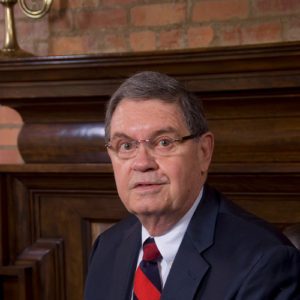
The Institution of The Fred Gray Legacy Award is certainly appropriate and well deserved. On March 13, my long-time friend, Fred D. Gray, Jr., was honored at the event in Montgomery when the first award was made. I can say without reservation that Fred is a giant among those who have fought the battle for civil rights in America. Having an award in his honor is a tribute to a great American.
The awards ceremony took place during the National Symposium put on by The Fred Gray Institute for Human & Civil Rights. I was selected along with Ayesha Bell Hardaway, Professor of Law at Case Western Reserve University School of Law, to speak at the awards presentation ceremony. That was a distinct honor which is greatly appreciated.
The initial award was made to Fred. There could not have been a more deserving person to receive the initial award. He has been an exhibit of foresight and vision, courage, dedication, perseverance, and toughness in the ongoing battle for civil rights in America.
Fred made it known early in his career that he would destroy racial segregation in our country whenever he found it. That is what he has done and continues to do.
The award ceremony honored the Justice System in our country. The system has been critically important in the battle to preserve the individual rights of the American people. Sometimes we fail to recognize the role of the federal district courts in the battle. Fred recognized early on that the courts were the place for him to fight for justice and civil rights for all people.
Lawyers and Judges have to do their part to make the judicial system work. There are many persons who have been involved in the ongoing battle for justice and civil rights. Lawyers like Fred Gray and Judges like Frank M. Johnson, Jr. are the reason the judicial system has worked to protect the constitutional rights of all people.
Fred has received numerous awards because of his tremendous efforts fighting on behalf of people, the highest being the Presidential Medal of Freedom awarded by President Biden in 2022. That award is the highest award a civilian can receive. It was quite appropriate that the first Fred Gray Legacy Award was presented to Fred. There is no single person more deserving.
SOCIAL MEDIA LITIGATION
First Social Media Bellwether Trial Ends With $6 Million Verdict
The first bellwether trial in the nationwide social media addiction litigation has concluded with a $6 million verdict. This case was watched closely by the media and by other companies in the social media business. A jury found Meta and YouTube liable for negligence and failure to warn, awarding $3 million in compensatory damages and $3 million in punitive damages.
The verdict marks a significant milestone in ongoing lawsuits alleging that addictive features built into social media platforms have caused serious psychological harm to children and teens. The jury’s finding on the punitive aspect is extremely significant.
The trial was part of the California Judicial Council Coordinated Proceedings (JCCP), a large group of coordinated cases pending in Los Angeles Superior Court. Bellwether trials are designed to test key evidence and legal arguments and often shape the direction of thousands of similar cases across the country.
Beasley Allen lawyers Joseph VanZandt (Co-Lead of the JCCP), Davis Vaughn, Jennifer Emmel, and Soo Seok Yang were on the trial team and played critical roles in trial preparation, handling fact and expert witnesses, law briefing, and evidentiary matters. Mark Lanier was the lead lawyer handling the trial supported by the Beasley Allen team.
About the Case
The lawsuit was brought on behalf of a young female who alleged that features intentionally designed to increase engagement on social media platforms contributed to significant mental health injuries. According to the claims, these platforms encouraged compulsive use while failing to adequately warn users and parents about the risks.
Alleged harms included:
- Depression and anxiety
- Body dysmorphia
- Suicidal ideation
- Other serious mental and emotional health conditions
These allegations mirror claims made in thousands of cases filed nationwide by families, individuals, and school districts.
Snapchat and TikTok Settle Before Trial
Just days before jury selection started, Snapchat reached a confidential settlement with the plaintiff. Shortly after that, another defendant, TikTok also settled right before the trial began. Those settlement amounts can’t be shared. The jury did not hear evidence against those companies. The case then moved forward against Meta (Facebook and Instagram) and YouTube. This case and its result show the growing legal pressure on major social media companies over their impact on youth mental health.
The Findings
Because of their significance, we will set out exactly what the jury found in the trial.
Meta:
Negligence
- Was Meta negligent – YES
- Was Meta’s negligence a substantial factor in causing harm to KGM? YES
Failure to Warn
- Did Meta know design was dangerous? YES
- Know that users would not realize the danger? YES
- Did meta fail to warn of danger? YES
- Would reasonable platform have warned? YES
- Was Meta’s failure to warn substantial factor in causing harm to KGM? YES
YouTube:
Negligence
- Was YouTube negligent? YES
- Was YouTube’s negligence a substantial factor in causing harm to KGM? YES
Failure to Warn
- Did YouTube know design was dangerous? YES
- Know that users would not realize the danger? YES
- Did YouTube fail to warn of danger? YES
- Would reasonable platform have warned? YES
- Was YouTube’s failure to warn substantial factor in causing harm to KGM? YES
Why This Verdict Matters
This verdict is the first result from a bellwether trial in the social media addiction cases. It shows how juries may react when they hear evidence that social media design choices can harm young users. Thousands of similar cases are now pending in California state court. More lawsuits are also moving forward in federal court as part of a Multi‑District Litigation (MDL) in Northern California. Future bellwether trials are already scheduled in both the JCCP and MDL for summer of 2026
Our Role in Social Media Addiction Litigation
Beasley Allen continues to actively represent individuals and families harmed by addiction to social media platforms.
Our firm also represents school districts seeking compensation for costs incurred in addressing student mental health challenges tied to excessive social media use, including counseling, intervention programs, and additional staffing needs.
Beasley Allen has a long history of holding powerful corporations accountable when profits are placed ahead of public safety—especially when children are harmed.
Meta Hit With $375 Million Verdict Over Alleged Harm To Teen Users
A New Mexico jury has ordered Meta to pay $375 million after finding the company engaged in unfair and unconscionable practices by concealing the mental health risks its social media platforms posed to underage users.
The verdict followed a 6-week trial and less than a day of jury deliberations. The jury awarded $187.5 million on each of the two claims, applying the maximum civil penalty per violation across an estimated number of teen users in the state. Thus, the verdict will be shared by a large number of individual claimants.
The New Mexico attorney general argued that Meta prioritized user engagement over safety, failed to adequately protect minors from harmful content, and publicly downplayed risks that internal communications showed the company understood. Meta denied the allegations and said it plans to appeal.
New Mexico is represented by Donald Migliori, Linda Singer, David Ackerman and Michael Pendell of Motley Rice LLC and Raúl Torrez of the New Mexico Office of the Attorney General.
The case is New Mexico v. Meta Platforms Inc. et al., case number D-101-CV-
2023-02838, in the First Judicial District Court of New Mexico. Read more at:
Source: Law360
Alabama Has A Pending Case In A Montgomery Circuit Court
Beasley Allen and Prince Glover Hayes represent Attorney General Steve Marshall on behalf of the State of Alabama in litigation against Social Media giant TikTok. The State accuses TikTok of designing a web app that not only targets children and teenagers (the app is predominately used by them) but actively harms them. The app bombards its users hour after hour with harmful content – content that promotes depression, eating disorders, self-harm, and drug use. It is also addictive. The allegations in this case are identical to the conduct of the defendants in the two cases in California and New Mexico.
Teen minds are particularly susceptible to the harmful content on TikTok and the addictive design of the app. This has led to the well documented rise in teen depression and other mental health issues in Alabama and the rest of the United States. Attorney General Marshall contends TikTok must pay for the treatment for the harm it has inflicted on Alabama’s youth.
The case is set for trial in September of 2026 before Judge Monet Gaines in Montgomery County Circuit Court. The State of Alabama, is represented in its suit against TikTok for these aforementioned harms by Beasley Allen lawyers Rhon Jones, Jeff Price, Elliot Bienenfeld, Gavin King, Elizabeth Walden, Connor Chase and Will Jones, along with Prince Glover Hayes lawyers Josh Hayes, Matt Glover, and Blake Williams. Brad Chynoweth, Michael Dean, and Lindsay Barton from the Attorney General’s Office are also lawyers for the state in the case.
Senator Katie Britt Speaks Out On Alabama’s TikTok Litigation
Recent public statements by U.S. Senator Katie Britt provide substantial reinforcement for the State of Alabama’s claims in its ongoing litigation against TikTok. Senator Britt has repeatedly emphasized that the nation’s youth mental health crisis is inextricably tied to rising social media use among children and teenagers, highlighting internal TikTok documents showing the platform knowingly designed features that promote addiction within minutes and expose minors to serious cognitive and emotional harms.
The Senator has further condemned TikTok for prioritizing profits over the wellbeing of young users, noting that the company’s own research acknowledges negative effects such as diminished analytical skills, impaired memory formation, reduced empathy, and increased anxiety among minors. Senator Britt has also stressed that TikTok continues to implement ineffective safety tools despite knowing that the vast majority of minors regularly use the platform, demonstrating willful disregard for child safety—an argument that closely parallels Alabama’s allegations.
In congressional hearings, Senator Britt has stated that social media companies prey on children because increased youth engagement drives revenue, underscoring the profit driven nature of the harm. Her bipartisan legislative efforts addressing age restrictions, algorithmic design, privacy protections, and mental‑health warnings underscore that these risks are widely recognized across political lines. Taken together, Senator Britt’s public remarks bolster Alabama’s position that TikTok knowingly endangered minors, ignored clear evidence of harm, and failed to implement meaningful safeguards, providing the State with authoritative public support for its claims.
The State of Alabama is represented in its suit against TikTok for its wrongdoing by Beasley Allen lawyers Rhon Jones, Jeff Price, Elliot Bienenfeld, Gavin King, Elizabeth Walden, Connor Chase and Will Jones, along with Prince Glover Hayes lawyers Josh Hayes, Matt Glover, and Blake Williams. Brad Chynoweth, Michael Dean, and Lindsay Barton, lawyers from the Attorney General’s Office, are also on the case.
Judge Finds Meta’s Conduct Was Intentional
A Delaware state court has ruled that Meta Platforms Inc.’s insurers do not have a duty to defend the company against thousands of lawsuits accusing it of intentionally designing social media platforms to be addictive to adolescents.
Delaware Superior Court Judge Sheldon K. Rennie found that the lawsuits against Meta allege deliberate business decisions—not accidental conduct—which places the claims outside the scope of Meta’s insurance coverage. The ruling grants partial summary judgment to insurers including The Hartford and Chubb.
Judge Rennie explained that the complaints clearly allege Meta intentionally designed youthfocused platforms to maximize engagement through algorithms, knowing that these choices could lead to addiction and serious harm. Because the alleged injuries were a foreseeable result of those decisions, the court rejected Meta’s argument that the claims were based on negligence or accidental harm.
The lawsuits, which include claims of depression, eating disorders, sleep problems, suicidal behavior, and other serious mental health injuries, are part of large, coordinated proceedings in California state court and federal multidistrict litigation.
The court also rejected Meta’s attempts to delay or dismiss the insurance coverage dispute, ruling that speculation about future amendments to the lawsuits was not enough to avoid summary judgment. Judge Rennie further denied Meta’s request to pause the case or move it to California, finding no legal basis to do so.
The decision marks a significant development in the broader social media litigation, reinforcing courts’ recognition that the claims center on intentional platform design choices rather than unintended consequences.
The moving insurers are represented by lawyers from Ruggeri Parks Weinberg LLP, Bayard PA, Holwell Shuster & Goldberg LLP, Stamoulis & Weinblatt LLC, Balaguer Milewski & Imbrogno LLP, Skarzynski Marick & Black LLP, Cooch & Taylor PA, BatesCarey LLP, Kennedys CMK LLP, Margolis Edelstein, Tressler LLP, Phillips McLaughlin & Hall, Ropers Majeski PC, Kaufman Dolowich LLP and Musick Peeler & Garrett LLP.
The case is Hartford Casualty Insurance Co. et al. v. Instagram LLC et al., case number N24C-11-010, in Delaware Superior Court.
Source: Law360
The Beasley Allen Social Media Litigation Team
Joseph VanZandt, who leads our firm’s Social Media Litigation Team, is co-lead counsel for the Judicial Council Coordination Proceeding (JCCP) for the plaintiffs in California State Court. Joseph is also a member of the Plaintiffs Steering Committee in the MDL, helping lead the federal social media multidistrict litigation. Lawyers on the Beasley Allen Social Media Litigation Team are set out below.
Social Media Litigation Team
Joseph VanZandt (who heads the team), Jennifer Emmel, Suzanne Clark, Clinton Richardson, Sydney Everett, Davis Vaughn, Soo Seok Yang, James Lampkin, Seth Harding and Slade Methvin. Andy Birchfield, who heads our Mass Torts Section, also works with the team.
If you need more information on the social media litigation or need help with a case, contact Melissa Prickett, Director of our Mass Torts Section, and she will have a lawyer on the Litigation Team contact you.
ONGOING TERMINIX LITIGATION
Tackling Termites: $25.8 Million Award Against Terminix
The Archdiocese of Mobile has been a steady presence in Mobile, with the Cathedral-Basilica of the Immaculate Conception standing tall since the mid-1800s. The Archdiocese owns several buildings downtown that are used for worship, community involvement, residences, and offices. These buildings serve not only as places of worship and community, but some are historical and community landmarks.
What could not be seen from the outside was the damage taking place within. Despite having a termite protection plan through Terminix, termites caused serious structural harm across several Archdioceseowned properties, and that damage continued to worsen without proper intervention.
The hidden damage led to a legal dispute that was tried through the arbitration process where an arbitration panel awarded $25,878,087.84, including $8.6 million in punitive damages, against Terminix International Company, L.P.
Beasley Allen, working in concert with Campbell Law represented the Archdiocese of Mobile throughout the proceedings. The arbitration involved multiple properties in downtown Mobile and was handled in several phases. After reviewing the evidence, the arbitration panel ruled in favor of the Archdiocese, holding Terminix responsible for the damage.
A Pattern of Failure, Not an Isolated Incident
The case focused on ongoing problems with termite inspections and treatment services. Evidence presented during arbitration showed that termite activity was allowed to continue and worsen across several properties over many years, even though service agreements were in place.
This was not a matter of one missed inspection or a simple mistake. Instead, the arbitration revealed repeated failures that led to serious structural damage. After reviewing the evidence, the arbitration panel determined that these failures were significant enough to support an award of both compensatory and punitive damages.
The punitive damages reflected the seriousness of the conduct and reinforced the importance of accountability in the pest control industry.
Two Experienced Trial Teams Working Together
The Archdiocese was represented by a Beasley Allen trial team that included Lance Gould, Tyner Helms, Jessi Haynes, and Lauren Miles, along with Campbell Law, led by Tom Campbell. Lance and Tom served as colead counsel in this important case. Tom Campbell with Campbell Law is widely known for his vast experience in termite and pest control litigation. The two firms worked closely together throughout the arbitration process in the case.
Their collaboration reflects a shared focus on holding large companies accountable when their actions — or failures to act — cause harm to property owners, institutions, and the communities they serve.
What Property Owners Should Do If They Suspect Termite Damage
If you believe your business, church, or commercial property has suffered termite damage, especially while under an active pest control contract, taking the right steps early can make a critical difference:
- Preserve all contracts, inspection reports, and communications
- Obtain an independent termite inspection
- Avoid authorizing major repairs unless absolutely necessary
- Seek legal advice if damage occurred during an active service agreement
These steps can help protect your rights and preserve key evidence.
TALC LITIGATION
Talc Suppliers’ Joint Bankruptcy Plan Pending Court Approval
As you may recall, after being subject to multiple jury verdicts in early talcum powder trials, talc supplier Imerys Talc America filed for Chapter 11 bankruptcy in February 2019. In 2021, Cyprus Mines Corporation (another talc mining company that supplied J&J with talc during a different time period) filed for Chapter 11.
In November 2024, Imerys and Cyprus filed joint bankruptcy plans that, if approved, would create a compensation fund for women diagnosed with ovarian cancer after using Johnson & Johnson talcum powder products. Women with talc claims voted to approve the plans.
In April 2025, the confirmation hearing for the joint bankruptcy plans began. On the fifth day, the hearing was put on hold due to issues with foreign claims. Over the ensuing months, Imerys and Cyprus filed amended plan documents to attempt to resolve those issues.
The plan confirmation hearing resumed on February 2, 2026, and concluded on February 6, 2026. Judge Silverstein indicated that she would issue a written ruling and opinion. There has been lots of activity recently in the J&J litigation. We will report on all aspects in the May issue.
Beasley Allen Talc Litigation Team
The ongoing battle with Johnson & Johnson (J&J) continues. Beasley Allen took on J&J in the very beginning. I tried the first case in St. Louis in 2016 and our firm has been involved since that time. While J&J’s three fraudulent bankruptcy attempts delayed justice for thousands of victims, our lawyers refused to back down. Beasley Allen lawyers will continue to fight this battle in the right way and for the right reason to the very end. Justice will ultimately be served for the thousands of J&J victims and their families.
This has been a tough battle, but it is a critically important and necessary one. Beasley Allen will continue its battle with J&J. Our clients’ best interests have been and continue to be at the top of our list of priorities.
CAMP LEJEUNE LITIGATION
An Update On The Camp Lejeune Litigation
During a recent status hearing, Magistrate Judge Robert Jones received updates from the parties on several ongoing matters in the Camp Lejeune litigation. The Plaintiffs’ Leadership Group (PLG) and the Department of Justice (DOJ) are continuing to conduct expert depositions on damages, offsets, and lifecare planning, with all depositions set to be completed within the next few weeks. The DOJ has proposed a schedule for Daubert and summary judgment motions, and PLG indicated general agreement, with the parties working toward submitting a joint proposed schedule.
The court also addressed questions surrounding pretrial deadlines. DOJ requested firm deadlines for supplemental damages discovery and expert opinions, along with procedures for a possible Phase 1 evidentiary hearing. PLG argued the request is premature because trial dates have not yet been set and emphasized that such deadlines should align with those dates under applicable rules.
Judge Jones confirmed that Fed. R. Civ. Pro. Rule 16 will govern pretrial deadlines. Additionally, the court reviewed compliance with a prior order requiring plaintiffs to provide identifier information through Rubris. Nearly all plaintiffs have now complied, with PLG continuing to follow up with the few remaining individuals.
The court heard argument on PLG’s motions to strike supplemental and allegedly
untimely expert reports from two of the DOJ experts. After questioning both sides, the court took the motions under advisement and will issue a written order. Overall, the hearing reflected steady progress in pretrial preparation, ongoing coordination between the parties, and the court’s continued focus on managing the complex procedural landscape of the litigation.
The court also recently released an order ruling on multiple motions from both parties. The PLG sought to reserve expert admissibility determinations for Phases 2 and 3 until the time of trial, arguing this approach would be more efficient in a bench trial setting and would accelerate progress toward bellwether trials. The court agreed in part, concluding that judges have discretion to reserve Rule 702 (Daubert) determinations until trial and noted the large volume of pending motions and the reduced risk of jury confusion in bench trials within its reasoning.
The court rejected the defendant’s renewed request for an en banc evidentiary hearing intended to establish historical water contamination facts across the entire 35-year statutory period. The court found that such a hearing would function as an unauthorized and impracticable bifurcated trial, noting that coordinating four district judges as joint factfinders would create significant procedural challenges. Instead, the court emphasized the value of resolving Phase 1 factual issues through individual bellwether trials, which would produce varied but useful data points to guide global settlement discussions.
The court also declined the PLG’s request to prioritize kidney cancer cases as the first Track 1 disease group for bellwether trials. It determined that the existing Pretrial Scheduling Order does not support disease specific prioritization and that no good cause exists to modify the schedule so late in the litigation process.
Beasley Allen Camp Lejeune Litigation Team
The following Beasley Allen lawyers are members of our Camp Lejeune Litigation Team: Jeff Price, Ryan Kral, William Sutton, Tucker Osborne, Elizabeth Walden, Travis Chin, Saima Khan, Wesley Merillat, Miland Simpler, Khadiga Carr, Will Jones, Connor Chase, Sarah Grace Strength, and Rylee Buzbee.
Rhon Jones, who heads our Toxic Torts Section, is heavily involved in all aspects of the litigation, including serving on the Resolution Committee. Rhon is also in leadership as a member of the Plaintiff’s Executive Committee.
SEXUAL ASSAULT LITIGATION
From Harassment To Assault: Where Employment Law And civil assault claims Intersect
Sexual harassment and sexual assault are often analyzed as separate legal issues, one governed by employment statutes and the other by traditional tort law. Many civil cases arise at the intersection of both. Harassment in the workplace can be a warning sign that precedes assault, and how an employer responds, or fails to respond, can be just as significant as the misconduct itself.
In employment settings, early harassment establishes notice, foreseeability, and patterns of tolerance. What may initially appear to be a hostile work environment claim can later become critical evidence supporting civil assault, negligent supervision, or negligent retention claims when misconduct escalates. The legal focus shifts from isolated behavior to institutional decisionmaking.
These cases often involve overlapping causes of action. Statutory employment claims center on employer conduct (investigations, discipline, retaliation, and termination decisions), while tort claims address personal harm and broader civil accountability. When viewed together, they frequently tell a more complete and compelling story than either framework alone.
Employer liability is rarely limited to the individual actor. Employers may face exposure where they ignored prior complaints, minimized warning signs, allowed known boundary violations to continue, or retaliated against those who reported concerns. Retaliation, in particular, often becomes the clearest evidence of systemic failure, even when employers dispute the underlying misconduct.
Courts are also increasingly informed by trauma science, recognizing that delayed reporting and continued workplace interaction are common responses to powerimbalanced abuse. These realities affect both employment and assault claims and must be addressed thoughtfully in litigation.
When harassment escalates to assault, treating the case as purely “employment” or purely “personal injury” risks missing the full scope of liability and damages. Early issuespotting and coordinated handling are essential to ensure survivors have access to meaningful remedies and institutions are held accountable for the choices they made long before the harm occurred.
GAMING LITIGATION
The Evolution Of Gambling: Part Three
Previously we have written about the class action lawsuits our firm has filed against online casinos in Alabama, Mississippi, Arkansas, Ohio, Georgia and Oregon. These lawsuits not only target unlawful online gambling operations, but also invoke gambling loss recovery statutes, which are designed to protect consumers by enabling them to reclaim money lost to illegal gambling activities.
Gambling loss recovery laws are not a modern invention. Their origins trace back more than three centuries to England, where Parliament enacted what became known as the Statute of Anne in 1710. The statute was adopted in response to widespread concern that excessive and unregulated gambling was causing financial ruin for individuals and families. Rather than enact criminal penalties, the statute allowed gamblers to sue to recover money lost in illegal wagers.
Recognizing that illegal gambling causes real financial harm not just to individual players, but to families and communities, states across America have enacted loss recovery statutes, giving people a legal right to recover money lost through unlawful gambling activity. These statutes are rooted in the simple idea that gambling operations which violate state law should not be allowed to profit from that conduct. When gambling is illegal, the law allows the person who lost money placing bets to bring a civil claim to recover those losses.
Timing is also critical. Gambling loss recovery statutes impose deadlines for filing suit. In many states, a person must act within six months from the date of the loss. These time limitations mean that people who suspect they may have claims must evaluate their rights quickly.
Some states extend these protections even further by allowing thirdparty recovery. If the gambler does not bring a claim, certain statutes permit another person, often a spouse, parent, or child, to sue to recover those losses instead. In some states, an unrelated third-party may recover the gambling losses. These provisions recognize that illegal gambling affects more than just the individual placing the bets and can create tremendous financial strain on the entire household and the community.
Taken together, gambling loss recovery statutes provide an important safeguard for consumers. They offer a path to recover money lost to unlawful gambling schemes, while reinforcing the broader principle that gambling operators must follow the law. As gambling continues to move online and take new forms, these statutes remain a powerful tool for accountability.
The lawsuits seek to recover gambling losses for affected individuals, utilizing each state’s gambling loss recovery laws. Plaintiffs contend that the defendants are exploiting legal loopholes to facilitate unlawful gaming activities and avoid paying taxes within these states.
The plaintiffs/class members are represented by Beasley Allen lawyers Dee Miles, Mitch Williams and Trent Mann. We will keep our readers informed on developments in this important litigation.
Holding Roblox Accountable: Parents Push Back Against Arbitration In Child Exploitation Cases
A growing number of parents are suing Roblox, alleging that the company failed to protect minor children from adult predators on its platform. These lawsuits, now consolidated in the Northern District of California, describe a disturbing pattern of grooming and exploitation that starkly contradicts Roblox’s public assurances about child safety.
Faced with mounting allegations, Roblox has responded by shifting its focus to procedural maneuvering. The company is attempting to steer many of these cases into arbitration, an effort that courts have thus far been reluctant to accept.
One California court recently rejected Roblox’s motion to compel arbitration in a case involving allegations of adult predation on the platform. The parent who brought that case is now urging the Ninth Circuit to affirm the ruling, arguing that he never agreed to arbitrate any dispute with the company. His minor child was the one who played Roblox and made in-game purchases, and those purchases, he contends, do not constitute assent to a binding contract with Roblox.
It’s further contended by the parent that Roblox waived any right to arbitrate since the company only turned to arbitration after spending months trying — and failing — to get his claims dismissed at the pleading stage. Courts have repeatedly rejected this kind of forum-switching, particularly when a party turns to arbitration only after losing ground in court.
Beasley Allen lawyers remain committed to holding Roblox accountable for the harm caused by its failure to protect young users. Our litigation team continues to actively investigate cases involving child sexual exploitation and abuse linked to Roblox’s defective design features and data practices.
VIDEO GAME ADDICTION LITIGATION
When Video Games Become A Problem: What Research Says About Young Adults
Video games are a fixture of modern life—for most people, a healthy way to relax and connect with others. But for a growing minority of young adults between 18 and 35, gaming can cross into something more harmful. Researchers call this Internet Gaming Disorder: a pattern where gaming becomes difficult to control and starts interfering with work, school, and relationships. Health professionals recognize it as a behavioral addiction when it significantly disrupts daily functioning.
A review of data from nearly 150,000 young adults across dozens of global studies found that problematic gaming is not rare. Young adults experience gaming-related difficulties more often than the broader adult population. The problem appears at similar rates across North America, Europe, and Asia—likely a reflection of the shared platforms and online communities that connect players worldwide. Research also consistently finds that men are affected more often than women, though women are by no means immune. Problematic gaming is often accompanied by anxiety, depression, educational impacts and attention difficulties.
Hundreds of lawsuits filed across the United States allege that major gaming companies deliberately built addictive features into their products to maximize engagement and revenue, particularly among young users. Plaintiffs point to tactics like variable reward schedules, time-limited events, and virtual currencies that obscure real spending, arguing these mechanics exploit the developing impulse-control systems of children and teenagers.
There have been a significant number of cases filed in California as well as several federal court jurisdictions around the country. As discovery is ongoing and the science continues to develop, Beasley Allen lawyers continue to investigate these cases in order to hold these defendants accountable.
MOTOR VEHICLE AND TRUCKING LITIGATION
Lawyers In Mobile Office Investigate Seat Belt Failure
Lawyers in the Beasley Allen Mobile office are investigating a wrongful death case after a man was ejected from his vehicle after being hit by another vehicle, causing his vehicle to rollover. Despite wearing his seatbelt, the occupant was ejected after the seat belt failed.
The general perception of the public is that a buckled seatbelt will remain buckled until a person unbuckles it; a person wearing their seatbelt will not be ejected from the vehicle; a person wearing their seatbelt will have bruising and marks indicative of seatbelt usage in every crash. Most jurors likely agree with these generalizations.
The average law enforcement officer also likely believes these generalizations hold true and will nearly always indicate a person was unbelted without such evidence. However, this is not always the case.
Seatbelts can fail in many ways. One of the most common ways is due to inertial unlatching of the buckle. As early as the 1960’s, automobile makers knew seatbelts could unlatch through inertial forces. An inertial release is a simple function of physics. A seatbelt buckle can release when the buckle is impacted, generating an acceleration pulse. This acceleration pulse to the buckle puts the buckle into motion, while the release button remains at rest. If the acceleration is great enough and for long enough, it can overcome the counteracting force from the spring on the release button and open.
Although this sounds like a complex series of events, it is a relatively simple function of physics. Unfortunately, it is extremely difficult to prove that a seatbelt buckle released due to inertia in an accident as little physical evidence is left to prove your case. However, electronic data recorders in modern vehicles record whether occupant belts were in use at the time of a collision.
Just because an occupant was ejected in a rollover, or they do not have bruising consistent with seatbelt use after an accident, do not assume that they were not wearing their seatbelt. Inertial release is a real problem and the documents needed to establish a strong case are available. Talk to the victim if he or she survives and witnesses about whether victims were wearing their seatbelt. Ask about prior seatbelt use and always examine the vehicle, seatbelt, and download the EDR.
A Deadly Crash, Then Business As Usual: How Trucking Oversight Gaps Are Failing The Motoring Public
In June 2021, Mamuye Takelu caused a fiery crash on I-65 near Greenville, Alabama that killed 10 people, including 8 children (ages 3-17) riding in a Tallapoosa County Girls Ranch van. Takelu was driving too fast for the weather conditions when he plowed into the back of the van at a high rate of speed. The company he was driving for, Asmat Express, quickly shut down after the crash, and Takelu was never criminally prosecuted for his actions.
Three years later, Takelu opened a new trucking company called E&V Login Trucking LLC and obtained USDOT number 4233479 to haul rock, sand, and gravel intrastate. There was no process in place to flag Takelu’s application as high-risk or to connect him to a mass-fatality crash. Since Takelu’s CDL was not revoked after he contributed to 10 fatalities, he was allowed to go right back to work. In October 2025, while driving a dump truck for his new company, Takelu was involved in another crash that injured 2 people in Georgia. Still, there is nothing to prevent Takelu from continuing to operate heavy trucks on any highway.
Takelu’s ability to go from a mass-fatality crash to a new USDOT number with no meaningful screening is not an isolated failure — it is a symptom of a broader regulatory blind spot. The FMCSA is woefully understaffed, and new entrant safety audits are typically conducted over the phone. One of the clearest examples of this oversight gap is the phenomenon of “chameleon carriers,” where unsafe operators shed one legal identity and reappear as another before regulators, shippers, and the public can connect the dots. This deceptive practice enables them to sidestep regulatory scrutiny, fines, or restrictions, while continuing to operate in a manner that poses significant threats to public safety. Chameleon carriers are a danger to the public and the transportation industry as a whole.
Hypothetical Illustration: Trucking Company A has received so many persistent and critical safety violations in its DOT inspections that the DOT performs a safety audit. The safety audit reveals that Trucking Company A has allowed and encouraged its drivers to falsify logs, drive fatigued, and drive trucks that have not been properly maintained.
The DOT is threatening to give Trucking Company A an unsatisfactory rating, which will impact its ability to haul for shippers and brokers. Instead of working to change its unsafe practices, Trucking Company A shuts down and voluntarily relinquishes its motor carrier authority.
However, just one month later, Trucking Company A re-opens as Trucking Company B using the previous owner’s wife’s name on official paperwork (even though the same person is still running B and using a PO Box instead of the same physical address.
Trucking Company B continues to use the same equipment, drivers, and unsafe practices. Trucking Company B is operating as a chameleon carrier.
Trucking Company B continues to use the same trucks and drivers under a new DOT number. The motoring public would have no way of knowing Trucking Company B was just on the verge of being shut down due to safety violations. Brokers and shippers continue to use Trucking Company B because its chameleon carrier scam makes its record appear like a clean slate even though these folks should know they are still dealing with the same people under a new name.
Trucking Company B’s unsafe business practices cause a fatal crash when the brakes on its poorly maintained truck fail. A post-crash investigation reveals the driver had been sleeping for only 4 hours each night in the five days before the crash and falsifying his logs to cover it up. Not only can Trucking Company B be held liable, the broker and the shipper can also be held liable for allowing an unsafe chameleon carrier to haul their property.
As demonstrated by the hypothetical, the most immediate danger posed by chameleon carriers is their disregard for road safety. The United States Governmental Accountability Office found, in a report to Congress, that chameleon carriers are three times more likely to be involved in a severe crash — one in which there was a fatality or injury. Chameleon carriers not only endanger lives but also distort the economic landscape of the transportation industry. By avoiding fines and regulatory compliance costs, they gain an unfair advantage over law-abiding competitors.
How can we stop these deceptive and unsafe trucking companies?
First, the FMCSA must utilize the systems and enforce the regulations already in place. The FMCSA already has a screening tool called the Application Review and Chameleon Investigation (ARCHI) program that is supposed to screen new applicants to see if their information matches that of existing carriers.
However, bad actors can evade screening by falsifying applications; using P.O. Boxes or UPS Store addresses; or applying under a family member’s name and SSN. In addition, the FMCSA has authority to place chameleon carriers already in operation out of service pursuant to 49 CFR § 386.73 if it finds that the carrier reincarnated to avoid being linked with a negative compliance history.
There are over 2,000,000 motor carriers but only 1,100 FMCSA employees to enforce the regulations. To make matters worse, the Trump administration reduced the FMCSA workforce by nearly 14% in 2025. With such an understaffed agency, around 94% of motor carriers have never had a compliance review where its chameleon carrier attributes could be discovered.
Second, brokers and shippers must stop giving chameleon carriers and other unsafe truckers business. Brokers and shippers are in a better position than the government to know who they are doing business with on a daily basis. They can readily verify carrier credentials and cross reference their internal records to identify when a new carrier is really masquerading as an old unsafe carrier.
When brokers and shippers continue to encounter the same people using different DOT numbers, they should quit using them and report them to the FMCSA and to industry watchdog lists. Brokers and shippers who put these unsafe carriers on our highways should be held accountable for not properly vetting them.
Yet, just a few weeks ago, brokers and shippers asked the U.S. Supreme Court to grant immunity to them for negligently hiring unsafe carriers pursuant to an economic regulation called the Federal Aviation Administration Authorization Act (F4A). In other words, even if a broker knows it is hiring a chameleon carrier — which is 3 times more likely to cause a catastrophic crash — or even if that broker hires Takelu — who has already killed 10 people — that broker thinks it should never be held accountable.
Ultimately, preventing the next tragedy will require meaningful action from regulators and a renewed commitment from brokers and shippers to vet the carriers they place on our roads. Beasley Allen lawyers in our Personal Injury & Products Liability Section have extensive experience handling trucking and catastrophic injury cases, and our attorneys have seen firsthand how preventable safety failures—and negligent carrier selection—can change families forever.
As the courts consider whether brokers can claim broad federal preemption as a shield from negligence claims, Beasley Allen will continue monitoring developments closely and will keep the public updated on the broker preemption issue and what it means for highway safety and accountability.
Tesla Sued Over Alleged Defective Door Handle
A proposed class action lawsuit filed in California federal court alleges that 2023–present Tesla Model S vehicles contain a dangerous design defect involving their electronically actuated door handles.
Plaintiff Robert L. Hyde claims in the lawsuit that during foreseeable emergencies such as crashes, fires, or power failures, the door handles may fail to operate, potentially trapping occupants inside the vehicle and preventing first responders from gaining access.
According to the complaint, both the interior and exterior door handles rely on electronic power, and the rear doors’ manual release is a concealed cable located beneath carpeting under the rear seats—an option the lawsuit alleges is not reasonably discoverable or usable during a traumatic emergency.
The plaintiff asserts Tesla was aware of these risks through prior incidents and consumer complaints but failed to warn buyers or correct the design. He seeks to represent purchasers and lessees of affected Model S vehicles, alleging economic harm, consumer protection violations, and fraudulent concealment, and is requesting class certification, damages, and injunctive relief.
Source: Top Class Actions
Should Driverless Big Rigs Come To U.S. Highways?
The American people are all aware of the huge number of large trucks on our highways. But Beasley Allen lawyers are fully aware of the serious safety risks involving trucks and the tremendous harm caused to the public. Many of the problems are the result of all too many unqualified drivers.
Now we are all seeing a major change in the system. This change could result in more and different safety risks. I am not sure the technology has reached a level that addresses fully the safety issues.
But the reality is driverless semitrucks are no longer a future idea — they are already being tested on American highways. Several companies predict that fully autonomous big rigs could begin regular commercial operations as soon as next year. Wider use is expected by 2027. It appears that Texas has been a target.
It has been reported that one of the first major tests took place on Interstate 45 between Dallas and Houston. A trucking company completed more than 1,200 miles of driverless deliveries for large customers like FedEx and Uber Freight. Those runs were briefly paused so a person could be placed back in the cab. Testing then continued with a human observer on board.
The trucking industry is promoting driverless technology as a major turning point. No one questions that paying drivers accounts for a large share of trucking costs. Removing that expense is said to possibly save billions of dollars in the industry. There may well be a driver shortage and especially a shortage of qualified trained drivers. But it’s being said that cost savings — not labor gaps — are the main reason companies are pushing automation.
A number of companies appear to be racing to be first in this area. Reportedly, one company plans to expand from a small number of trucks to hundreds by the end of this year, with thousands expected by 2027. Others are already running autonomous trucks on long interstate routes with safety drivers, and some are operating fully driverless trucks on rural roads, such as routes serving oil and mining sites.
Texas has become the center of this movement because of its long highway routes, favorable weather, and supportive regulations. Reportedly more companies plan to launch autonomous trucking operations in the state before expanding elsewhere.
There are major concerns relating to this change in the industry. One major issue is “phantom braking.” That’s where automated systems mistakenly detect obstacles and stop suddenly. While newer systems using radar and lidar are said to have reduced this risk, experts warn it has not been fully solved. Because semitrucks are so large and heavy, sudden braking can lead to serious accidents.
There are also safety concerns about remote monitoring. Some experts say relying too much on remote human operators could create delays and safety risks, especially if communication signals are weak. Industry leaders argue that remote systems should be used mainly for monitoring, not direct control.
Beasley Allen lawyers handling trucking accident litigation are greatly concerned over the safety risks. But it appears that driverless big rigs will soon become a regular sight on American highways. There was an article in The New York Times recently that discusses the strong push by the industry and explains the movement toward driverless trucks in detail. We will continue to monitor this matter very closely and will write more in future issues.
Video Evidence In Heavy Truck Cases
The old adage “a picture is worth a thousand words” proves even more true when the picture is in the form of video evidence. With emerging technologies, video cameras are located on many devices today. In the heavy truck industry, many companies are equipping their fleets with video-based safety programs. These systems interface with other onboard monitoring systems as well as the engine to provide information to the trucking company regarding the safety (or lack thereof) of its drivers through video evidence and analytics.
These systems use these data sources to determine a critical event and begin recording video. Such critical triggering events include, but are not limited to: following too closely, speeding, hard braking, swerving, lane changes, g-force changes, rollover stability, and impacts. Following a triggered event, the recorded video of an event is sent to the company providing the safety program for analysis and e-mailed to the trucking company for review.
Thus, a trucking company can be provided evidence in real time of its driver operating the vehicle in an unsafe manner. This type of video evidence is not only critical in showing the driver acting negligently or wantonly at the time of the crash which harmed your client, but also proving the trucking company had notice of a driver’s unsafe driving habits.
These systems can include forward facing cameras, in cab cameras, as well as those on the sides of the vehicle. Such recorded video provides a jury a clear understanding of exactly how the crash occurred because they see it happen.
The systems can also provide more than just video evidence. They also provide analytics on every driver, a driver score card, trends, maintain a company portal with information on coaching risky drivers and provide reports that focus on both driving and coaching performance.
SmartDrive®, Samsara, and Zonar Systems are some examples of commercially available video-based safety programs. It is important to quickly determine what type of on-board equipment the trucking company has equipped its fleet with and the capabilities of such equipment. Letters requesting that the evidence be preserved should be immediately sent not only to the trucking company, but also to the provider of the video-based safety program. Often the videos are saved by the commercial provider for a specified time period before they are discarded.
In addition to on-board video recordings of the crash between the heavy truck and your client’s vehicle, body-cam video recordings of responding law enforcement personnel can be key evidence and is often overlooked. Such video evidence can provide a clear picture of the behavior of the truck driver following the crash, your client’s injuries, as well as the crash scene. This video evidence can be particularly damaging if the truck driver is criminally charged. For instance, if the driver is charged with driving while under the influence.
Body-cam video recordings will capture field sobriety tests, searches performed of the cab of the vehicle, as well as the condition of the truck driver. This video evidence will provide the jury a clear indication of the level of inebriation of the truck driver, further establish liability and add tremendous value to your case.
In a recent trucking case handled by Beasley Allen, this type of evidence proved critical in establishing liability and providing visual evidence of the crash and the condition of the driver following the crash. The truck driver at issue had been previously reprimanded for hard-braking incidents captured by the trucking company’s video-based safety program. Moreover, on the day of the crash, the truck driver had two triggering hard-braking incidents, which would have been sent to the trucking company, yet continued to drive and ultimately caused a crash resulting in severe injuries.
The entire crash, with sound, was video recorded by the on-board camera. The body-cam videos obtained from the responding law enforcement agency provided a clear visual of the condition of the driver at the time of the crash. The driver was visibly intoxicated, and the video evidence showed the cab of his tractor with remnants of alcoholic beverages.
While documents from the trucking company or responding law enforcement personnel are used to establish liability in trucking cases, the video evidence that is available with emerging technologies can be used to further enhance liability and provide a clear picture of what happened at the time of the crash.
Uber Driver Liability
Rideshare services like Uber have changed how people get around these days, but they have also created new challenges when serious crashes occur. Unlike traditional taxi companies, Uber relies on drivers classified as independent contractors, not as employees. That distinction plays a central role in accident cases and often complicates the question of who is legally responsible when someone is injured or killed.
Liability in an Uber crash usually depends on the driver’s status in the app at the moment of the accident. If the app is off, Uber typically denies responsibility and points to the driver’s personal insurance. If the app is on but no ride has been accepted, limited coverage may apply. Once a ride is accepted or a passenger is in the vehicle, Uber’s larger commercial policy is usually available. These shifting insurance “periods” are not obvious to injured passengers, pedestrians, or other drivers—and disputes over which policy applies are common.
Uber’s insurance structure can leave injured people caught between insurers, each arguing that another policy should pay first. Personal auto insurers often deny coverage once rideshare activity is involved, while Uber’s coverage is tightly tied to app data and timing. For serious injuries, delays and denials can have real consequences, especially when medical bills and lost income are mounting.
Although Uber works hard to distance itself from crashes, it is not always shielded from accountability. Claims may arise from the company’s own conduct, including how it screens drivers, monitors safety issues, or designs systems that influence driver behavior. Internal data such as GPS records, trip logs, and app activity can be critical in showing how a crash occurred and which coverage applies.
Uber accident cases are rarely straightforward. They demand early investigation, fast evidence preservation, and a clear understanding of how rideshare companies manage risk. As courts continue to address the balance between innovation and public safety, these cases remain an important area of personalinjury law—and one where careful legal strategy can make a decisive difference.
Supreme Court Rules NJ Transit Can Be Sued By Out‑Of‑State Injury Plaintiffs
The U.S. Supreme Court unanimously ruled recently that New Jersey Transit is not entitled to interstate sovereign immunity and may be sued in other states’ courts by out‑of‑state plaintiffs injured in bus accidents.
The decision settles a split between New York and Pennsylvania courts over whether NJ Transit qualifies as an “arm of the state” protected from private lawsuits outside New Jersey. Writing for the court, Justice Sonia Sotomayor concluded that the transit agency operates as a legally independent corporation rather than an extension of state government.
The case involved two consolidated lawsuits brought by individuals injured in NJ
Transit bus crashes in New York City and Philadelphia. NJ Transit sought dismissal, arguing that New Jersey’s sovereign immunity barred suits in other states without its consent. The Supreme Court rejected that argument, holding that constitutional immunity applies only to the state itself and entities that function as true arms of the state.
The justices focused on NJ Transit’s statutory structure, noting that New Jersey created the agency as a separate corporate entity with the power to sue and be sued, enter contracts, acquire property, and incur debt. State law also expressly disclaims responsibility for the agency’s liabilities, a key factor in determining immunity status.
Although New Jersey exercises significant oversight — including appointing board members and retaining veto authority over certain decisions — the court said state control alone does not convert a legally independent corporation into a sovereign entity.
The court also rejected arguments based on state financial support, emphasizing that immunity turns on legal liability for judgments, not discretionary subsidies. As a result, NJ Transit may now face personal injury lawsuits in other states for accidents occurring outside New Jersey.
It should be noted that the court said sovereign immunity could still apply in cases where the state itself is the real party in interest. But NJ Transit did not make that argument in these cases.
This ruling expands potential litigation exposure for state‑created entities operating across state lines and clarifies limits on sovereign immunity when states choose to structure agencies as separate corporate bodies. The plaintiff in the Pennsylvania case, is represented by Michael B. Kimberly, Patrick G. Simonaitis, Kent Z. Steinberg, Erica K. Achepohl and Sophia Borne of Winston & Strawn LLP and Olivia Gabriel of The Gabriel Law Firm.
Jeffrey Colt, the New York plaintiff, is represented by Brian J. Shoot of Sullivan Papain Block McManus Coffinas & Cannavo PC and Jeffrey L. Fisher, Easha Anand and Pamela S. Karlan of Stanford’s Supreme Court Litigation Clinic.
The cases are Galette v. New Jersey Transit Corp., case number 24-1021, and New Jersey Transit Corp. et al. v. Colt et al., case number 24-1113, in the Supreme
Court of the United States.
Source: Law360
MOTOR VEHICLE RECALLS
Major Motor Vehicle Recalls To Know About In March 2026
March 2026 saw a significant wave of motor vehicle recalls affecting millions of
drivers across the United States. Automakers issued safety recalls for problems ranging
from seat and airbag defects to engine power loss, fire risks, and malfunctioning safety
systems. Many of these defects pose serious risks to drivers, passengers, and others
on the road, making it especially important for vehicle owners to check whether their car
or truck is affected.
Below is an overview of some of the most notable vehicle recalls announced this
month, along with what drivers should do next.
Hyundai Palisade Recall Following Fatal Incident
One of the most serious recalls announced in March involves certain 2026 Hyundai Palisade models. Hyundai stopped sales and initiated a recall after reports that second and third row power-folding seats may fail to detect an occupant or object. According to reports, the defect came to light following the death of a young child, prompting federal safety scrutiny and urgent action by the manufacturer.
The recall affects tens of thousands of vehicles in the U.S. and Canada. Hyundai
has stated that a repair is under development and that owners will be notified once a fix is available. In the meantime, drivers have been warned to use caution when operating the power seat functions.
Toyota Recalls Over 550,000 Highlander SUVs
Toyota also announced a major recall in March, affecting more than 550,000 Toyota Highlander and Highlander Hybrid SUVs from model years 2021 through 2024. The issue involves second row seatbacks that may not lock properly, increasing the risk of injury in a crash.
According to the National Highway Traffic Safety Administration (NHTSA), Toyota
dealers will replace defective components at no cost to owners. This recall underscores
how even well-established safety features like seats and restraints can fail and put
occupants at risk.
Ford Leads 2026 Recall Counts
Ford continues to rank among the automakers with the highest number of recalls in early 2026. By mid-March, Ford had already issued numerous recall campaigns affecting millions of vehicles nationwide. Some of the most significant issues include:
- Loss of engine power tied to failing EGR valves
- Brake light and trailer communication failures
- Rearview camera malfunctions
- Structural concerns such as suspension or driveshaft defects
While some fixes may be delivered through software updates, others require dealership repairs. Safety experts warn that ignoring recall notices can leave drivers exposed to serious crash risks.
Other Notable Recalls Announced in March
Additional recalls reported in March 2026 involve a wide range of manufacturers and safety concerns, including:
- Volvo vehicles recalled for seat belt warning system failures
- Volkswagen and Audi models recalled for fire risks or lane-departure warning issues
- General Motors trucks and SUVs recalled for fuel system defects that could lead to stalling
- Kia models recalled due to seat belt latch failures
Federal safety officials emphasize that recall repairs are always free and should be addressed as soon as possible to reduce the risk of injury or accidents.
What Drivers Should Do If Their Vehicle Is Recalled
If you own or lease a vehicle, it is important to check regularly for open recalls.
Drivers can search for recalls by entering their Vehicle Identification Number (VIN) on
the NHTSA website. If a recall is listed, contact an authorized dealership to schedule a
repair. In some cases, recalled vehicles may be linked to crashes or injuries before a
defect is identified. When a known safety issue goes unaddressed, it can raise serious
questions about manufacturer responsibility and consumer protection.
AVIATION LITIGATION
The Invisible Threat In The Sky: How Unmarked Power Lines Endanger Aircraft And Cost Lives
Across the United States, lowflying aircraft—including helicopters, military training flights, seaplanes, and lawenforcement aviation units—operate daily over lakes, rivers, canyons, and rural terrain. These natural corridors are the very places where unmarked utility and transmission lines frequently span long distances, often nearly invisible to pilots.
Lawsuits from around the country paint a grim and consistent picture: when power companies fail to mark aerial hazards, the consequences can be catastrophic. Pilots and passengers have been killed after aircraft struck unmarked power lines that were known to pose risks to aircraft operating in the area.
In one tragic case, four Marines from Camp Pendleton in California were killed when their UH1N Huey helicopter struck unmarked utility lines during a night training mission in Talega Canyon. San Diego Gas and Electric (SDG&E) owned and maintained the lines, but failed to mark them, even though it knew aircraft routinely used the area for military operations. In California, there were two more crashes involving unmarked power lines.
A pilot was tragically killed on May 23, 2014, in the crash of a helicopter when Southern California Edison Company failed to mark nearly invisible overhead distribution power lines. In the lawsuit, it was alleged that the nearly invisible wires span the Santa Clara River and directly intersect the published helicopter route approximately one and a half miles from the airport. In fact, helicopters are directed to fly low level on this route.
Despite having notice of this dangerous condition, the lawsuit alleged that Edison consciously chose not to mark its nearly invisible wires between the supporting poles. Edison’s hazard effectively became a booby trap for helicopter pilots and took the pilot’s life. Prior to this crash, two persons were killed when their plane struck a wire in close proximity to Edison’s nearly invisible unmarked wires.
In 2018, at Lake Mitchell, Alabama, a lawenforcement helicopter crashed into unmarked Alabama Power lines stretching across Lake Mitchell, killing the pilot and his passenger. The purpose of the flight was to transport the helicopter to the Chilton County Airport for maintenance associated with the helicopter’s use by the Metro Narcotics Task Force. The complaint outlined evidence that Alabama Power knew aircraft—including seaplanes, floatplanes, and helicopters—operated regularly over the lake, had issued shoreline permits for seaplane docks and promoted floatplane activity on its lakes. Yet it left spans of power lines unmarked.
Beasley Allen represents the wife of a passenger that died in a seaplane crash in Lake Hickory, North Carolina. At time of the accident, the pilot was performing touchandgo landings in a 2022 amphibious aircraft when it struck unmarked power lines spanning Lake Hickory. Both the pilot and our client’s husband died. The power lines were owned and operated by Duke Energy Carolinas.
Our complaint alleges that the lines were not marked on VFR Sectional Maps used by pilots to determine the location of power lines. We expect the evidence will show that the power lines were nearly invisible to pilots and unmarked even though there were longstanding requests to Duke from the local seaplane community to mark the lines.
The power company was aware that pilots frequently operated seaplanes on the lake, the lake hosted flyin events, and had permitted seaplane ramps and hangars. Yet Duke did not mark the power lines, resulting in the deaths of two people.
The common threads in all of these cases are that power lines were present in areas of known aviation activity. The companies who owned and maintained the power lines were aware of lowaltitude flights—military training, seaplane operations, law enforcement, rescue flights, and recreational aviation, in the area of the power lines that were unmarked, unlit, and often hidden by terrain or trees. And, in most cases, the pilots had no realistic ability to detect the wires in time to avoid impact.
The tragedies underscore a fundamental reality: unmarked power lines remain one of the most lethal threats to lowaltitude aviation. While the Federal Aviation Administration (FAA) issues advisory guidance on when to mark obstructions, these tragedies emphasize that companies frequently had actual knowledge of aviation in the area, making the hazard highly foreseeable.
Where companies place structures that pose foreseeable risks to aircraft, they have a duty to the public to install conspicuity markers, balls, or lighting; provide warnings or signage where appropriate and/or avoid creating hidden or nearly invisible hazards. When companies know that aircraft operate over waterways or terrain crossed by power lines, they have a duty to take reasonable steps to mitigate danger. Power companies should adopt a “safetyfirst” standard regardless of minimum regulatory requirements.
A single unmarked wire can mean the difference between life and death. These lawsuits, while born from tragedy, shine a necessary light on a persistent publicsafety gap—and the urgent need for consistent, proactive marking of power lines wherever aircraft fly.
Judge Rules Illinois Law Applies In Ethiopian Airlines Crash Case
A federal judge overseeing consolidated litigation over the 2019 crash of Ethiopian Airlines Flight ET 302 has ruled that Illinois law—not Massachusetts law—will apply to the case against Boeing that is heading to trial. The decision allows the plaintiffs, the parents of crash victim Samya Stumo, to seek broader compensatory damages, including damages for grief, sorrow, and preimpact fear.
U.S. District Judge Jorge Alonso found that Illinois has a stronger interest in the case because Boeing was headquartered there at the time of the crash and some of the alleged misconduct occurred in the state. While Massachusetts law limits recovery for wrongful death, Illinois law permits families to seek damages for emotional loss and the victim’s fear before impact.
Judge Alonso rejected Boeing’s attempt to apply Massachusetts law, calling it an effort to limit the family’s compensation. He explained that applying both Illinois law to bar punitive damages and Massachusetts law to restrict compensatory damages would unfairly protect Boeing twice and undermine the balance struck by state laws.
The ruling clears the way for the Stumo family to present evidence of emotional harm to a jury when their case goes to trial in May. Boeing has denied wrongdoing.
Flight ET 302, a Boeing 737 MAX 8, crashed shortly after takeoff from Addis Ababa, Ethiopia, killing all 157 people onboard. Plaintiffs in the consolidated litigation accuse Boeing of prioritizing speed and profits over safety in the design of the 737 MAX and its flight control system, even after a similar crash occurred months earlier.
Most cases in the litigation have settled before trial. However, one case reached a jury last year and resulted in a verdict exceeding $28 million before settling shortly thereafter.
Stumo and Milleron are represented by Specter Shanin and Elizabeth Crawford of Kline & Specter PC and Joseph Power Jr. and Jonathan Thomas of Power Rogers LLP.
The individual case is Stumo et al. v. The Boeing Co., case number 1:19-cv-02281, and the consolidated case is In re: Ethiopian Airlines Flight ET 302 Crash, case number 1:19-cv-02170, in the U.S. District Court for the Northern District of Illinois.
Source: Law360
Beasley Allen Aviation Litigation Team
When tragedy strikes in the skies, victims and their families need more than sympathy—they deserve justice. Leading the charge in aviation litigation for our firm is lawyer Mike Andrews. Mike, author of Aviation Litigation & Accident Investigation, is one of the Top 10 Aviation Attorneys named by the National Trial Lawyers Association. Mike has represented families impacted by some of the most devastating aviation disasters, including the Boeing 737 Max 8 crashes. Currently, Mike and the Beasley Allen Aviation Litigation Team are seeking justice on behalf of more than 140 families affected by the Air India Flight 171 crash.
Aviation crashes often make headlines due to their devastating impact. But behind every incident is a story of preventable failure. Whether you are seeking answers after a catastrophic airline disaster or a loved one was injured in a helicopter or small plane crash, an experienced aviation accident lawyer can help navigate the legal complexities and fight for the compensation you deserve.
Mike Andrews, LaBarron Boone, and Dana Taunton, from our Personal Injury & Products Liability Section, compose our Aviation Litigation Team. Other Beasley Allen lawyers in the Section assist the team with individual cases as needed.
PREMISES LIABILITY LITIGATION
An Update On Premises Liability
Beasley Allen is pursuing a case on behalf of a client who was robbed and fatally shot by third-party assailants while he was standing next to a transit pole sign, a few feet away from the transit bus stop/shelter. This bus stop/shelter was in a high-crime area with a well-documented history of similar prior criminal activity on and around the premises. However, the Transit Authority, which owns and operates the bus service at that location, did not take the steps necessary to ensure the safety of passengers.
Pursuant to O.C.G.A. § 51-3-1, an owner or occupier of land is liable in damages to invitees for injuries caused by his failure to exercise ordinary care in keeping the premises and “approaches” safe. A transit authority may be deemed an occupier of a bus stop/shelter when it takes affirmative steps, for its own particular benefit, to exercise control or dominion over a bus stop/shelter. In the present case, the Transit Authority constructed, or at least had significant input in constructing, a bus shelter next to an existing Transit Authority pole marking the bus stop. Thus, the Transit Authority had a duty to keep the premises and approaches safe.
Because the victim was standing near — but not inside — the bus shelter, the question of whether that area qualifies as an “approach” is central to the claim and to establishing the scope of the Transit Authority’s duty. In Elmore of Embry Hills v. Porcher, 124 Ga. App. 418, 420 (1971), the court defined the term approaches as “sidewalk or other approach that is directly contiguous, adjacent to, and touching the premises under control of the owner or occupier.”
More recently, in Motel Properties, Inc. v. Miller, 263 Ga. 484, 486 (1993), the Georgia Supreme Court further construed the term to mean property that is within the last few steps taken by invitees as they enter or exit the premises, “through which the owner or occupier, by express or implied invitation, has induced or led others to come upon his premises for any lawful purpose, and through which such owner or occupier could foresee a reasonable invitee would find it necessary or convenient to traverse while entering or exiting in the course of the business for which the invitation was extended.”
Even when a property is not immediately contiguous to the premises in question, it may still be deemed an approach if the owner or occupier of those premises has exerted affirmative control or dominion over it, for its own particular benefit. See Six Flags over Georgia II, LP v. Martin, 343 Ga. App. 134 (2017); O.C.G.A. § 51-3-1. In sum, an occupier’s duty to protect invitees against criminal acts is predicated on its control over the public space (approach), and this duty may arise even in the absence of a contractual obligation to maintain the approach between the landowner and occupier of the premises.
Beasley Allen lawyers Parker Miller and Key Lamberth, who are handling this case, have extensive experience with premises liability cases, particularly in identifying approaches — a determination that is essential to establishing a duty.
FCA AND WHISTLEBLOWER LITIGATION
DOJ Expands Corporate Whistleblower Program, Raising Stakes For Companies And Executives
It’s being reported that the U.S. Department of Justice’s expanded corporate whistleblower pilot program is reshaping how misconduct is reported and enforced. New financial incentives are added for individuals while increasing pressure on companies to self‑disclose potential violations. First launched in August 2024, and broadened in 2025, the program targets misconduct including foreign bribery, money laundering, health care fraud, sanctions violations, and cartel activity.
Designed to complement existing whistleblower regimes at the Securities and Exchange Commission and the Commodity Futures Trading Commission, the DOJ initiative fills enforcement gaps by offering rewards in cases that fall outside those agencies’ jurisdiction. The program also reflects the department’s broader strategy of increasing individual accountability while applying what officials have described as “more stick” to corporations.
There are no changes relating to awards for whistleblowers. Under the program, whistleblowers may receive up to 30% of forfeited proceeds exceeding $1 million. Awards can reach 30% of the first $100 million recovered and up to 5% of amounts between $100 million and $500 million. This creates potentially significant payouts to whistleblowers in large enforcement actions.
Originally focused on financial institutions, the program’s scope has expanded to include customs fraud, foreign corruption, bribery, sanctions and export‑control violations, and antitrust offenses such as cartel conduct. This broader reach has heightened concern among companies operating in heavily regulated or international markets.
The initiative also creates a strategic race between companies and individuals. Employees who report misconduct to the DOJ before their employer self‑reports may qualify for substantial financial rewards, increasing the risk for companies that delay disclosure. At the same time, the DOJ has emphasized that internal compliance programs still matter. Whistleblowers who report internally before going to the government may receive enhanced awards, while companies that interfere with internal reporting risk reduced cooperation credit.
To qualify for an award, information must be original, voluntary, and relate to misconduct not already known to the DOJ. The department has framed these requirements as safeguards to ensure the program targets meaningful, actionable disclosures rather than duplicative reporting. The program has already produced results. In early 2026, the DOJ’s Antitrust Division issued its first payout under the initiative, awarding $1 million to a whistleblower tied to a $16 million antitrust scheme.
As enforcement activity continues to ramp up, the expanded whistleblower program underscores the DOJ’s message to corporate America: robust compliance systems and prompt self‑reporting are more critical than ever, as individuals now have stronger financial incentives to bypass companies and go directly to prosecutors.
Source: Law360
Gastroenterology Practice Pays $4.75 Million To Settle FCA Claims
Atlanta Gastroenterology Associates (AGA) has agreed to pay $4.75 million to resolve federal allegations that it violated the False Claims Act (FCA) by receiving unlawful kickbacks in exchange for referrals of gastrointestinal pathology services and performing certain gastrointestinal pathology services that were not medically reasonable or necessary, according to the U.S. Department of Justice. The settlement addresses alleged violations of the FCA dating back to 2017.
The United States alleges that beginning in or around May 2017, AGA entered into an arrangement with Advanced Pathology Solutions (APS), a pathology laboratory based in Little Rock, Arkansas, to construct and operate a limited-capacity pathology laboratory within AGA’s offices. Under the arrangement, APS provided various benefits related to the setup and ongoing operation of the inoffice lab, where histology technicians prepared and stained specimen slides, and AGA billed Medicare for the technical component of those services. In return, AGA agreed to refer patients exclusively to APS, which interpreted the slides and billed for the professional component. The United States contends that the benefits APS provided constituted unlawful remuneration offered in exchange for patient referrals.
The government also claims AGA performed and billed for medically unnecessary pathology tests, including special stains ordered automatically without individualized clinical review or adequate documentation to support their necessity. Officials stated such practices place a financial burden on federal healthcare programs and undermine public trust. Although the business relationship ended in 2020, the settlement underscores the government’s continued focus on healthcare fraud enforcement.
If you are aware of fraud being committed against federal or state governments, your reporting is confidential and protected by the FCA. Under that same statute you could be rewarded for reporting the fraud you have witnessed.
Aetna To Pay $117.7 Million To Settle Medicare Advantage False Billing Claims
Aetna Inc. has agreed to pay $117.7 million to resolve allegations that it violated the False Claims Act by submitting inaccurate diagnosis codes for Medicare Advantage members to increase federal reimbursements, according to the U.S. Attorney’s Office in Philadelphia.
Of the total settlement, $106.2 million addresses claims that Aetna billed Medicare using unsupported or untruthful patient diagnoses, leading to overpayments. An additional $11.5 million resolves allegations that Aetna improperly submitted obesity-related diagnosis codes for individuals who did not meet the medical criteria.
Federal prosecutors alleged that beginning in 2015, Aetna reviewed patient medical records and hired diagnosis coders to identify and submit additional diagnosis codes to the Centers for Medicare & Medicaid Services (CMS), inflating payments. The government also claimed Aetna failed to correct or withdraw unsupported codes, which would have required repayment to CMS. From 2018 to 2023, the company allegedly continued submitting inaccurate obesity-related diagnoses.
CVS Health, Aetna’s parent company, said it disagreed with the Justice Department’s allegations and emphasized that the settlement is not an admission of wrongdoing. The company stated it chose to settle to avoid prolonged litigation and remain focused on its Medicare Advantage members.
Federal officials reiterated their commitment to holding insurers accountable for submitting inaccurate diagnoses that improperly increase Medicare Advantage reimbursements.
The government is represented by Gregory B. David, Charlene K. Fullmer, Peter Carr and Gregory B. in den Berken of the U.S. Attorney’s Office for the Eastern District of Pennsylvania and Nelson Wagner and Edward Crooke of the DOJ’s Fraud Section.
The case is Thomas v. Aetna Inc., case number 2:24-cv-00339, in the U.S. District Court for the Eastern District of Pennsylvania.
Source: Law360
The Beasley Allen Whistleblower Litigation Team
Beasley Allen lawyers continue to represent whistleblowers in litigation around the country. Claims continue to be made against multiple bad actors in the corporate world. The widespread Whistleblower litigation has been increasing nationwide at a rapid pace. However, there has recently been strong opposition to the litigation instigated and carried out by some powerful forces in Corporate America. Beasley Allen lawyers are watching this activity closely.
If you are aware of fraud being committed against the federal or state governments, you could be rewarded for reporting the fraud. If you have questions about whether you qualify as a whistleblower or you need help with a case, a Beasley Allen lawyer will be glad to make a free and confidential evaluation of your claim.
SECURITIES AND ANTITRUST LITIGATION
Private Equity Firm Norada Faces Investor Suits Over $92 Million Ponzi Scheme
Last month, groups of investors from multiple states filed a series of lawsuits against Norada Capital Management LLC in Wyoming federal court, alleging the private equity fund defrauded them out of millions of dollars as part of a Ponzi scheme that the firm’s managing member pled guilty to.
Investors from 10 different states, including Tennessee, Arizona, Florida and New York, filed complaints against Norada Capital, claiming that they invested amounts ranging from $100,000 to $1.8 million in promissory notes issued by the firm and were subsequently defrauded.
Investors were allegedly told that the foundation of the notes was a “diverse pool of profitable companies whose investment returns were touted to outperform the stock market and beat inflation.” The firm also said it was investing in crypto assets like bitcoin, the Tennessee complaint said.
Though, none of the notes ever produced enough cash for Norada Capital to pay interest to investors, resulting in a Ponzi scheme when money from new investors was used to pay interest to older ones, the complaints state. Additionally, the investment holdings were “speculative companies subject to the financial whims” of Norada Capital’s managing member, Marco Santarelli, who was an “utter failure” as an investor, according to the complaints.
The investors further allege Santarelli did not disclose his prior bankruptcy filings on behalf of himself and his company, 360 Enterprises d/b/a Norada Real Estate, nor his prior violations of Pennsylvania and California state securities laws.
The complaints state that, to perpetuate the Ponzi scheme, Norada Capital used multiple marketing materials and channels as early as May 2021. Norada Capital allegedly distributed marketing materials offering “predictable income with promissory notes” and “monthly passive income with interest of 15% or more” to investors and stated that investment objectives for the notes were to provide “rates of return that are higher than banks, traditional low yield bonds, and higher than most stock dividends.”
The firm also offered the notes as a way for investors to “use their self-directed traditional IRA or Roth IRA,” according to the complaints.
Santarelli also promoted the notes on his YouTube channel, and investors were offered terms in the notes ranging from three to seven years with a 12% to 17% interest rate, depending on the principal amount invested, plus a 5% “bonus rate” if more than $200,000 was invested, the complaints state.
To maintain the Ponzi scheme, the complaints claim that investment proceeds from new investors in the notes were used to pay the monthly interest payments promised to existing investors, and that Santarelli “wasted whatever was left.” The complaints further state:
Making matters worse was that some of the base investments ultimately approved by Santarelli … were in fact Ponzi schemes themselves.
Through the scheme, the investors allege that Norada Capital obtained between $60 million and $92 million from deceived investors who are now left holding the firm’s “worthless equity.”
According to the complaints, the scheme began to collapse in June 2024, when Santarelli told investors that Norada Capital would suspend distribution payments on all notes and convert them into equity in Norada Capital.
By November 2024, the complaint states that all communications regarding the notes and equity between the defendants and investors had ceased. The most recent suits follow a group of would-be investors’ suit against Norada Capital last March, alleging similar claims.
Additionally, in September 2025, Santarelli was charged by federal prosecutors with one count of wire fraud based on the alleged scheme. Santarelli pleaded guilty to the charge in October 2025, and his sentencing is scheduled for August 2026, according to the court docket.
The U.S. Securities and Exchange Commission also filed suit against him, and in January 2026, Santarelli was ordered to pay disgorgement and a civil penalty, the amounts of which have not yet been determined by the court.
The investor actions seek damages, attorney fees, a jury trial, the appointment of a receiver for Norada Capital and an accounting of the firm’s funds.
We will keep our readers updated on any new developments in these cases.
Intel CEO And Board Of Directors Along With Commerce Security Howard Lutnick Face Investor Suit Over Government’s 10% Stake
An Intel Corp. shareholder is suing the company’s CEO, board of directors, and Commerce Secretary Howard Lutnick over a deal in which the government received a 10% stake in the company in exchange for releasing billions of dollars in previously agreed-upon funding. The shareholder, Richard Paisner, filed a derivative suit against Lutnick, Intel CEO Lip-Bu Tan and the company’s board of directors in Delaware Chancery Court.
Though the complaint was originally filed under seal and much of it still remains redacted, it alleges that Intel’s board breached “its fiduciary duties of loyalty, due care, and good faith regarding its uninformed approval of an unlawful contract that gives the U.S. government $11 billion worth of Intel stock for no meaningful consideration in response to extortionary threats by the government.” An exhibit shows that last year, Paisner requested and was denied access to Intel’s books and records to investigate possible misconduct tied to its deal with the Trump administration.
The deal “raises significant red flags about which stockholders have legitimate concerns, i.e., that Intel’s fiduciaries prioritized their own interests over those of the minority stockholders,” according to Paisner’s books and records request, submitted to the company in November.
Intel announced in August 2025 that the U.S. government had agreed to invest $8.9 billion in the company by taking common stock in exchange for releasing previously awarded grant money. According to the complaint, the agreement came about after President Trump publicly criticized Tan on August 7, 2025, claiming he was “highly conflicted and must be fired immediately.” Four days later, Tan met with the President at the White House. After the meeting, President Trump “publicly stated that he and Tan had made a ‘little deal’ for a 10% stake in Intel so that Tan could keep his job,” according to the complaint.
Of that money, $5.7 billion was awarded to the company under the 2022 bipartisan CHIPS and Science Act in exchange for the company building up its semiconductor manufacturing capabilities in four U.S. states. The rest of the money released was the $3.2 billion awarded to the company by the Biden administration for the supply of secure tech to the U.S. Department of Defense, according to Intel.
President Trump said on Truth Social at the time of announcement that the U.S. now “fully controls and owns” 10% of Intel. He said further: “The United States paid nothing for these Shares, and the Shares are now valued at approximately $11 Billion Dollars.”
The Intel shareholder said in his books and records demand that it appeared as if the company had been pressured into accepting the deal by the U.S. Department of Commerce after being criticized for allegedly failing to meet its CHIPS commitments and after Malaysian-born Tan was accused by President Trump of having ties to the Chinese Communist Party.
Intel responded with a letter saying that the Paisner was not owed access to the company’s books and records, as he had not “set forth a credible basis for a court to infer wrongdoing or mismanagement” by the company’s board or officers, according to an exhibit filed alongside the complaint. The letter reads:
The demand is devoid of any allegation of self-dealing or conflicts of interest on the part of the directors. Indeed, there is no allegation that any director stood on both sides of the Transaction or received a non-ratable personal benefit.
We will keep our readers updated on any new developments in this case.
The case is Paisner v. Tan et al., case number 2026-0307, in the Court of Chancery of the State of Delaware.
The Vacated $4.7 Billion NFL Verdict May Be Reinstated
The Ninth Circuit appears poised to potentially reverse some of a lower court’s ruling that nullified a $4.7 billion class action antitrust jury verdict against the National Football League back in 2024. The court stating that a “fundamental problem” is the trial court took the verdict away from the jury. The court declared this sentiment during the NFL’s arguments in a hearing on cross-appeals challenging various aspects of a lower court’s judgment.
The NFL’s counsel argued that the lower court was correct to conclude that plaintiffs’ economic expert Daniel Rascher’s testimony was inadmissible, and that Rascher had improperly used college football as a “yardstick” comparison as the basis of his damages model. However, the Ninth Circuit panel doubted the argument. Judge Joan Lefkow (sitting specially) told the NFL lawyers:
My fundamental problem with your position is taking this all from the jury. I mean, juries are imprecise. It’s an archaic sort of process we have for resolving disputes, and you know, as a trial judge, there have been many times I could point to where the jury came to a result that as long as the instructions were valid and correct, then we accept the jury’s verdict. This judge, remarkably very soon after the verdict, decides to take it away from the jury.
In addition, U.S. Circuit Judge Holly A. Thomas also doubted that plaintiffs expert Rascher was wrong to compare NFL broadcasting rights to college football. “If college football is an inappropriate yardstick, what would be?” Judge Thomas asked.
The NFL’s response was that professional leagues like the NBA and the MLB that are specifically governed by the Sports Broadcasting Act, which allows professional sports leagues to pool their broadcasting rights and negotiate collective deals with networks, is a better starting point than college football.
But U.S. Circuit Judge Anthony Johnstone, who asked both parties numerous questions throughout the hearing, suggested that the NFL was downplaying Rascher’s testimony, and he noted that Rascher theorized that with money on the table, sophisticated parties would work out a pro-competitive deal — just like the parties did in the college football broadcast deals.
Judge Johnstone also pointed out that the question the court is reviewing is whether Rascher’s testimony is admissible, and not whether it’s impeachable. The judge asked:
[If it’s admissible], why shouldn’t that be the end of the inquiry? To Judge Thomas’ question earlier, if that’s not a yardstick, what is? I mean, it seems like if the yardstick is the methodology, that’s the gatekeeping. Once the methodology is applied, why isn’t that it?
The NFL responded that in order for Rascher’s testimony to be admissible the expert must present a “reliable yardstick” and a reliable method to explain how he gets to his conclusion. The NFL contends that didn’t occur in this case.
In 2024, after a four-week trial, jurors awarded two certified classes of DirecTV Sunday Ticket subscribers roughly $4.7 billion. That amount was considerably lower than the more than $7 billion in maximum damages proposed by class experts, including Rascher.
However, weeks after trial, in August 2024, U.S. District Judge Philip S. Gutierrez vacated the verdict and entered judgment in the NFL’s favor, ruling that plaintiffs experts had presented “flawed methodologies,” and should not have been given the weight the jury gave them.
The subscribers appealed and the NFL cross-appealed some aspects of the trial court’s judgment, claiming that the classes should be decertified in light of the stricken expert testimony.
The plaintiffs main position on the appeal is that trial Judge Gutierrez abused his discretion in vacating the jury’s verdict in excluding the opinions of Rascher, who had previously offered testimony in other related antitrust cases, like the Alston v. NCAA ruling cited by the U.S. Supreme Court. Plaintiffs contend that with regard to expert Rascher’s yardstick comparison damages model “there can really be no debate” that there is a “reasonable economic similarity” between NFL football and top tier college games.
The court is now considering the arguments on appeal and will issue an opinion shortly. We will keep our readers updated on any new developments in this important antitrust case.
Workplace Litigation
When Worker’s Compensation Doesn’t Apply
Most lawyers know that when a potential client comes to them complaining of an injury they sustained while on the job, there isn’t much to think about. Worker’s Compensation laws (O.C.G.A. § 34-9-11) provide the exclusive remedy and there’s not an option to sue your employer. Once the lawyer confirms there’s no third-party case, they simply tell the client that they need to hire a worker’s compensation lawyer. But, that’s not always the case. As with everything, there are important exceptions.
A lawyer should first confirm that the company does actually carry worker’s compensation insurance. It’s rare in this day and age that a company won’t, but those bad actor companies do exist. If there’s no worker’s compensation insurance, even if there should be, then an employee can sue in tort, and the employer may actually be limited in their defenses.
Next a lawyer should always make sure that they have a clear understanding of the proper classification of the employee. Many times, an employee is not actually an employee under worker’s compensation laws. You must ask, “Who had the right to control the work? The alleged employer, or someone else?” If someone else had the right to control the work of the client, there may be a tort case.
Also always consider how the injury occurred. If there is an intentional injury, it’s likely worker’s compensation does not apply. It should be noted that this means more than reckless or wanton conduct. It’s likely not even enough for the knowingly dangerous act to be intended. The injury itself must be intentional, like a fight.
Finally, make sure the work actually falls in the line and scope of the employment. Was the client commuting? Were they “messing around” at work? These are questions that need to be asked before sending a client to a worker’s compensation lawyer.
The best case for any injured employee, of course, is the one in which a third party is actually at fault for the injury. This simply falls outside worker’s compensation altogether, and that’s where any victim wants to be.
Class Action Litigation
Class Action Against Honda For Odyssey Van Sliding Door Defect Proceeds
Beasley Allen lawyers, along with their co-counsel, represent plaintiffs and proposed class members in a class action lawsuit against American Honda Motor Co., Inc. (Honda) for manufacturing, marketing, and selling 2018–2025 Honda Odyssey minivans (the Class Vehicles) equipped with allegedly defective rear power sliding doors. Plaintiffs seek to represent a proposed nationwide class and statewide classes of consumers who purchased or leased the Class Vehicles in Florida, Virginia, Ohio, South Carolina, California, and Illinois.
The lawsuit alleges that the rear sliding doors’ pinch sensors fail to detect common obstructions in the door’s path and continue closing, placing occupants at an increased risk of serious injury. Because the Odyssey is marketed as a family-focused vehicle emphasizing safety, plaintiffs allege the defect poses particular risks to children and other rear-seat passengers.
In November of 2024, Honda filed its initial Motion to Dismiss and plaintiffs filed their opposition to Honda’s motion on December 18, 2024. On March 3, 2025, the court granted that motion in part and denied it in part, allowing plaintiffs’ core claims, including fraud-based and express warranty claims, to proceed. Following that ruling, plaintiffs filed a Second Amended Complaint expanding the named plaintiffs and asserting additional state-law claims.
In October of 2025, Honda filed its Motion to Dismiss Plaintiffs’ Second Amended Complaint and plaintiffs filed their opposition on November 13, 2025. On February 13, 2026, the court again granted in part and denied in part Honda’s renewed Motion to Dismiss the Second Amended Complaint. In its latest order, the court reaffirmed that plaintiffs adequately alleged Article III standing based on economic injury tied to Honda’s safety-focused marketing and the diminished value of the Class Vehicles equipped with the alleged Door Defect.
The court again rejected Honda’s challenges to plaintiffs’ fraud-based and express warranty claims, finding those allegations sufficiently pled at the motion-to-dismiss stage. While the court dismissed a narrow subset of claims, specifically, a California unjust enrichment claim and an Illinois fraudulent omission claim, it otherwise allowed the case to proceed, leaving the bulk of plaintiffs’ claims intact as the litigation moves forward.
The parties are actively engaging in discovery with the current focus on the exchange and analysis of relevant materials. Plaintiffs are currently reviewing and analyzing these documents with the assistance of independent automotive experts to better understand the technical aspects at issue in the litigation and to prepare for Class Certification briefing, which is currently scheduled for September 2026.
The Beasley Allen lawyers working on this case are Dee Miles, Clay Barnett, Mitch Williams, Dylan Martin, and Trent Mann, along with lawyers from Blood Hurst & O’Reardon. The case is Leon v. American Honda Motor Co., Inc., No. 2:24-cv-07872-HDV-PVC, pending in the Central District of California.
Bank Of America Agrees To Settlement In EpsteinRelated Sex Trafficking Case
Bank of America has reached a tentative settlement with a woman who accused the bank of helping facilitate Jeffrey Epstein’s sex trafficking operation. The agreement resolves claims brought in a proposed class action on behalf of women allegedly abused or trafficked by Epstein and his associates. The settlement was reported to the court last month.
In a brief court entry, Bank of America and the plaintiff—identified as Jane Doe—told U.S. District Judge Jed S. Rakoff that they had agreed to a settlement in principle. The judge approved a pause on all pending deadlines, and a hearing on the proposed settlement was scheduled for April 2. At press time, details of the agreement had not been disclosed.
Jane Doe, an Epstein survivor now living in Florida, alleged the bank knowingly ignored red flags and allowed Epstein and his associates to use accounts in her name for trafficking-related payments. Earlier this year, Judge Rakoff allowed key claims against Bank of America to move forward while dismissing the case against Bank of New York Mellon.
The settlement terms have not been disclosed and must still be approved by a federal judge. A hearing is scheduled for April 2 in New York, replacing a trial that had been set for May 11. Attorneys for the victims called the agreement a meaningful step forward, while Bank of America declined to comment.
The proposed settlement is expected to cancel a planned deposition of Leon Black, cofounder of Apollo Global Management, who paid Epstein $158 million for tax and estate planning services. Black, who stepped down from Apollo in 2021, has denied any knowledge of Epstein’s criminal conduct.
The lawsuit is part of a broader wave of litigation targeting financial institutions accused of enabling Epstein’s crimes. In recent years, Deutsche Bank and JPMorgan Chase each agreed to pay substantial settlements to resolve similar claims brought on behalf of Epstein’s survivors.
Plaintiff Doe is represented by David Boies and Sigrid McCawley of Boies Schiller Flexner LLP and Bradley Edwards and Brittany Henderson of Edwards Henderson LLC.
The case is Doe v. Bank of America NA, case number 1:25-cv-08520, in the U.S. District Court for the Southern District of New York.
Source: Law360
Judge Certifies Investor Class In Boeing 737 Max Securities Lawsuit
An Illinois federal judge has certified a class of investors who claim Boeing misled the market about the safety of its 737 Max aircraft, ruling that their proposed method for calculating damages can be applied across the class.
U.S. District Judge Franklin U. Valderrama rejected Boeing’s argument that individual issues would overwhelm common ones, finding that the investors’ expert presented a viable, classwide damages model based on an event study and outofpocket losses. The judge said the approach aligns with the investors’ theory that Boeing’s alleged misstatements artificially inflated its stock price.
While granting certification, the court shortened the class period, ending it on Oct. 18, 2019. Judge Valderrama concluded that market disclosures before Boeing’s Dec. 16, 2019, production halt had already revealed key information about delays in returning the 737 Max to service, meaning later stock declines could not clearly be tied to new corrective disclosures.
The lawsuit accuses Boeing and former CEO Dennis Muilenburg of making misleading statements about the aircraft’s certification process and pilot safety while concealing flaws in the MCAS flightcontrol system, which was later linked to two fatal crashes that killed 346 people. The 737 Max was grounded worldwide for nearly two years before returning to service in late 2020.
The certified class includes investors who traded Boeing stock or options between Nov. 7, 2018, and Oct. 18, 2019. The judge also allowed options traders to remain in the case and appointed Bernstein Litowitz Berger & Grossmann LLP, along with Kessler Topaz Meltzer & Check LLP, as class counsel.
The investors are represented by Salvatore J. Graziano, Katie M. Sinderson and Avi Josefson of Bernstein Litowitz Berger & Grossmann LLP, John L. Davidson of Davidson Bowie PLLC, and Andrew L. Zivitz and Joshua A. Materese of Kessler Topaz Meltzer & Check LLP.
The case is In re: The Boeing Co. Aircraft Securities Litigation, case number 1:19-cv-02394, in the U.S. District Court for the Northern District of Illinois.
Source: Law360
MASS TORTS LITIGATION
Ryan Duplechin Appointed To Plaintiffs’ Executive Committee In GLP-1 NAION MDL
Beasley Allen lawyer Ryan Duplechin has been appointed to the Plaintiffs’ Executive Committee in the GLP-1 Receptor Agonists Non-Arteritic Anterior Ischemic Optic Neuropathy (NAION) Products Liability Litigation (MDL No. 3163), pending in the Eastern District of Pennsylvania before the Honorable Karen Spencer Marston.
The litigation consolidates claims from plaintiffs who allege that GLP-1 receptor agonist medications, a class of drugs widely used to treat Type 2 diabetes and obesity, caused NAION, a serious eye condition that can result in permanent vision loss.
The Court’s Case Management Order No. 5, issued February 23, 2026, formalized the leadership structure for plaintiff’s counsel. In addition to the Executive Committee, three lawyers were appointed as Co-Lead Counsel, and two were named Liaison Counsel to coordinate proceedings.
Ryan’s appointment is a testament to his commitment to justice. The entire Beasley Allen GLP-1 litigation team has worked very hard on behalf of their clients.
Dupixent Litigation Update
Beasley Allen has filed its first lawsuit involving the prescription drug Dupixent, placing our firm among only three in the country currently pursuing such cases. Our lawyers are investigating potential safety concerns raised by patients and medical professionals, with a focus on helping individuals who were harmed after using the medication.
Dupixent (dupilumab) is an injectable drug commonly prescribed for moderate to severe eczema, asthma, and chronic sinusitis with nasal polyps. It works by reducing immunerelated inflammation. While many patients benefit from the drug, emerging concerns suggest it may be linked to serious longterm health risks.
Some patients and doctors have questioned whether Dupixent may contribute to the development or worsening of rare cancers—particularly cutaneous Tcell lymphoma (CTCL)—as well as other serious conditions. These concerns stem from patient experiences and medical research reviewed by Beasley Allen lawyers.
The lawsuits focus on whether patients received adequate warnings about these potential risks, whether early signs of harm were overlooked or misdiagnosed, and whether drug manufacturers fully disclosed important safety information.
Individuals should consult a lawyer if they used Dupixent for six months or more and later developed CTCL or another serious condition, noticed their symptoms worsening rather than improving, or were not informed of possible longterm risks associated with the medication.
A JPML hearing is set in May 2026 to determine whether to consolidate Dupixent lawsuits into a single MDL.
Depo-Provera MDL Issues Third Amended Scheduling Order
The Depo-Provera multidistrict litigation (MDL) in the Northern District of Florida recently issued its Third Amended Scheduling Order, prescribing several deadlines pertaining to some of the first five (5) cases filed, known in the MDL as the “pilot” cases. These deadlines center around preemption arguments pertaining to its lack of warning of meningioma risks, which are benign brain tumors. It was not until December 2025 that this warning was included on Depo-Provera’s labels.
The court’s order required defendants to disclose their general causation experts in February and further required all expert depositions to be completed last month. Daubert motions commence on April 22nd, with all Daubert briefing to be completed at the end of May.
The Depo-Provera MDL is currently overseen by Judge Casey M. Rogers. Beasley Allen lawyer Roger Smith serves on the Data Administration Subcommittee for this litigation. He, along with Mary Cam Raybon, have filed multiple Depo-Provera cases in the MDL. These lawyers continue to advocate for women adversely effected by Depo-Provera.
Kratom and 7-Hydroxy (7-OH) – Tennessee Lawmakers May Ban Kratom Statewide
Tennessee lawmakers are considering a proposal that would ban kratom products statewide. House Bill 1647 would prohibit the sale, possession and distribution of kratom. Supporters of the Bill argue the substance poses a growing public health risk. Opponents argue the state should regulate kratom instead of banning it entirely.
Kratom is a plant-based substance derived from a tropical tree native to Southeast Asia. It is commonly sold in gas stations, vape shops and online as powders, capsules, drinks and gummies. In small doses, it can act as a stimulant, while higher doses can produce opioid-like effects.
According to the FDA’s public health advisories, there are no drug products containing Kratom that are legally on the market in the U.S., and the FDA has not approved any prescription or over-the-counter drug products containing Kratom or its two main chemical components, mitragynine or 7-OH-mitragynine. Additionally, the FDA has warned consumers not to use Kratom because of the risk of serious adverse events including liver toxicity, seizures, substance use disorders, and in some cases, death.
In the Tennessee General Assembly, Investigators with the Tennessee Bureau of Investigation have testified in support of the proposal, saying they are seeing increasing reports tied to kratom use. Tommy Farmer with the TBI Dangerous Drugs Task Force told lawmakers they frequently hear from families and health providers about problems linked to the substance.
Our lawyers and support staff at Beasley Allen are working hard to combat the spread of this dangerous product which is typically sold without any warnings or information concerning health risks, dosing-instructions, serving sizes, mitragynine and 7-OH concentrations in each serving, or the other active ingredients that manufacturers add to their Kratom products.
Hair Relaxer Litigation Discovery Update
The United States District Court for the Northern District of Illinois have held a series of status conferences over the past few months to discuss discovery issues raised by the parties. The good news is that discovery against the original first wave defendants is nearing completion. However, there are a few issues that remain.
Plaintiffs are seeking a privilege log from Avlon for documents being withheld for privilege, a requested site visit to Luster’s manufacturing facility, and the sufficiency of Strength of Nature’s 30b6 marketing witness. Issues were raised about the use of written interrogatories of certain defendant’s 30b6 witnesses as well.
Counsel for plaintiffs agreed to explore the approach, but in the event an agreement cannot be reached it will opt for pursuing depositions as originally planned.
The next step in the discovery process will focus on expert discovery, where each side presents experts whose opinions support or prove various aspects of the case in chief. This process is very contentious and usually involves challenges to the experts, often called “Daubert” challenges. In January 2026, the MDL court held a “science day” previewing the general issues requiring expert testimony.
Infant Formula Litigation Update
The Judge overseeing the Infant Formula and NEC litigation in Illinois State Court is conferring with the parties and will soon issue a Case Management Order and set a trial date, now that all the jurisdictional appeals have finally been resolved in plaintiffs’ favor. Now that the Supreme Court of Illinois denied certiorari on defendants’ appeal, there should be no other obstacles to advancing this litigation in Illinois State Court. The trial court has scheduled a tentative status conference for the coming weeks to finalize the Case Management Order. Beasley Allen has several cases in this first discovery/trial pool that we will be aggressively pushing to trial.
This litigation involves children inflicted with necrotizing enterocolitis as newborns from being fed infant formula derived from cow’s milk. Giving “cow’s milk” formula to premature, underweight infants dramatically increases their risk of getting this permanent, life-threatening condition. Virtually every pediatric health organization in the world encourages mothers to breastfeed their premature newborn if possible or use human donor milk when breastfeeding is not feasible. Non-cow’s milk formulas are a third recommended option.
Federal court lawsuits against Mead Johnson (maker of Enfamil products) and Abbott Laboratories (maker of Similac products) are consolidated in a multidistrict litigation in the Northern District of Illinois, the Honorable Rebecca Pallmeyer presiding. Most of Beasley Allen’s cases are pending in Illinois state court in Madison County, IL.
TOXIC TORT LITIGATION
Billion Dollar Roundup Settlement Receives First Approval
A Missouri state court has granted preliminary approval to a proposed settlement that could pay up to $7.25 billion over 21 years to resolve current and future claims alleging that Roundup weed killer causes non‑Hodgkin lymphoma. Circuit Judge Timothy J. Boyer’s order triggers a final approval hearing set for July 9. Class members will have until June 4, 2026, to opt out or object, and Missouri cases will be paused until the court makes its final decision.
Bayer AG, which acquired Monsanto in 2018, said the ruling marks a significant step toward implementing a long‑term, well‑funded settlement plan. Announced Feb. 17, the deal is part of Bayer’s broader strategy as it awaits a U.S. Supreme Court decision in Durnell v. Monsanto, a case that could determine whether state failure‑to‑warn claims are preempted by federal pesticide‑labeling law.
A ruling for Monsanto could sharply limit future lawsuits, while the proposed class settlement is designed to resolve remaining claims regardless of the outcome.
Bayer has been involved in the Roundup litigation for a very long time. The Supreme Court case stems from a 2019 lawsuit by John L. Durnell, who won a $1.25 million verdict after alleging Roundup exposure caused his cancer. Federal officials, some state attorneys general, and a number of business groups have urged the court to overturn that verdict. They claim that allowing state‑by‑state labeling requirements for glyphosate could disrupt agriculture nationwide.
The proposed class action settlement was filed in King et al. v. Monsanto Co., case number 2622-CC00325, in the Circuit Court of the City of St. Louis in the State of Missouri.
Source: Law360
Syngenta Announces Global Halt Of Paraquat Productions
Some encouraging developments emerged in the Paraquat litigation as March got underway. Syngenta announced on March 3 that it would cease global manufacturing of the herbicide paraquat. The Swiss agrochemical company is currently the world’s largest producer of the highly toxic herbicide, commonly sold under the brand name Gramoxone.
According to the announcement, production was to first wind down at Syngenta’s facility in Huddersfield, United Kingdom. The company plans to halt all manufacturing by the end of June 2026 and cease global sales of paraquat by December 31, 2026.
Could this move suggest that broader realizations are beginning to take hold? Perhaps Syngenta’s shareholders are finally confronting the long-term implications of the company’s position. The timing is hardly coincidental. The decision comes after years of mounting pressure from environmental health advocates and increased regulatory scrutiny from agencies such as the Environmental Protection Agency (EPA).
There have also been a growing number of lawsuits linking paraquat exposure and increased Parkinson’s disease health risks. The scrutiny surrounding paraquat has become increasingly difficult to ignore with the rise of public awareness of these concerns.
While the move represents a notable shift, it falls short of an outright ban on paraquat in the United States. At present, there is no federal prohibition on Paraquat’s use nationwide. Existing inventories remain in circulation, and Syngenta is not the only manufacturer of paraquat-dichloride containing products. Absent further regulatory action, other manufacturers—particularly those operating abroad—will continue producing and exporting paraquat for use in the United States.
Paraquat has been used since the 1960s to quickly eliminate weeds before planting, but it is considered extremely dangerous. Federal regulators have warned that even small amounts can be fatal. Although banned across much of the world, its use in the U.S. has increased. The Environmental Protection Agency reapproved the chemical in 2021. That decision is now under reassessment following lawsuits from environmental and farmworker groups.
More than 6,400 lawsuits allege that Syngenta and distributor Chevron USA failed to warn users about paraquat’s neurological risks despite research linking exposure to Parkinson’s disease. Studies have found elevated risk among people who live or work near treated farmland.
Advocacy groups say Syngenta’s move does not go far enough, arguing that other manufacturers will continue supplying paraquat unless the U.S. bans it outright. At least 12 states are considering legislation to restrict or prohibit its use, signaling growing momentum toward tighter regulation.
Sources: Syngenta.com and Mlive
THE STRUCTURE OF BEASLEY ALLEN AND CASES HANDLED BY THE FIRM
The Structure Of Beasley Allen Is Designed To Work For Clients
Beasley Allen is organized in a structure that benefits the clients we represent. The firm operates in five separate sections: four litigation sections and one administrative section. The separate litigation sections concept has worked extremely well for the firm. It has definitely benefited Beasley Allen clients. Lawyers have also brought about needed national changes in product and workplace safety.
Since our beginning over 45 years ago, Beasley Allen lawyers have handled all sorts of civil litigation for plaintiffs. The Administrative Section supports the four Litigation Sections that could be described as “mini-firms” within Beasley Allen. Those four Litigation Sections are the Mass Torts Section, the Toxic Torts Section, the Consumer Fraud & Commercial Litigation Section, and the Personal Injury & Products Liability Section.
Each litigation section has a team of lawyers and support staff working closely together, creating efficiency and case proficiency within each section. Successful section performance leads to better firm performance overall, allowing us to expand our resources and enabling firm growth. We believe our approach has allowed us to help more of those who need it most, year after year.
The Personal Injury & Products Liability Section
Cole Portis heads our Personal Injury & Products Liability Section with Sloan Downes serving as the Director of the Section. The section handles Auto Accidents, Auto Products, Aviation Accidents, Defective Tires, Negligent Security, On-the-Job Injuries, Premises Liability and Truck Accident cases. There are 27 lawyers in the Section.
The Mass Torts Section
Andy Birchfield heads our Mass Torts Section. Melissa Prickett serves as the Section’s Director. With over 50 years of combined legal experience, Andy and Melissa lead the firm’s largest section in medical devices, medication, and other practice areas. The section currently handles cases involving Acetaminophen, Hair Relaxers, Kratom, NEC Baby Formula, Ozempic, Social Media, Predatory Gaming, Video Game Addiction, Ultra-Processed Foods, Dupixent, Depo-Provera and Talcum Powder. There are 40 lawyers in the Section.
The Toxic Torts Section
Rhon Jones leads our firm’s Toxic Torts Section with Section Director Tracie Harrison’s assistance. The section focuses on toxic exposure cases. Recent cases involve Camp Lejeune Water Contamination, Roundup, and Paraquat. There are 19 lawyers in the Section.
The Consumer Fraud & Commercial Litigation Section
Dee Miles is the Section Head of our Consumer Fraud & Commercial Litigation Section. Michelle Fulmer is the Director of the Section. The section currently handles cases involving Business Litigation, Class Action, Consumer Protection, Social Media, Securities cases, Civil & Human Rights, Employment Law and Whistleblower cases. There are 16 lawyers in the Section.
The Administrative Section
The Administrative Section consists of several departments: Accounting, Operations, Human Resources (HR), Information Technology (IT), and Marketing. Michelle Parks serves as the Director of Accounting, while Michelle Fulmer is the Director of Operations. Kimberly Youngblood holds the position of Executive Director, overseeing HR, IT, and Marketing.
Since we reorganized the firm’s structure in 1998, Beasley Allen’s record speaks for itself. The revised structure – without any doubt – has contributed greatly to our firm’s success. Section Heads and Directors have been able to concentrate on the volume of cases in their section. They quickly recognize when additional resources are needed.
Lawyers have been able to focus on cases within their sections. This has allowed them to achieve favorable results. There are major differences in each section, both as to the law, regulations and industry requirements.
The efficiency and teamwork generated by the sections concept has resulted in our firm being recognized as one of the best litigation firms in the country. This has been for the benefit of the folks we represented.
The Latest Look At Case Activity At Beasley Allen
Our BeasleyAllen.com website provides the latest information on the current case activity at Beasley Allen. The list can be found on our homepage, the top navigation, or the practices page of the website (BeasleyAllen.com/Practices/). The following are the current case activity listings for the Beasley Allen Litigation Sections.
Practices
- Business Litigation
- Civil & Human Rights
- Class Actions
- Consumer Protection
- Employment Law
- Medical Devices
- Medication
- Personal Injury
- Product Liability
- Toxic Exposure
- Whistleblower Litigation
Cases
The cases in the categories listed below are handled by lawyers in the appropriate Litigation Section at Beasley Allen. The list can be found on our homepage, on the top navigation, or on the Cases page of our website (BeasleyAllen.com/Recent-Cases/).
- Acetaminophen
- Auto Accidents
- Auto Defect Class Actions
- Auto Products
- Aviation Accidents
- Camp Lejeune
- Defective Tires
- Depo-Provera
- Dupixent
- Hair Relaxers
- Kratom
- NEC Baby Formula
- Negligent Security
- On-the-Job-Injuries
- Ozempic
- Paraquat
- Premises Liability
- Roblox
- Roundup
- Social Media
- Talcum Powder
- Truck Accidents
- Ultra-Processed Foods
- Video Game Addiction
We will give a brief explanation below for each of the listed categories:
- Acetaminophen
Beasley Allen lawyers handle cases of mothers who took acetaminophen while pregnant and gave birth to a child later diagnosed with autism or ADHD. Cases also include children treated with the drug during the first 18 months of life who developed autism or ADHD. - Auto Accidents
Our lawyers handle life-altering and deadly automobile accident cases caused by defective products and driver negligence. Crashes may involve single vehicles, multiple vehicles, motorcycles, recreational vehicles, transit vehicles or trucks. - Auto Defect Class Actions
Our team pursues auto manufacturers and their suppliers for vehicle defects that create safety risks for occupants and others on the road. We seek to correct defects not addressed by recalls or warranty extensions through class action litigation. - Auto Products
Our team will meticulously investigate your accident, examine vehicles for defects or product liability issues, identify responsible parties, file lawsuits, manage legal documents, and strive to maximize your compensation. - Aviation Accidents
Lawyers investigate aviation accidents resulting from mechanical failures, human error and other causes. Crashes injure hundreds, sometimes thousands, of victims onboard aircraft and on the ground every year. - Camp Lejeune
Our firm handles cases of victims exposed to contaminated water supplies at U.S. Marine Corps Base Camp Lejeune between 1953 and 1987. Exposure to toxic water caused serious injuries, including cancer, adult leukemia, Parkinson’s disease, major cardiac birth defects and others. - Defective Tires
Defective tires can lead to automobile accidents resulting in injury or even death. Beasley Allen lawyers investigate these accidents caused by blowouts, tread separation and other tire failures. - Depo-Provera
We are investigating cases for individuals who were given Depo-Provera shots for at least 1 year and developed cerebral or spinal meningiomas. - Dupixent
We are investigating the link between Dupixent and Cutaneous T-Cell Lymphoma (CTCL)— a group of rare blood cancers that affects the largest organ in your body — your skin. - Hair Relaxers
Our lawyers handle cases for women injured by toxic chemicals in hair relaxers. Women who frequently use hair relaxers may develop uterine cancer, endometriosis, uterine fibroids or breast cancer. - Kratom
Beasley Allen is investigating cases of serious adverse effects experienced by individuals who have consumed products containing Kratom. - NEC Baby Formula
Our firm investigates cases of premature babies who developed necrotizing enterocolitis after consuming infant formulas manufactured by brands like Enfamil and Similac. Necrotizing enterocolitis is an intestinal disease that can lead to long-term complications and even death. - Negligent Security
Establishment owners and managers are responsible for maintaining safe premises. When someone is injured or killed as a result of negligent security, Beasley Allen lawyers hold owners and managers accountable. - On-the-Job-Injuries
We investigate workers’ compensation cases, often finding that defective industrial products are to blame for workers’ injuries or deaths. Quite often, the incident results in a product liability case. Industrial products include manufacturing, farming, construction or other types of equipment. - Ozempic
We investigate cases of gastroparesis, intestinal obstruction, deep vein thrombosis and pulmonary embolism related to the use of diabetes and weight loss drugs like Ozempic, Wegovy and Mounjaro. - Paraquat
Our firm handles cases for victims injured by paraquat, a popular herbicide linked to Parkinson’s Disease that has been banned or partially banned in at least 92 countries. Paraquat remains legal in the U.S., risking the health and safety of workers on over 2 million U.S. farms. - Premises Liability
We investigate cases every day where negligence from property owners or occupiers has created dangerous conditions. Catastrophic premises cases involve serious injuries that occur on someone else’s property. These cases - Roblox
Online gaming has become one of the most popular forms of entertainment for children and teens. We are investigating claims involving child exploitation in gaming and predatory design that puts profits over children’s safety. - Roundup
We’re taking new Roundup cancer cases. If you used Roundup and later developed non-Hodgkin lymphoma or another blood cancer, you may be eligible for a claim. - Social Media
Our youth are facing a mental health crisis caused by social media addiction. Beasley Allen advocates for these youth who have suffered harms, including anxiety, depression, eating disorders, body dysmorphia, ADD/ADHD, self-harm and suicide. - Talcum Powder
Beasley Allen handles cases for women diagnosed with ovarian cancer after regular use of talcum powder. For decades, companies like Johnson & Johnson knew that talcum powder might cause cancer but failed to warn consumers. - Truck Accidents
Our firm handles accident cases involving tractor-trailers, commercial vehicles and other large trucks. These cases often involve multiple, well-funded defendants and complex insurance issues. - Ultra-Processed Foods
We are actively investigating cases where ultra-processed foods are linked to type 2 diabetes and NAFLD, especially in individuals diagnosed before age 18. - Video Game Addiction
We are investigating cases of video game addiction caused by companies intentionally designing games to be highly addictive, especially for minors, using psychological tactics.
Resources to Help Your Practice
The leadership team at Beasley Allen understands the importance of sharing resources and collaborating with our fellow trial lawyers throughout the country. We are committed to investing in resources that can help our other trial lawyers in their work. We have compiled a list of our most popular resources for those seeking to work with us or seeking information to help their law firm with a case.
Co-Counsel E-Newsletter
Beasley Allen sends out a Co-Counsel E-Newsletter specifically tailored with lawyers in mind. It features case updates, highlights key victories achieved for our clients, and informs readers about the firm’s latest resources. You can get it online by visiting our website, BeasleyAllen.com, and clicking the Articles link.
Recalls Update
We try our best to stay current on the latest significant consumer recalls. Contact our JLB Report Team at [email protected] if you have any questions or believe we may need to include a recall.
The Jere Beasley Report
We also consider The Jere Beasley Report a service to lawyers and the general public. We provide the Report at no cost monthly. Visit our website, BeasleyAllen.com and click the Articles link.
THE BEASLEY ALLEN INVESTIGATORS
The Role of Beasley Allen’s Investigators
At Beasley Allen, our work doesn’t stop when a case is opened. Behind every lawsuit is a team of experienced investigators dedicated to uncovering facts, preserving evidence, and finding answers for our clients.
Our team of investigators are Beasley Allen employees that are fully trained in their field.
Our investigators play a critical role in building strong cases. They work alongside Beasley Allen lawyers from the very beginning—often stepping in within hours of a serious injury, disaster, or wrongful death—to ensure important evidence is not lost and key details are documented.
What Our Investigators Do
Beasley Allen’s investigators focus on the facts that matter most. Their work may include:
- Visiting accident and incident scenes
- Photographing and documenting physical evidence
- Locating and interviewing witnesses
- Reviewing police reports and public records
- Working with law enforcement and regulatory agencies
- Helping reconstruct how and why an incident occurred
This handson approach allows our legal teams to move forward with confidence and clarity.
Experience That Makes a Difference
Our investigators have vast experience handling complex and highstakes cases, including catastrophic injuries, mass torts, product liability, aviation incidents, and largescale accidents. They are trained to follow strict ethical guidelines and investigative standards while working respectfully with families, witnesses, and officials.
Their experience often helps uncover details that may otherwise be overlooked—details that can make a real difference in holding companies and wrongdoers accountable.
Why Investigations Matter for Clients
Strong cases are built on strong facts. Early and thorough investigations can:
- Protect evidence before it disappears
- Identify responsible parties
- Support expert analysis and testimony
- Strengthen claims during settlement negotiations or trial
For clients, this means peace of mind knowing their case is backed by careful, professional factfinding from day one.
A TeamFirst Approach
Beasley Allen’s investigators are part of a larger team that includes lawyers, nurses, paralegals, and technical staff. By working together, Beasley Allen is able to approach each case from every angle and provide clients with the support they deserve during difficult times.
TRIAL TIPS FOR LAWYERS
Mike Andrews, a lawyer in our firm who has lots of experience handling and trying civil lawsuits, has some “practice tips” for our lawyer readers. Let’s see what Mike has to say. His title will definitely get your attention.
Practice Tip: Be Curious
Do you really want to help your client? There is no substitute for curiosity. Not talent – talent without wonder and effort is just wasted potential. Not hard work – a washing machine works hard without having a clue what it is doing. Genuine curiosity is the fire that lights the furnace of knowledge. Albert Einstein said “I have no special talent. I am passionately curious”. Curiosity about the world around us is vital but nowhere more so than in taking up the yoke of a client’s burden and working to understand what happened, why it happened, how it happened, and how it could have been prevented.
Whether you are arriving months or years later to the scene of a wreck and interpreting asphalt yaw marks, reading through medical records to suss out the underlying meaning of vital signs, testing your litigation theories by playing devils advocate with defense arguments or trying to piece together why a machine (automobile, aircraft, construction, and so on) failed, you HAVE to be curious to be effective. But just like wasted talent, curiosity without action is also wasted. Get out of the office. Go to the scene. Go to the inspection. Hold the evidence in your hands. Go to your client’s home. If you can, buy an exemplar and take it apart – yourself. Learn how it works and why it works and then you will understand why and how it failed and how to improve it.
After almost 30 years at our firm, my office is filled with all sorts of models and products – most of which I have taken apart to learn how they work. Pretty early in my career I was lucky to represent the family of a man who was ejected from a heavy truck in a wreck. Marks on the seatbelt and buckle indicated that he was likely wearing his seatbelt, but still he was ejected. I spent weeks climbing through truck junkyards removing seatbelt buckles and then more weeks taking them apart at my desk to learn how they work.
There are very few moving parts in most buckles so pretty soon it became easy to spot subtle changes in evolving designs. By comparing changes in subsequent year models of the same buckle, I saw that the manufacturer made one small design change in the latching mechanism.
As a result, I could see how the older design (worn by our driver) suffered from a condition in which it could fail to fully latch. However, the defendant manufacturer had not produced any documents or evidence of the design changes in discovery. I took comparison photos and actual pieces with me to the buckle manufacturer corporate rep deposition, and he and I had great fun talking about all the changes in the design while his attorney took lots and lots and lots of notes. Being curious about how our buckle worked caused me to discover its failures and redesign and resulted in a very rewarding outcome for the case.
Similarly, in another heavy truck case, we represented a young man who was ejected when his truck suddenly lost control and rolled over on the interstate. As a result of his spinal injuries, he was rendered a paraplegic. One of our primary theories centered around a stabilizer/sway bar that was not properly connected after a maintenance company performed brake work. I spent a considerable amount of time learning about tolerances and design and metallurgy and everything I could about the functionality of our sway bar…but the biggest benefit to curiosity about the sway bar came up at trial.
It should come as no real surprise that metallurgy is hugely important to the US Navy (think submarines and crush depths, ships and corrosion, etc.) and the defendant in our case hired a senior professor of metallurgy from the US Naval College to testify about all sorts of metallurgical issues. He was truly a highly qualified expert and knew exactly what he was talking about and the jury seemed very attentive learning from him during trial. Using an exemplar sway bar in the courtroom, he took great pains testifying about how that specific bar would have done thus and such and how the connector could not have failed the way we claimed.
The only problem was that, because I had spent so much time with the sway bar, I could see that he was using the wrong bar as an exemplar on the witness stand.
I began cross examination by asking him if he thought it would be appropriate to deceive his students in class by teaching from a false or misleading model. When he adamantly said of course not and then had to admit he was “teaching” the jury with the wrong bar, all of his genuine credibility suddenly evaporated, and the jury became angry at the deception.
The bottom line is that there is no substitute for genuine curiosity and the hard work that often goes along with satisfying that curiosity. Be curious and do the work yourself to understand everything about the product or conduct or issues in your client’s case. The same principles of reliability that underpin the concept of hearsay (and not an evidentiary game of telephone) apply to doing the work yourself – reading memos and looking at photographs are helpful, but you need firsthand knowledge of the issue by attending inspections and seeing and touching the evidence to truly and reliably understand your case. Be curious and do the work. Who knows what you might find.
Special Recognitions
Kendall Dunson Inducted Into The 2026 Alabama Lawyers Association Hall Of Fame
The Alabama Lawyers Association has announced that Beasley Allen lawyer Kendall Dunson will be inducted into its Hall of Fame as part of the Class of 2026, recognizing his outstanding career, leadership, and lasting impact on the legal profession in Alabama.
Kendall, a Principal at Beasley Allen, has devoted his career to representing individuals and families harmed by defective products, unsafe workplaces, and corporate misconduct. With over more than two decades of practice, he has earned a reputation as a skilled trial lawyer and a passionate advocate for justice, helping secure significant verdicts and settlements while driving meaningful safety changes that protect the public.
In addition to his work in the courtroom, Kendall has been a leader within the legal community. He has served in key roles with professional organizations, mentored young lawyers, and remained deeply committed to civic and community service. His dedication to ethical practice, professionalism, and mentorship reflects the values at the core of the Alabama Lawyers Association Hall of Fame.
The Hall of Fame honor recognizes attorneys whose careers exemplify excellence, integrity, and service to both the profession and the public. Kendall’s induction places him among a distinguished group of Alabama lawyers who have made lasting contributions to the law and to their communities.
The formal induction ceremony for the Alabama Lawyers Association Hall of Fame Class of 2026 took place on March 19. This is a welldeserved recognition for Kendall. His continued commitment is to help those who need it most.
Beasley Allen Lawyer And Employee Spotlights
Casie Coggin
Casie Coggin serves as a Paralegal in our firm’s Personal Injury & Products Liability Section. She has been with the firm for nearly nine years. Casie provides dedicated litigation support to Ben Locklar, a lawyer in the section, assisting with all phases of complex personal injury cases. From drafting correspondence and requesting records to managing discovery, conducting research, and preparing for trial, Casie plays an integral role in moving cases forward and supporting the pursuit of justice for clients.
Outside the office, Casie values time with family and friends. She and her husband, Mark, celebrated 25 years of marriage last November and are proud parents of two children, JD and Faith. This fall, their family will grow as JD gets married and welcomes Carly as their “bonus daughter.” Casie enjoys relaxing in the sunshine with a good book and cherishes opportunities to gather with her close-knit, extended family for special occasions.
Casie says what she appreciates most about Beasley Allen is the strong sense of teamwork and shared purpose. She values being part of a collaborative group that is always willing to help one another and finds great fulfillment in working alongside her team to make a meaningful difference in the lives of clients.
Casie is a dedicated, hard-working paralegal who does excellent work. She is an asset to the firm, and we are fortunate to have her at Beasley Allen.
Stephen Dees
Stephen Dees, one of our newest Of Counsel lawyers in the Personal Injury & Products Liability Section, brings nearly two decades of experience representing individuals and families in complex, highexposure personal injury, catastrophic injury, and wrongful death litigation. His practice reflects years of trying cases across Alabama, where disciplined preparation, strategic thinking, and sound judgment are essential to achieving meaningful outcomes for clients.
Originally from Montgomery, Stephen attended both college and law school at the University of Alabama before beginning a long and successful career focused on civil litigation. He is drawn to the intellectual demands of advocacy and the responsibility of guiding clients through challenging and uncertain moments. Known for his analytical precision and thoughtful approach, Stephen places great importance on understanding each client’s story beyond the legal issues involved.
Outside the office, Stephen enjoys an active family and community life. He and his wife, Anna, have two children, Parrish (12) and Walker (10). His time away from work is often spent coaching youth sports, supporting his children’s activities, enjoying Lake Martin with his family, and serving in leadership and service roles with local charitable and civic organizations.
We are pleased to have Stephen join the firm and look forward to the experience, perspective, and dedication he brings to our Personal Injury & Products Liability Section. Stephen is a tremendously talented lawyer who has been with a very good and well-respected law firm. We are fortunate to have him with us.
Julia Gay
Julie Gay is a Paralegal in the firm’s Mass Torts Section. She first joined the firm in May 2010, left for a time and returned in May 2019. In her role, Julie supports mass tort litigation, including Talcum Powder cases and other matters spanning multiple jurisdictions. Working under the direction of the section’s lawyers, her responsibilities include drafting and filing complaints, motions, and orders; managing MDL filings; monitoring PACER; and assisting lawyers throughout the litigation process. Julie works closely with lawyers Brittany Scott, Liz Achtemeier, and Alexa Wallace and values the opportunity to make a meaningful contribution in each case.
Outside of work, Julie has been married to her husband Billy for 10 years and is a proud dog mom to Zoey, a Siberian Husky. She and Billy relocated to Fort Myers, Florida, in October 2025 and enjoy their time there. Family remains an important part of Julie’s life, with close ties to her parents in Clanton, her sister and brotherinlaw on Lake Martin, and her two nephews.
What Julie appreciates most about Beasley Allen is the supportive, familyoriented environment. She values kindness and collaboration among her colleagues and finds fulfillment in working for a firm dedicated to helping those who need it most.
Julie is a dedicated, hard-working paralegal who does excellent work. She is an asset to the firm, and we are fortunate to have her at Beasley Allen.
Madison “Madi” Thomas
Madi has been with Beasley Allen since 2023 and currently serves as a Staff Assistant in the Toxic Torts Section, supporting the firm’s Camp Lejeune litigation. In her role, she works closely with Wes Merillat, a lawyer in the section, and Patricia Wilson, a paralegal, providing daytoday support and building meaningful relationships with clients throughout the duration of their cases. Madi brings dedication, empathy, and a strong appreciation for teamwork to her work, and she values being part of a closeknit, collaborative team.
Outside of work, Madi is a devoted mother to two children, Hollyn (13) and Cyrus (4). Hollyn enjoys sketching and drawing, while Cyrus is full of energy and loves anything with wheels. Madi and their father, Cory, raise the children together, along with their three rescue pets, two cats, Chicky and Goose, and a dog named Mollie. In her spare time, Madi enjoys skating with her family, tending to her plants, cooking, playing with makeup, encouraging healthy and positive life choices, and watching true crime documentaries.
Madi says what she values most about Beasley Allen is the people and the purpose behind the work. She appreciates being part of a firm where compassion, support, and making a positive difference in others’ lives are truly at the heart of what the team does.
Madi is a dedicated, hard-working staff assistant who does excellent work. She is an asset to the firm, and we are fortunate to have her at Beasley Allen.
Elizabeth Walden
Elizabeth Walden began her journey at Beasley Allen in 2020 as a law clerk and was promoted to attorney in 2022. She represents plaintiffs across a range of cases, with a primary focus on environmental litigation. Elizabeth’s commitment to advocating for others is deeply personal. Her grandfather experienced serious health issues following exposure to Agent Orange, and her cousin was impacted by pollution in Anniston, Alabama. These experiences inspired her to pursue a legal career dedicated to standing up for individuals and communities seeking justice.
Beyond her practice, Elizabeth is highly engaged in the legal profession. She serves as Communications Chair and Admissions Ceremony Chair on the Executive Committee of the Alabama State Bar Young Lawyers’ Section and CoChairs the Law Day/Lawyers in the Classroom Committee. She is also on the Emerging Leaders Board of Directors for the Alabama Association for Justice, serves on the Law School Committee for the American Association for Justice, volunteers with the Johnson Institute, and she is a member of the Women’s and Young Lawyers Sections of the Montgomery County Bar Association.
A Birmingham native, Elizabeth and her husband Nathaniel now live in Montgomery and are active in their community and church where she sings in choir and leads a care group for young married couples. In her free time, she enjoys traveling, Auburn football, mentoring students, and spending time with family and their miniature schnauzer.
What Elizabeth values most about Beasley Allen is the firm’s unwavering commitment to its clients and its people. She believes the firm stands apart because of its genuine culture of mentorship, collaboration, and purposedriven work—where lawyers are encouraged to grow while making a meaningful difference for those they serve.
Elizabeth is a dedicated, hard-working lawyer who truly cares about her clients. She does excellent work and is an asset at Beasley Allen. We are blessed to have her with us.
Favorite Bible Verses
In this month’s issue, one of our staff members and one of our lawyers who are being spotlighted, share their favorite Bible verses with us.
Casie Coggins
Casie offers two of her favorite verses. The first verse serves as a reminder that if we seek a relationship and understanding of God that He will always provide. The hard part is getting out of our own way, understanding that God provides and answers in His way instead of ours, putting our selfish nature aside, and seeking Jesus will all of our heart and soul.
Ask and it will be given to you; seek and you will find; knock and the door will be opened to you. 8 For everyone who asks receives; the one who seeks finds; and to the one who knocks, the door will be opened. Matthew 7:7-8
The second verse makes Casie thankful that she doesn’t have to rely on her own strength to deal with all the ups and downs of life.
The Lord is my strength and my shield; my heart trusts in him, and he helps me. My heart leaps for joy, and with my song I praise him. Psalm 28:7
Elizabeth Walden
Elizabeth shares three of her favorite verses with us.
And do not forget to do good and to share with others, for with such sacrifices God is pleased. Hebrews 13:16
Blessed is she who has believed that the Lord would fulfill his promises to her! Luke 1:45
For even the Son of Man did not come to be served, but to serve, and to give his life as a ransom for many. Mark 10:45
MONTHLY REMINDERS
We continue to include this section of “reminders” in the Report. That’s because we believe each of the reminders is very important. The reminders are from key individuals and are for all of us at Beasley Allen. The reminders are to be applied in the workplace, in our social life, and at home. In addition to all of us at Beasley Allen, we send these reminders to all who get the Report each month. All persons in a leadership role, including those persons in government at every level, will benefit by reading the quotes and applying the lessons learned in their daily lives.
If my people, who are called by my name, will humble themselves and pray and seek my face and turn from their wicked ways, then will I hear from heaven and will forgive their sin and will heal their land.
2 Chronicles 7:14
All that is necessary for the triumph of evil is that good men do nothing.
Edmund Burke
Injustice anywhere is a threat to justice everywhere.
There comes a time when one must take a position that is neither safe nor politic nor popular, but he must take it because his conscience tells him it is right.
The ultimate tragedy is not the oppression and cruelty by the bad people but the silence over that by the good people.
Martin Luther King, Jr.
Get in good trouble, necessary trouble, and help redeem the soul of America.
Rep. John Lewis speaking on the Edmund Pettus Bridge in Selma, Alabama, on March 1, 2020
Ours is not the struggle of one day, one week, or one year. Ours is not the struggle of one judicial appointment or presidential term. Ours is the struggle of a lifetime, or maybe even many lifetimes, and each one of us in every generation must do our part.
Rep. John Lewis on movement-building in Across That Bridge: A Vision for Change and the Future of America
The opposite of poverty is not wealth; the opposite of poverty is justice.
Bryan Stevenson, 2019
I see in the near future a crisis approaching that unnerves me and causes me to tremble for the safety of my country….corporations have been enthroned and an era of corruption in high places will follow, and the money power of the country will endeavor to prolong its reign by working upon the prejudices of the people until all wealth is aggregated in a few hands and the Republic is destroyed.
U.S. President Abraham Lincoln, Nov. 21, 1864
Closing Observations
Alabama Secures Nearly $460 Million To Expand High-Speed Internet Statewide
Governor Kay Ivey announced last month that the federal government has approved Alabama’s final Broadband Equity, Access and Deployment (BEAD) plan, unlocking nearly $460 million to expand highspeed internet to the state’s last unserved areas. The approval clears the way for 63 broadband projects that will connect about 92,000 locations across Alabama. This is very important and needed.
State leaders say the milestone reflects more than a decade of planning and coordination aimed at closing Alabama’s digital divide. Once the projects are complete, Alabama is expected to achieve full broadband coverage as defined by the National Telecommunications and Information Administration (NTIA).
Most of the projects will rely on fiber technology, with additional coverage provided through lowEarth orbit satellite service (24%) and hybrid fibercoaxial networks (5%). Funding is spread across a mix of national providers, local companies, and cooperatives, reaching rural and hardtoserve communities in nearly every part of the state.
State officials emphasized that Alabama’s approach prioritized efficiency and cost control. Of the $1.4 billion originally allocated to the state under the BEAD program, more than $800 million—over 60%—will remain unspent. The funded projects average less than $5,000 per location, placing Alabama among the most costeffective broadband deployments in the country.
ADECA Director Kenneth Boswell said the approval positions Alabama to deliver reliable internet access while ensuring taxpayer dollars are used responsibly. Former Senate Majority Leader Clay Scofield called the funding a “transformational milestone” that will improve education, healthcare, economic development, and quality of life for tens of thousands of Alabamians. Gov. Kay Ivey is to be commended for her active leadership role in this matter.
Source: Yellowhammer News
PARTING WORDS
The Capital City is fortunate to be the home of the Montgomery Biscuits. For outsiders, the Biscuits are a professional baseball team. The stadium, which is located very close to our law firm, can actually be seen from a window in my second-floor office.
When the team was planning its coming to Montgomery in 2004, I met with the owners. When they told me the team would be named the Biscuits, I said: “you have got to be kidding!”
Was I ever wrong, the name has been a tremendous success story. It’s said to be among the top minor league “team names” in the country insofar as commercial appeal is concerned.
I encourage folks in the River Region to support the Biscuits. The home of the Biscuits is a great place for families and especially for baseball fans like me. The team, a farm club of the Tampa Bay Rays, is in the Southern League. The stadium is one of the best in the country.
Visit the team’s website at https://biscuitsbaseball.milbstore.com/ for more information.
To access this publication online, update an address,
or to contact us about this publication, please
visit BeasleyAllen.com.
This is an advertisement.